

• Latest
  • Trending
25 Years Later: Structural Engineers Reflect on 9/11 and the Lessons That Changed the Profession

25 Years Later: Structural Engineers Reflect on 9/11 and the Lessons That Changed the Profession

September 11, 2026
Samsung seeks $186M from CMA CGM over disputed container charges

Samsung seeks $186M from CMA CGM over disputed container charges

October 8, 2026
Amazon fraud scheme involving 23 trucking accounts ends with two-year prison sentence

Amazon fraud scheme involving 23 trucking accounts ends with two-year prison sentence

October 8, 2026
ADVERTISEMENT
ELD Data Needs a Clear, Enforceable Standard

ELD Data Needs a Clear, Enforceable Standard

October 8, 2026
Radiant Logistics strengthens its bi-modal brokerage platform with Dallas acquisition

Radiant Logistics strengthens its bi-modal brokerage platform with Dallas acquisition

October 8, 2026
Mexico strengthens its lead in U.S. trade as August commerce reaches $94.3 billion

Mexico strengthens its lead in U.S. trade as August commerce reaches $94.3 billion

October 8, 2026
Tesla Semi secures 50-truck deal with IMC Logistics

Tesla Semi secures 50-truck deal with IMC Logistics

October 8, 2026
Zim sharply raises 2026 earnings outlook as freight rates and demand strengthen

Zim sharply raises 2026 earnings outlook as freight rates and demand strengthen

October 8, 2026
U.S. rail freight gains momentum as intermodal traffic surges

U.S. rail freight gains momentum as intermodal traffic surges

October 8, 2026
Logistics companies agree to $2M settlements over alleged hiring discrimination

Logistics companies agree to $2M settlements over alleged hiring discrimination

October 8, 2026
Yellow Corp. and Teamsters reach agreement on WARN Act claims

Yellow Corp. and Teamsters reach agreement on WARN Act claims

October 8, 2026
Union Pacific CEO remains almost certain regulators will approve Norfolk Southern merger

Union Pacific CEO remains almost certain regulators will approve Norfolk Southern merger

October 8, 2026
Garten Trucking loses final bid to overturn NLRB bargaining order

Garten Trucking loses final bid to overturn NLRB bargaining order

October 8, 2026
  • Home
  • About Us
  • Press Room
  • Podcasts
  • Media Kit
  • Contact Us
  • Careers
Thursday, October 8, 2026
  • Login
  • Register
The Logistic News
  • Logistic
  • Air
  • Maritime
  • Land
  • World
  • Business
  • Tech
  • Events
  • Advertise
No Result
View All Result
  • Logistic
  • Air
  • Maritime
  • Land
  • World
  • Business
  • Tech
  • Events
  • Advertise
No Result
View All Result
The Logistic News
No Result
View All Result
Home Business

25 Years Later: Structural Engineers Reflect on 9/11 and the Lessons That Changed the Profession

Twenty-five years after the September 11 attacks, structural engineers look back at the investigations into the World Trade Center and the Pentagon, the experiences that shaped their work and the safety lessons that continue to influence building design.

The Logistic News by The Logistic News
September 11, 2026
in Business, Logistic, World
Reading Time: 4 mins read
0
25 Years Later: Structural Engineers Reflect on 9/11 and the Lessons That Changed the Profession
ADVERTISEMENT

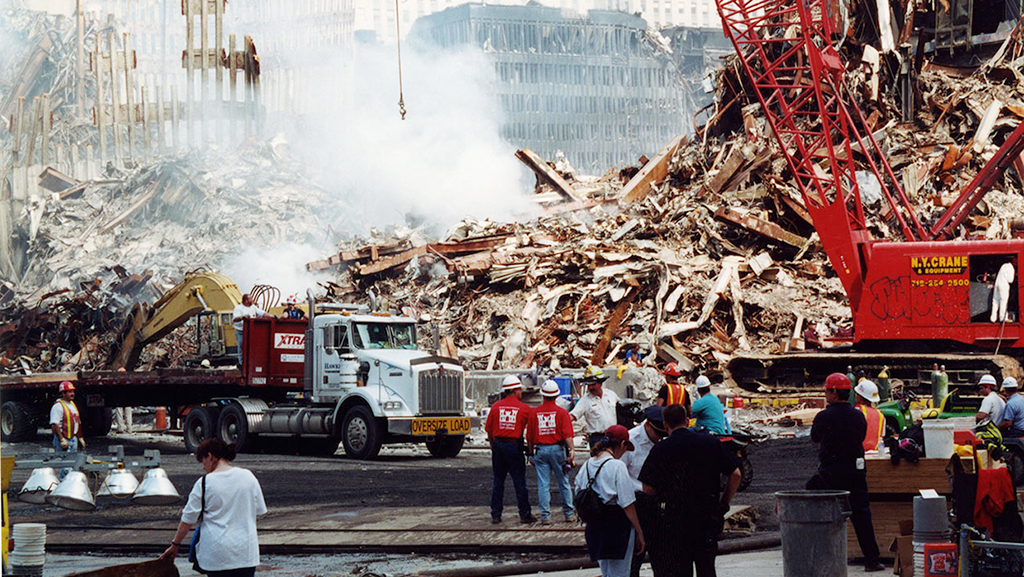
In the aftermath of the devastating events of Sept. 11, 2001, the American Society of Civil Engineers (ASCE) and organizations such as the National Institute of Standards and Technology (NIST) launched extensive investigations into the factors that led to the progressive collapse of the World Trade Center towers.

Those investigations not only helped engineers understand what happened to the buildings, but also changed the way structural risks are assessed and addressed.

A recent article recounts the experiences of engineers who played a role in examining the World Trade Center and the Pentagon. Their accounts combine technical findings with personal memories of the attacks and highlight the lessons that have influenced structural engineering over the past 25 years.

ADVERTISEMENT

The Daily Commercial News has highlighted several key elements from that article. The full version is available through ASCE.

The need for a blast standard

On the morning of Sept. 11, 2001, Paul Mlakar, an engineer emeritus with the U.S. Army Corps of Engineers, was preparing for a telephone discussion with colleagues about the need for a standard covering blast-resistant design.

A news program was playing silently in the background when the first aircraft struck the North Tower at 8:46 a.m. EDT.

For Mlakar, the attacks demonstrated the importance of developing what would eventually become the ASCE/Structural Engineering Institute 59-22 Blast Protection of Buildings standard.

“Not all buildings need to be blast-resistant,” he said. “But for public buildings, we now have the ASCE standard to provide a basis for that. It could help designers better protect those structures in the future.”

The standard has since provided structural designers with a framework for considering blast protection in buildings where such risks are relevant.

Designing against progressive collapse

Gerard Schwartz, who became president of ASCE the month following the attacks, visited Ground Zero for the first time in late October 2001.

According to the article, he said the public often does not realize the extent of the contribution made by structural engineers, particularly members of SEAoNY, to the rescue and cleanup operations following the attacks.

As the new head of ASCE, Schwartz helped coordinate civilian forensic teams responsible for assessing and analyzing building performance at both the World Trade Center and the Pentagon.

The work provided engineers with a better understanding of the factors that contributed to the collapses and offered information that could be incorporated into the design of future structures.

“The planes hit the World Trade Center tower at an angle, cutting through several floors,” Schwartz explained. “The building was actually strong enough structurally to withstand that hit. But it wasn’t strong enough to withstand the fire that resulted from all the jet fuel. That lit everything inside the building on fire, buckling important joists that provided important vertical and horizontal support.”

The Pentagon’s older structural design also played a role in limiting the extent of a potential progressive collapse.

“There was a lot about the way the Pentagon was designed and built (beginning) in 1941 that made it more resistant to the progression of collapse,” Mlakar said in the article.

“There was a relatively small area of the building that collapsed 20 minutes after impact, but the extent of it was fairly minimal, thanks to the continuity of the structural system and the way the columns were reinforced. We can learn from that.”

The contrast between the two structures provided engineers with valuable information about how structural continuity and reinforcement can influence the progression of a collapse.

A broader view of structural risk

Vicki Arbitrio, an associate partner at Manhattan-based Gilsanz Murray Steficek, was serving as secretary of SEAoNY when the twin towers collapsed.

Looking back on the aftermath, she said in the article that “strong engineering judgment” helped ensure that no one suffered fatal physical injuries during the removal process.

Twenty-five years after the attacks, Arbitrio believes that the investigations conducted by ASCE and NIST have contributed to broader improvements in building safety.

She also points to a significant cultural change within structural engineering. The experience of 9/11 encouraged greater collaboration between different engineering disciplines and reinforced the importance of considering a wider range of potential risks during the design process.

Arbitrio also notes that the World Trade Center had, in fact, been designed with the possibility of an aircraft impact in mind.

“Planes have gotten so much bigger since the building went up (in 1973), and no one thought any impact would be intentional,” she said.

The evolution of aircraft, combined with the intentional nature of the 9/11 attacks, demonstrated that engineers must consider how changing technologies and threats can affect structures.

“We understand now there are other technologies we need to learn more about so we can understand their potential impact on a structure, depending on where a building is and what’s around it,” Arbitrio added.

“There are a lot of possibilities that you want to consider as you work through a design.”

Lessons that continue to shape the profession

The structural engineering lessons from Sept. 11 extend far beyond the investigation of the World Trade Center towers and the Pentagon.

The work carried out by ASCE, NIST and the engineers involved in the forensic investigations helped deepen the profession’s understanding of blast protection, progressive collapse, structural continuity, fire resistance and broader risk assessment.

Twenty-five years later, the experiences of those engineers continue to influence how structural risks are evaluated and how buildings are designed to respond to threats that may not have been fully anticipated when earlier structures were conceived.


Previous Post

Construction Begins on New 61,050-Square-Foot Industrial Building in Acheson

Next Post

Two Vessels Struck in Strait of Hormuz Off Oman

Next Post
Two Vessels Struck in Strait of Hormuz Off Oman

Two Vessels Struck in Strait of Hormuz Off Oman

Leave a Reply Cancel reply

Your email address will not be published. Required fields are marked *

A D V E R T I S E M E N T

Popular News

  • Drone Delivery Takes Flight: Amazon Partners with UPS for Trial Program

    Drone Delivery Takes Flight: Amazon Partners with UPS for Trial Program

    0 shares
    Share 0 Tweet 0
  • Rail Cargo Group Strengthens European Network with Captrain Netherlands Acquisition

    0 shares
    Share 0 Tweet 0
  • Automotive Inbound Logistics Market: Navigating Future Challenges

    0 shares
    Share 0 Tweet 0
  • Global Inflation Cools to Target After Three Years, Central Banks Face Policy Dilemma

    0 shares
    Share 0 Tweet 0
  • Dubai Mercantile Exchange Rebrands as Gulf Mercantile Exchange Following Saudi Tadawul Group Acquisition

    0 shares
    Share 0 Tweet 0

Recent News

Samsung seeks $186M from CMA CGM over disputed container charges

Samsung seeks $186M from CMA CGM over disputed container charges

October 8, 2026
Amazon fraud scheme involving 23 trucking accounts ends with two-year prison sentence

Amazon fraud scheme involving 23 trucking accounts ends with two-year prison sentence

October 8, 2026
ELD Data Needs a Clear, Enforceable Standard

ELD Data Needs a Clear, Enforceable Standard

October 8, 2026

Discover a new era of logistics reporting with The Logistic News, your go-to platform for breaking news, insightful features, and exclusive interviews shaping the global logistics and freight landscape. Trust us to deliver accurate, timely, and relevant information that empowers professionals and enthusiasts alike in navigating the intricacies of this vital sector.

Navigation

  • Home
  • About Us
  • Press Room
  • Podcasts
  • Media Kit
  • Contact Us
  • Careers
  • Privacy Policy
  • Terms of Use

© 2024 - thelogisticnews.com

Welcome Back!

Login to your account below

Forgotten Password? Sign Up

Create New Account!

Fill the forms below to register

All fields are required. Log In

Retrieve your password

Please enter your username or email address to reset your password.

Log In

SIgn Up Newsletter

This will close in 20 seconds

Manage Cookie Consent
We use technologies like cookies to store and/or access device information. We do this to improve browsing experience and to show (non-) personalized ads. Consenting to these technologies will allow us to process data such as browsing behavior or unique IDs on this site. Not consenting or withdrawing consent, may adversely affect certain features and functions.
Functional Always active
The technical storage or access is strictly necessary for the legitimate purpose of enabling the use of a specific service explicitly requested by the subscriber or user, or for the sole purpose of carrying out the transmission of a communication over an electronic communications network.
Preferences
The technical storage or access is necessary for the legitimate purpose of storing preferences that are not requested by the subscriber or user.
Statistics
The technical storage or access that is used exclusively for statistical purposes. The technical storage or access that is used exclusively for anonymous statistical purposes. Without a subpoena, voluntary compliance on the part of your Internet Service Provider, or additional records from a third party, information stored or retrieved for this purpose alone cannot usually be used to identify you.
Marketing
The technical storage or access is required to create user profiles to send advertising, or to track the user on a website or across several websites for similar marketing purposes.
Manage options Manage services Manage {vendor_count} vendors Read more about these purposes
View preferences
{title} {title} {title}
No Result
View All Result
  • Logistic
  • Air
  • Maritime
  • Land
  • World
  • Business
  • Tech
  • Events
  • Advertise

© 2024 - thelogisticnews.com