



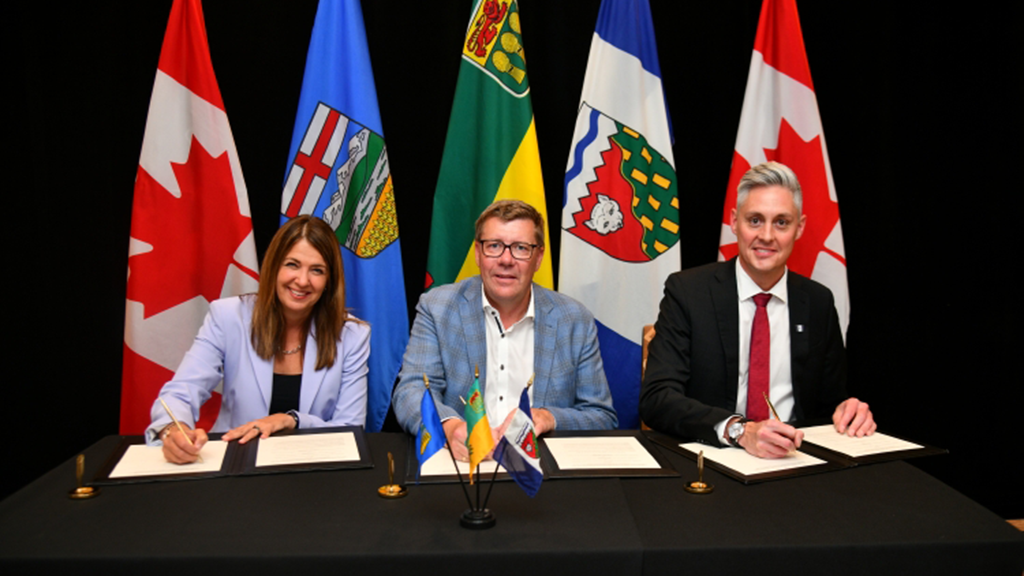
Alberta, Saskatchewan and the Northwest Territories have signed a memorandum of understanding (MOU) establishing a framework for closer collaboration and information-sharing on nuclear generation technologies.
The agreement covers a range of nuclear options, including large-scale nuclear reactors, small modular reactors (SMRs) and microreactors, as well as electricity transmission infrastructure.
According to the release, the MOU is built around three shared priorities: strengthening the security, reliability and long-term affordability of electricity systems; assessing nuclear technologies as an economical route toward carbon-neutral electricity generation; and examining opportunities to improve electricity transmission infrastructure across the three jurisdictions.
The agreement is also intended to recognize the different energy requirements and priorities of Alberta, Saskatchewan and the Northwest Territories while providing a common framework for continued co-operation.
Under the MOU, the three governments will work together on several aspects of potential nuclear development. These include selecting and developing reactor technologies, exploring financing approaches, environmental assessment processes, regulatory requirements and federal approval pathways.
The collaboration will also cover the supply and transportation of uranium fuel, as well as approaches to nuclear waste management.
Beyond nuclear generation itself, the agreement places emphasis on strengthening regional electricity connections. The governments plan to explore stronger interconnections capable of supporting a diverse mix of generation technologies.
That mix could include nuclear, natural gas, wind, solar and hydroelectric generation, along with battery storage.
The initiative therefore extends beyond the development of individual nuclear projects, focusing also on the transmission infrastructure needed to connect different sources of electricity across the region.