Land Nov 2, 2026
Schneider Names Norfolk Southern Its New Eastern Rail Partner, Ending CSX Relationship
The No. 3 U.S. domestic intermodal provider will transfer its eastern rail operations to Norfolk Southern in November, seeking broader market access, greater network flexibility and new opportunities to shift freight from trucks to rail.
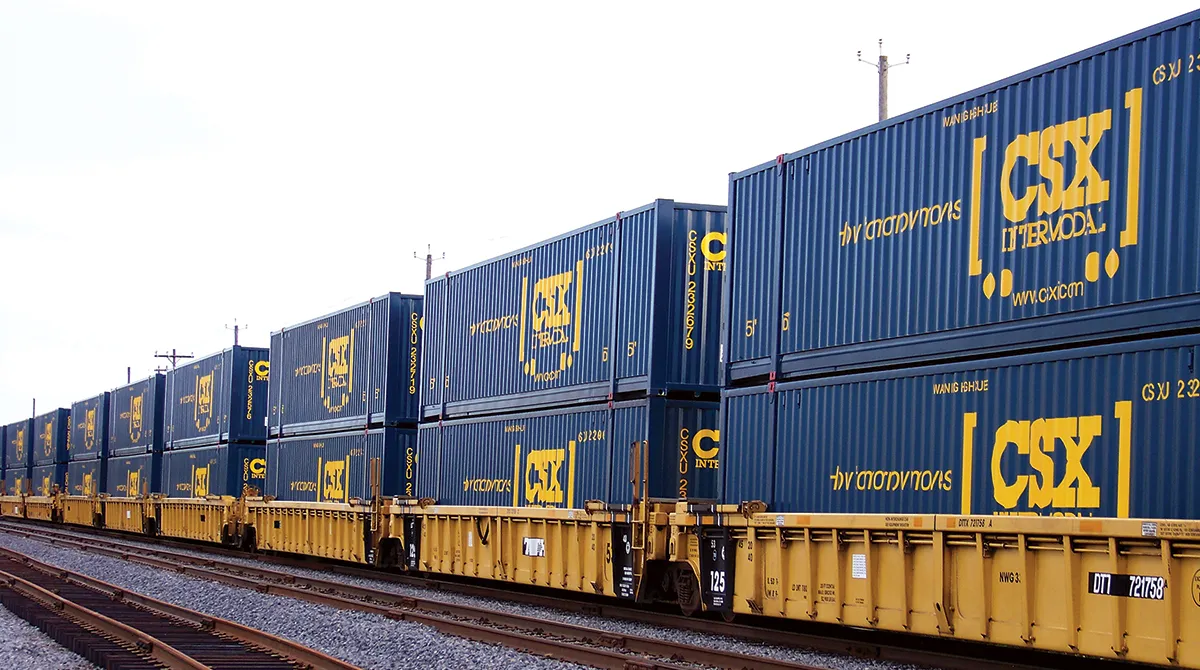
Schneider is preparing for a major change in its U.S. rail strategy, selecting Norfolk Southern as its primary eastern rail provider and moving its business away from CSX. The agreement, announced October 29, is designed to strengthen domestic intermodal capacity and give shippers additional options for moving freight throughout the eastern United States.
The transition, scheduled to take effect in November, will bring Schneider's company-owned equipment, drivers and logistics operations previously associated with CSX onto Norfolk Southern's intermodal network, which spans 22 states. Both companies expect the partnership to improve access to important freight markets, provide greater capacity flexibility and create opportunities to attract shipments currently transported by truck.
Michael Baumgardt, Schneider's executive vice president of intermodal and logistics, said the decision would strengthen the company's ability to serve customers by expanding access to key markets and making its network more flexible. He also pointed to the additional commercial opportunities expected from the change in eastern rail provider.
Schneider adds a major intermodal business to partnership
The deal pairs Norfolk Southern with a seasoned intermodal operator. Schneider’s North American network includes approximately 23,900 chassis, 26,800 containers and over 60 rail hubs.
It also has its own drivers, which are key in the operation and handle more than 90% of the company’s domestic drayage movements, the companies said.
The partnership comes as Norfolk Southern continues to invest in infrastructure and services to support expected customer growth. As part of its development program, it is adding a new rail service between Cincinnati and Atlanta, and improving double-stack clearances along the East Edge route linking the Midwest with New England.
The railroad also is expanding terminal capacity in Ohio, Michigan, North Carolina and Illinois.
Terminal upgrades are for reliability and efficiency
In addition to expanding its network, Norfolk Southern also is focused on performance improvements at its existing terminal infrastructure.
The investment program includes pavement improvements, lighting, storage areas, maintenance facilities, truck access and security systems. Several locations are included and include Atlanta, Louisville, Harrisburg, Chicago and St. Louis.
These upgrades are intended to boost service reliability and cut down the time drivers spend in railroad terminals, which is an important operational factor for intermodal customers who want more predictable freight movements.
“Customers are looking at intermodal transportation in a broader sense,” said Ed Elkins, executive vise president and chief commercial officer for Norfolk Southern. The company is investing for this growing demand, he said.
Third quarter intermodal volumes increase 3%
Norfolk Southern’s recent operating statistics further highlight its efforts to expand its intermodal business. The railroad reported a 3 percent increase in intermodal volumes for the third quarter of 2026.
The improvement was fueled by steady consumer demand, a strong environment in the trucking market and better performance in the company’s rail network.
The Schneider deal is expected to be another source of growth. The companies are hoping to expand Schneider’s reach across Norfolk Southern’s network to create more opportunities to convert traditional truckload freight to intermodal shipments.
That would mean more freight moved by rail, but would still keep the road links needed to complete deliveries between terminals and final destinations.
Union Pacific merger could open the door to future market options
The partnership also comes as Norfolk Southern proposes a merger with Union Pacific to create a transcontinental railroad.
The possible combination would have big implications for Schneider’s longer-term intermodal strategy. An expanded rail network could unlock new markets and also relieve some of the operational difficulties of short rail hauls and hand-offs between different railroad operators.
For Schneider, it could mean more opportunities to connect freight flows across the United States via an expanded intermodal offering. Getting Schneider's business is a significant commercial win for Norfolk Southern as it continues to build out its customer base.
But there are a few details that are still a secret. The companies have not disclosed the financial terms of the deal, or an estimate of the additional capacity it will generate or a firm transition date.
Why the deal matters
The Schneider decision is a huge win for Norfolk Southern as a customer, but the potential benefits run far beyond the immediate transfer of operations from CSX.
In the longer term, if the proposed Union Pacific-Norfolk Southern merger materializes, Schneider may be able to access more intermodal markets, and make rail transportation more competitive by addressing the problems inherent with shorter hauls and inter-railroad transfers.
The agreement therefore both immediately changes eastern rail operations and provides a broader opportunity to strengthen Schneider's hand in the U.S. domestic intermodal market.
Similar articles
Uber Freight makes significant multi-year commitment to Europe with new Krakow hub — September 23, 2026
Schneider National Raises 2026 Outlook as Tight Truckload Capacity Fuels Pricing Recovery — July 31, 2026
Schneider announces new leadership appointments as succession plan takes effect — June 30, 2026
CPKC Bets on Mexico-Canada Growth and New CSX Corridor to Drive Rail Expansion — March 19, 2026
Surcharges Hit Early as Intermodal Volumes Rise in the U.S. Heartland — August 7, 2025
END OF REPORT