Tech Nov 2, 2026
TrashLab secures $12 million to expand AI automation across waste management operations
The funding will accelerate the development of AI agents for dispatch, billing and collections, building on the success of Haul-E, which already handles incoming calls and after-hours orders for nearly 80% of haulers using the platform.
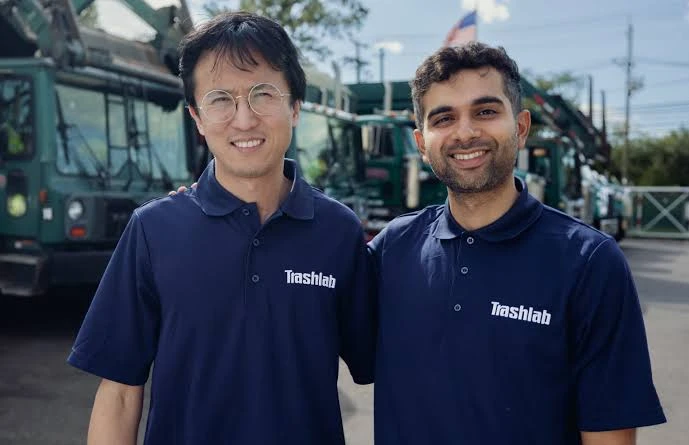
TrashLab has raised $12 million in Series A funding as it looks to extend artificial intelligence automation across the administrative operations of waste collection companies. The investment will support the development of additional AI agents designed to take over tasks traditionally handled by office teams, including dispatch management, billing and payment collection.
The company's first AI agent, Haul-E, is already gaining traction among customers. According to TrashLab, nearly 80% of waste haulers using its software rely on the system to answer incoming calls and record orders received outside normal business hours.
The company announced the funding on Thursday, positioning the investment as a major step in its ambition to simplify back-office operations throughout the waste management industry.
Mike Smith, president of First State Waste, which provides roll-off, front-load and portable toilet services, said the technology has helped the company significantly expand its operations without increasing administrative headcount.
"Since going live TrashLab has allowed us to grow our fleet 3x all while keeping the same lean backoffice team," Smith said.
Bringing waste management operations onto a single platform
TrashLab is targeting an industry where many operators continue to depend on spreadsheets, paper-based routing processes and legacy software to manage their daily activities.
Its platform brings several operational functions together in one environment, covering customer service and records, dispatch and route planning, driver applications, truck cameras, invoicing, payments and business reporting.
The objective is to eliminate fragmented systems and give waste haulers better visibility over their operations, regardless of how many service lines they manage.
Neil Chaudhary, co-founder and CEO of TrashLab, said operators have historically faced limited software choices, often having to rely on outdated tools or platforms unable to support multiple business activities.
The technology is also helping companies connect information collected in the field directly with administrative and financial processes.
At Uribe Refuse, for example, truck-mounted cameras are now integrated into the billing workflow. When the system identifies an issue such as a container that was not placed out for collection, a blocked dumpster or an overflowing receptacle, the information can automatically move from the field to a customer notification and then to an invoice.
Brad Uribe, owner of the company, said this process allows his business to identify, charge for and resolve operational issues that previously went unnoticed.
The integration demonstrates how vehicle technology and automated administrative systems can work together to improve service management and revenue collection.
TrashLab’s investor-funded expansion
The $12 million Series A financing was led by early-stage equity investment firm Ventana. The round also featured participation from existing investors Bienville Capital, Harlem Capital and CreativeCo.
The investment adds further industry and operational expertise to the leadership fabric of TrashLab.
Ventana's board of directors will include the firm's co-founder and partner, Vinay Kumar. Ershad Jamil, former chief growth officer at ServiceTitan and BuildOps, also named as an independent director.
Since 2024, the annual contract value for TrashLab has more than doubled as existing customers have added more modules. The company did not disclose its revenue or the value of the original contract recorded in 2024.
Its customers now number in the hundreds of waste haulers in more than 40 states in the United States and Canada. The platform has helped customers manage more than 5 million tons of material since it was launched.
There's a big market opportunity. According to estimates from Waste Business Journal, the U.S. waste and recycling industry generated $104.63 billion in revenue in 2024, the first time the sector has topped the $100 billion mark.
Kumar said TrashLab was the fastest-growing platform his firm had seen in an industry that for decades lacked software solutions.
New AI agents expected by 2027
TrashLab’s next generation of AI agents is still in development but Haul-E is already in operation.
Dedicated tools for dispatch, billing and collections are planned to be launched with deployment expected to continue through 2027. These are additions to automate more of the administrative workload, and to extend the platform’s capabilities beyond customer calls and order taking.
TrashLab was founded in 2022 by former BCG and EY-Parthenon consultant Neil Chaudhary and the company’s chief technology officer John Tan. Tan was formerly a senior engineer at Stripe and Google.
The company plans to expand its engineering and customer success teams in the near term to support its growth plans.
“Customers can start to see financial and operational benefits within weeks of platform implementation,” said Chaudhary. These involve lower fuel costs, smaller administrative teams and faster collection of payments.
He added that Haul-E already takes calls and processes orders for most of the company’s customers. The agent is the first of a number of AI tools to be integrated into the platform, he said.
Automation: a growth driver for waste haulers
“The latest round of funding for TrashLab underscores an emerging opportunity to use AI to improve the customer experience, and also to tackle the administrative challenges confronting waste collection companies.”
The value proposition for operators like First State Waste is simple: expand fleet capacity and take on more service work without having to add office staffing at the same rate.
But the company’s ability to deliver on that ambition is tied to the successful rollout of its next AI agents. Dispatch, billing and collections automation is not fully available yet, with rollout extending through 2027.
The trick will be to build on the initial adoption of Haul-E to make more extensive operational improvements throughout the waste management workflow.
END OF REPORT