Business Nov 2, 2026
Trump Signals Progress Toward a Potential Trade Agreement Between the U.S. and Canada
Donald Trump says Washington and Ottawa are close to reaching an agreement that could benefit both countries, with agricultural interests, energy cooperation and the future of the Keystone XL pipeline among the issues shaping negotiations.
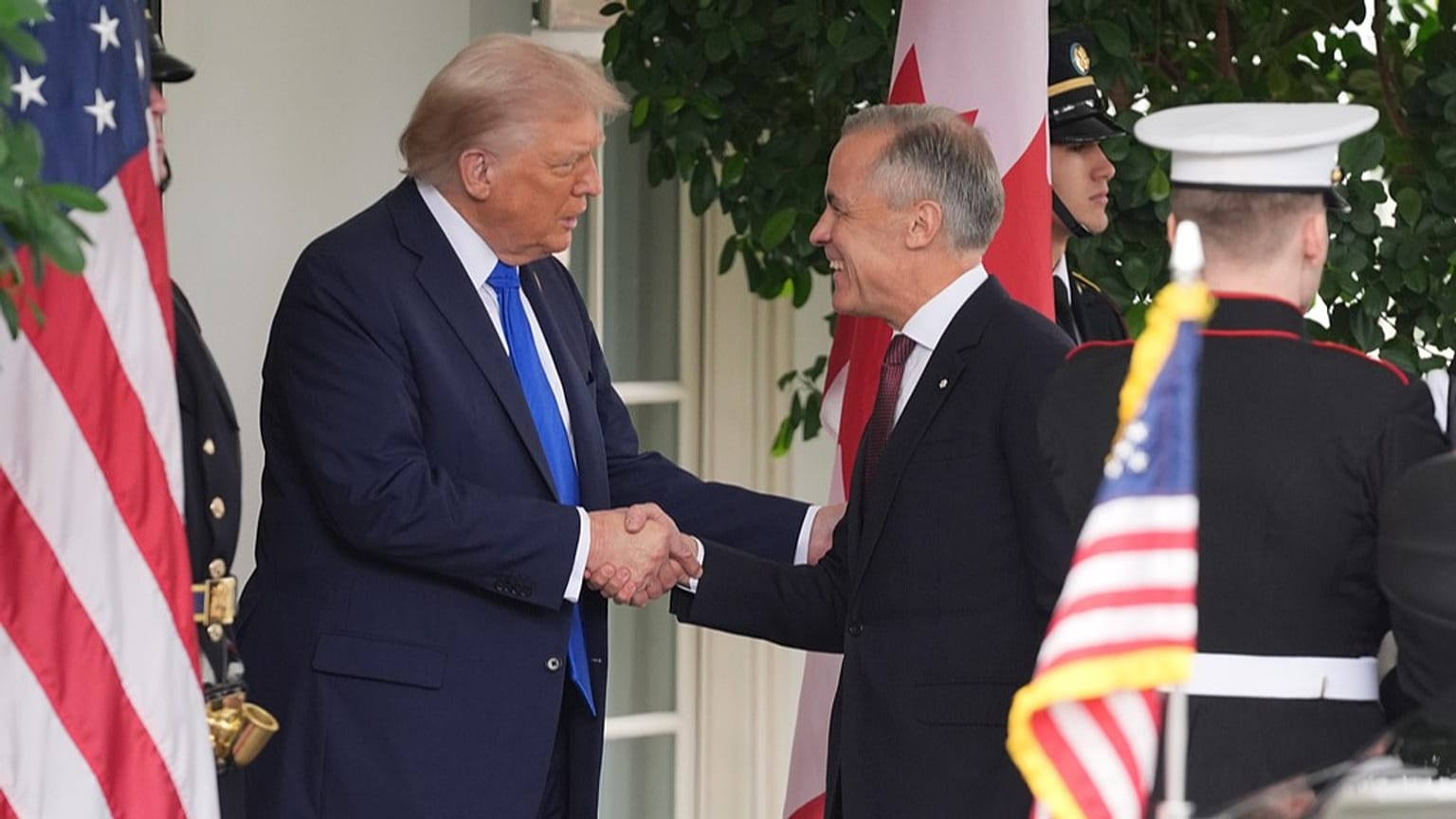
The United States and Canada may be moving closer to a new trade agreement, following what both leaders described as constructive discussions on the future of their economic relationship. U.S. President Donald Trump said Sunday that the two countries had developed the foundations of what he called a potentially very good deal.
Speaking to reporters in Iowa, Trump indicated that negotiations were nearing an important stage, saying Washington and Ottawa were “very close” to an agreement.
According to the U.S. president, the proposed arrangement would deliver benefits to American farmers and the broader U.S. economy while remaining acceptable to Canada.
“We’ve been losing money for many years with Canada,” Trump said, adding that the emerging agreement would be positive for both countries.
Canadian Prime Minister Mark Carney also addressed the discussions on social media Sunday, describing his exchange with Trump as a “good conversation” focused on the future of bilateral trade. A spokesperson for the Prime Minister’s Office subsequently confirmed that the conversation had taken place on Saturday.
Carney explained that the latest exchange builds on earlier discussions about establishing a mutually beneficial commercial relationship. He said an agreement should support employment, improve affordability for households and protect Canada's languages, culture and national sovereignty.
The Canadian prime minister added that negotiating teams would work over the coming weeks to translate those objectives into an agreement.
Keystone XL pipeline returns to the centre of negotiations
Energy cooperation has emerged as another significant element of the discussions, particularly the long-running Keystone XL pipeline project.
Trump told reporters Sunday that the pipeline was included in the negotiations and claimed Canada would cover its entire cost. Under his proposal, the United States would provide the route, which he said had largely been determined, while Canada would take responsibility for construction.
The president had already promoted the possibility of reviving Keystone XL in August, presenting the project as a major achievement in trade discussions with Ottawa. At the time, he announced on Truth Social that the two countries had reached a deal.
He subsequently shared an illustration depicting himself pulling a pipeline out of the ground beside a tombstone marked “buried by Biden”. Another sign in the image described the Keystone project as completely free, linking it to energy, employment and his America First agenda.
Originally proposed almost two decades ago, Keystone XL was designed to transport more than 800,000 additional barrels of oil from Alberta to the United States.
However, the project encountered years of opposition and legal challenges involving American landowners, Indigenous leaders in both countries and environmental organisations. In 2021, former U.S. President Joe Biden effectively ended the project by revoking a key federal permit.
Carney had raised the possibility of restarting Keystone XL with Trump almost a year ago, as part of a broader proposal connecting energy cooperation with support for Canada's steel and aluminium industries.
In April, Trump signed an executive order approving a new pipeline that would make use of existing sections of the abandoned Keystone infrastructure.
Opposition in Canada wants tangible results
The recent diplomatic exchanges have also come under criticism and political pressure in Canada.
Conservative Leader Pierre Poilievre said at a Sunday news conference that Canadian households and businesses can’t wait forever to settle the trade dispute and he urged Carney to negotiate a good deal.
Carney, Poilievre noted, had promised during the last federal election to negotiate a better deal than the last one. But the Conservative leader said that commitment had still not been met.
He urged the prime minister to go beyond political rhetoric and deliver tangible economic results.
Mid-term elections in the U.S. add pressure to trade talks
The discussions come ahead of Tuesday’s U.S. midterm elections, when the Canada-U.S. trade dispute has emerged as a key issue for several candidates.
The election will be hugely consequential for Republicans and Democrats alike. A strong Democratic showing could give Congress more leverage to counter Trump’s heavy use of executive authority for the rest of his presidency.
Democrats are likely to win control of the House of Representatives, where a net gain of three seats would be enough to win a majority, according to polls. It is harder to predict the Senate results, although polls indicate that the Democrats could gain as many as four seats.
Trade tensions with Canada are especially unpopular in states such as Michigan and Maine, where close Senate races could determine which party controls Congress.
But a Democratic win would not automatically signal an immediate rollback of Trump's trade policies. Even a change in congressional control or a Democratic victory in the 2028 presidential election would not immediately reverse the administration’s tariff policies.
Trade tensions continue to loom over bilateral ties
Relations between Ottawa and Washington have soured considerably during Trump’s second presidential term.
His first administration already caused tensions between the two neighboring countries, but the latest period has seen a much deeper breakdown of bilateral relations. Trump’s tariff policy is one of the first to target Canada, while the repeated threats to annex the country have drawn widespread anger among Canadians.
Trade talks broke down in August, worsening the situation. In return, Trump placed tariffs of up to 50% on a range of Canadian goods, restricted imports of further Canadian products and signed an executive order renaming Lake Ontario as Lake America.
The trade dispute has since become politically charged, particularly in American states with strong economic ties to Canada.
While the latest signals from both leaders have been positive, there is still a lot of uncertainty as to whether a comprehensive deal is possible.
Last week, Carney acknowledged Canada was not ready to make a deal with the Trump administration yet. “Ottawa will only accept an agreement if it is in Canada’s interest,” he told reporters Wednesday ahead of the weekly Liberal national caucus meeting on Parliament Hill.
The next few weeks will be critical in deciding whether the new talks can deliver a durable commercial deal or whether disputes over tariffs, energy and economic sovereignty will continue to put strain on one of North America’s most important trading relationships.
END OF REPORT