



Air Canada chief executive Michael Rousseau will retire early and leave the carrier by the end of the third quarter of 2026, following mounting criticism over how he handled communications after a fatal crash involving two pilots.
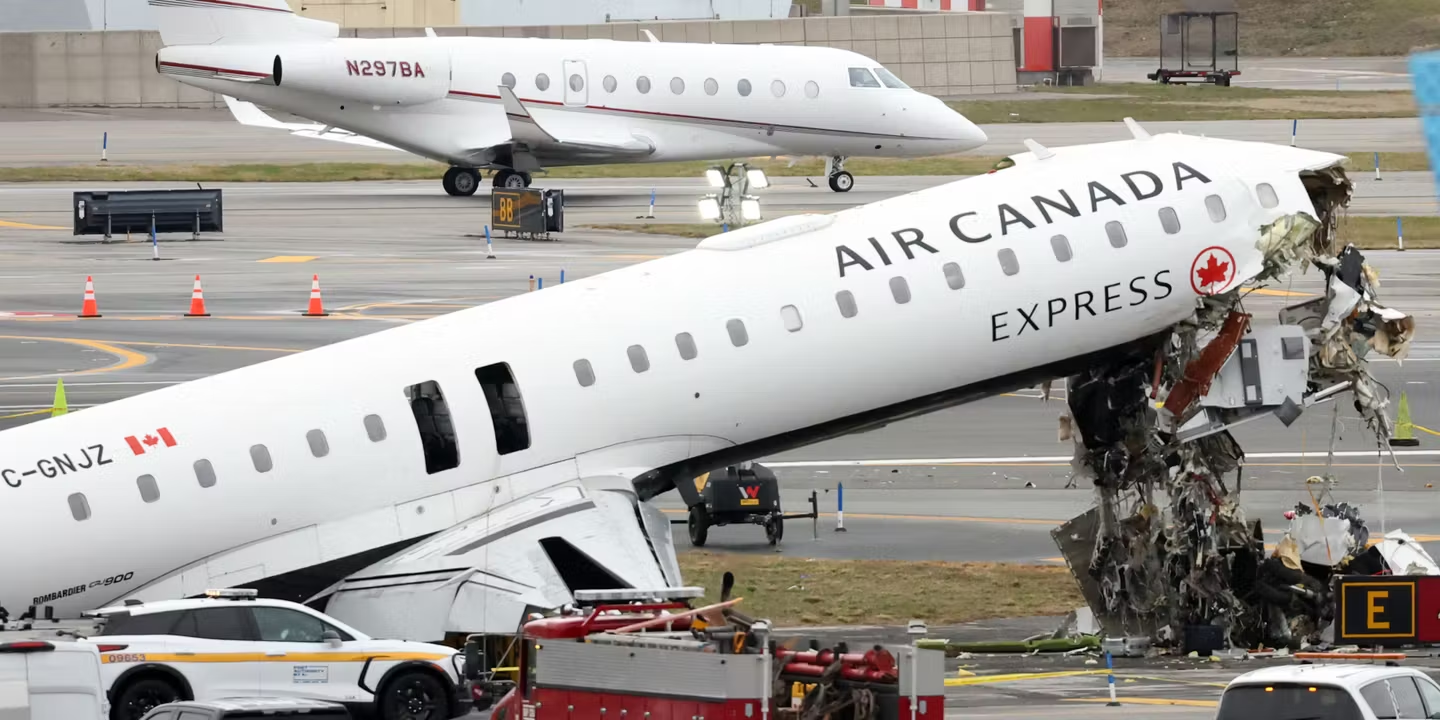
The incident killed Antoine Forest and Mackenzie Gunther when the aircraft they were controlling collided with a fire truck after receiving clearance to land on a runway at LaGuardia Airport. All 43 passengers and crew on board survived, though some were taken to hospital with injuries.
The political and public backlash centred not only on the crash itself, but on Rousseau’s response afterwards. He was criticised for failing initially to offer condolences in French, one of Canada’s two official languages. He later apologised and said he was deeply saddened that his inability to speak French had diverted attention from the grief of the victims’ families.
The issue quickly took on political weight. Prime Minister Mark Carney said Rousseau had shown a lack of judgment and compassion, while Quebec Premier François Legault and Bloc Québécois leader Yves-François Blanchet both called for his resignation. Lawmakers in Quebec also passed a non-binding motion last week urging him to step down.
The controversy revived earlier criticism dating back to 2021, when Rousseau apologised for giving a speech almost entirely in English after being rebuked by then-prime minister Justin Trudeau.
In announcing the departure, Air Canada said Rousseau had informed the board he would retire by the end of the third quarter after nearly 20 years of service. He will remain as chief executive and board member until then.
Board chair Vagn Sørensen thanked Rousseau for helping steer Air Canada through the 2007-2008 financial crisis, the Covid period and other challenges, as well as for advancing strategic moves such as the Aeroplan acquisition, pension solvency restoration, customer centricity and employee wellbeing.
Carney welcomed the decision, saying Rousseau had performed well in technical terms but that leaders of national institutions also carry broader responsibilities. He added that it was essential for the next chief executive to be fully bilingual.
Air Canada shares fell more than 2% in early trading in Toronto before recovering some ground. Although publicly listed, the airline remains subject to Canada’s Official Languages Act and is required to provide services in both English and French.