

• Latest
  • Trending
Washington Targets Chinese Shipbuilding with New Port Fees: Strategic Protection or Trade Gamble?

Washington Targets Chinese Shipbuilding with New Port Fees: Strategic Protection or Trade Gamble?

April 24, 2025
Stocks plummeting: warehouses are emptying and “just-in-time” is making a comeback

Stocks plummeting: warehouses are emptying and “just-in-time” is making a comeback

January 12, 2026
US–Mexico: Flexport anticipates a turbulent 2026 on tariffs

US–Mexico: Flexport anticipates a turbulent 2026 on tariffs

January 12, 2026
ADVERTISEMENT
Inchcape strengthens its network in Indonesia with two new locations

Inchcape strengthens its network in Indonesia with two new locations

January 12, 2026
Green hydrogen: promising, but still difficult to industrialize at sea

Green hydrogen: promising, but still difficult to industrialize at sea

January 12, 2026
Lunar New Year awakens transpacific rates

Lunar New Year awakens transpacific rates

January 12, 2026
Global cargo aviation in full swing: +5.5% in November 2025

Global cargo aviation in full swing: +5.5% in November 2025

January 12, 2026
Hong Kong Air Cargo strengthens its fleet: a sixth A330 cargo to accelerate expansion

Hong Kong Air Cargo strengthens its fleet: a sixth A330 cargo to accelerate expansion

January 8, 2026
Global air freight increases by 5.5%: Africa and Asia drive the rise, America remains slower

Global air freight increases by 5.5%: Africa and Asia drive the rise, America remains slower

January 8, 2026
New quarterly barometer: U.S. Bank and DAT launch a report dedicated to truck rates (spot, contract, and fuel)

New quarterly barometer: U.S. Bank and DAT launch a report dedicated to truck rates (spot, contract, and fuel)

January 8, 2026
Seizures of “dark fleet”: pressure mounts on sanctioned tankers and sensitive routes

Seizures of “dark fleet”: pressure mounts on sanctioned tankers and sensitive routes

January 8, 2026
China signs $4.1 billion port project in Kuwait: a regional hub in sight

China signs $4.1 billion port project in Kuwait: a regional hub in sight

January 8, 2026
The United States withholds 60 million from California: potential impact on truck capacity and CDL compliance

The United States withholds 60 million from California: potential impact on truck capacity and CDL compliance

January 8, 2026
  • Home
  • About Us
  • Press Room
  • Podcasts
  • Media Kit
  • Contact Us
  • Careers
Wednesday, January 14, 2026
  • Login
  • Register
The Logistic News
  • Logistic
  • Air
  • Maritime
  • Land
  • World
  • Business
  • Tech
  • Events
  • Advertise
No Result
View All Result
  • Logistic
  • Air
  • Maritime
  • Land
  • World
  • Business
  • Tech
  • Events
  • Advertise
No Result
View All Result
The Logistic News
No Result
View All Result
Home Logistic

Washington Targets Chinese Shipbuilding with New Port Fees: Strategic Protection or Trade Gamble?

Washington Targets Chinese Shipbuilding with New Port Fees: Strategic Protection or Trade Gamble?

The Logistic News by The Logistic News
April 24, 2025
in Logistic, World
Reading Time: 3 mins read
0
Washington Targets Chinese Shipbuilding with New Port Fees: Strategic Protection or Trade Gamble?
ADVERTISEMENT
ADVERTISEMENT

By Eva Richardson – The Logistic News

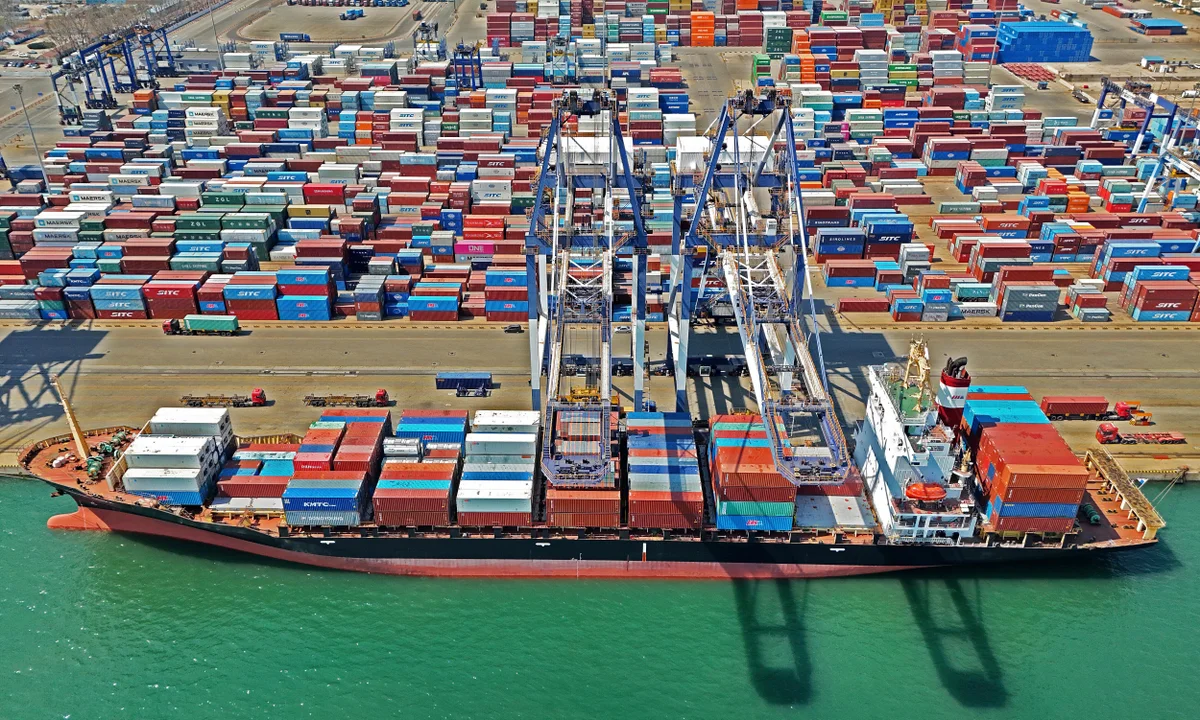
In a move likely to intensify trade tensions and provoke global shipping realignments, the U.S. government has introduced a sweeping surcharge on all commercial vessels built in Chinese shipyards. The measure—unprecedented in scope—will impose port access fees of up to $3.5 million per stop on affected ships, starting later this year.

The policy, officially framed as an effort to “rebalance the strategic supply chain,” is part of a broader initiative to rebuild the American shipbuilding industry, which has seen decades of decline under the weight of low-cost Asian competition.

Redrawing the Maritime Map

Under the new rule, container ships, LNG carriers, and bulk vessels constructed in China after January 2023 will face escalating charges for entering U.S. ports. The decision follows months of behind-the-scenes lobbying by domestic shipbuilders and Jones Act operators who argue that unrestricted foreign dominance of maritime construction poses a long-term security risk.

“This is not just an economic measure—it’s a national security correction,” said a senior administration official involved in the drafting of the regulation. “We’ve outsourced too much, for too long.”

The Department of Transportation has clarified that vessels already in service before the cutoff date will be exempt. However, new ship deliveries scheduled for 2025 and beyond—many of them already chartered—will be directly affected.

A Push to Revive Domestic Capacity

To offset the financial shock for U.S.-based operators, the government has paired the surcharge with a package of incentives, including tax breaks for companies committing to build in American yards, low-interest financing tools, and preferred berthing rights for compliant fleets.

The policy also earmarks $1.2 billion in infrastructure funds for modernizing shipbuilding facilities in Virginia, Louisiana, and California. The goal: make U.S. yards viable alternatives for both commercial and military-adjacent construction projects.

Industry sources say that while the funding is welcome, capacity constraints remain. “You can’t rebuild a shipyard workforce overnight,” noted John Farley, CEO of a Gulf Coast repair and fabrication firm. “This is a 10-year play—but it’s the first real play we’ve seen in decades.”

Shipping Industry Reacts with Caution

Reaction from global carriers has ranged from concern to strategic reassessment. Major European and Japanese firms have expressed unease about cost escalation and potential retaliation. Some are already exploring alternate North American gateways in Canada and Mexico to circumvent the fees.

Privately, several U.S.-based freight forwarders say their customers are anxious. “The risk is that the cost will trickle down to cargo owners,” said one executive with a leading 3PL. “At the end of the day, someone has to absorb it—and it probably won’t be the shipping line.”

The China Factor

Beijing has not yet issued an official response, but trade analysts expect some form of countermeasure—possibly tariffs or regulatory delays for U.S.-flagged vessels operating in Chinese ports. The surcharge may also further complicate delicate negotiations over technology transfers and maritime cybersecurity, both already strained.

Yet within Washington, the move enjoys rare bipartisan backing. In an election year marked by economic uncertainty and geopolitical anxiety, reclaiming industrial ground has proven a unifying message.

Conclusion

The U.S. decision to tax China-built vessels marks a turning point in maritime policy—an assertive, high-stakes attempt to reset a sector long surrendered to globalization. Whether it succeeds in reviving shipbuilding or sparks a broader trade backlash remains to be seen. But one thing is clear: for the first time in a generation, the United States is willing to pay a price to steer its own course.



Previous Post

Universal Logistics Prepares Earnings Report Amid Complex Freight Landscape

Next Post

The Logistics Recalibration: How Amazon’s $15 Billion Strategy Signals a Shift in Supply Chain Thinking

Next Post
The Logistics Recalibration: How Amazon’s $15 Billion Strategy Signals a Shift in Supply Chain Thinking

The Logistics Recalibration: How Amazon’s $15 Billion Strategy Signals a Shift in Supply Chain Thinking

Leave a Reply Cancel reply

Your email address will not be published. Required fields are marked *

A D V E R T I S E M E N T

Popular News

  • Drone Delivery Takes Flight: Amazon Partners with UPS for Trial Program

    Drone Delivery Takes Flight: Amazon Partners with UPS for Trial Program

    0 shares
    Share 0 Tweet 0
  • Rail Cargo Group Strengthens European Network with Captrain Netherlands Acquisition

    0 shares
    Share 0 Tweet 0
  • Automotive Inbound Logistics Market: Navigating Future Challenges

    0 shares
    Share 0 Tweet 0
  • Global Inflation Cools to Target After Three Years, Central Banks Face Policy Dilemma

    0 shares
    Share 0 Tweet 0
  • Dubai Mercantile Exchange Rebrands as Gulf Mercantile Exchange Following Saudi Tadawul Group Acquisition

    0 shares
    Share 0 Tweet 0

Recent News

Stocks plummeting: warehouses are emptying and “just-in-time” is making a comeback

Stocks plummeting: warehouses are emptying and “just-in-time” is making a comeback

January 12, 2026
US–Mexico: Flexport anticipates a turbulent 2026 on tariffs

US–Mexico: Flexport anticipates a turbulent 2026 on tariffs

January 12, 2026
Inchcape strengthens its network in Indonesia with two new locations

Inchcape strengthens its network in Indonesia with two new locations

January 12, 2026

Discover a new era of logistics reporting with The Logistic News, your go-to platform for breaking news, insightful features, and exclusive interviews shaping the global logistics and freight landscape. Trust us to deliver accurate, timely, and relevant information that empowers professionals and enthusiasts alike in navigating the intricacies of this vital sector.

Navigation

  • Home
  • About Us
  • Press Room
  • Podcasts
  • Media Kit
  • Contact Us
  • Careers
  • Privacy Policy
  • Terms of Use

© 2024 - thelogisticnews.com

Welcome Back!

Login to your account below

Forgotten Password? Sign Up

Create New Account!

Fill the forms below to register

All fields are required. Log In

Retrieve your password

Please enter your username or email address to reset your password.

Log In

SIgn Up Newsletter

This will close in 20 seconds

Manage Cookie Consent
We use technologies like cookies to store and/or access device information. We do this to improve browsing experience and to show (non-) personalized ads. Consenting to these technologies will allow us to process data such as browsing behavior or unique IDs on this site. Not consenting or withdrawing consent, may adversely affect certain features and functions.
Functional Always active
The technical storage or access is strictly necessary for the legitimate purpose of enabling the use of a specific service explicitly requested by the subscriber or user, or for the sole purpose of carrying out the transmission of a communication over an electronic communications network.
Preferences
The technical storage or access is necessary for the legitimate purpose of storing preferences that are not requested by the subscriber or user.
Statistics
The technical storage or access that is used exclusively for statistical purposes. The technical storage or access that is used exclusively for anonymous statistical purposes. Without a subpoena, voluntary compliance on the part of your Internet Service Provider, or additional records from a third party, information stored or retrieved for this purpose alone cannot usually be used to identify you.
Marketing
The technical storage or access is required to create user profiles to send advertising, or to track the user on a website or across several websites for similar marketing purposes.
Manage options Manage services Manage {vendor_count} vendors Read more about these purposes
View preferences
{title} {title} {title}
No Result
View All Result
  • Logistic
  • Air
  • Maritime
  • Land
  • World
  • Business
  • Tech
  • Events
  • Advertise

© 2024 - thelogisticnews.com