



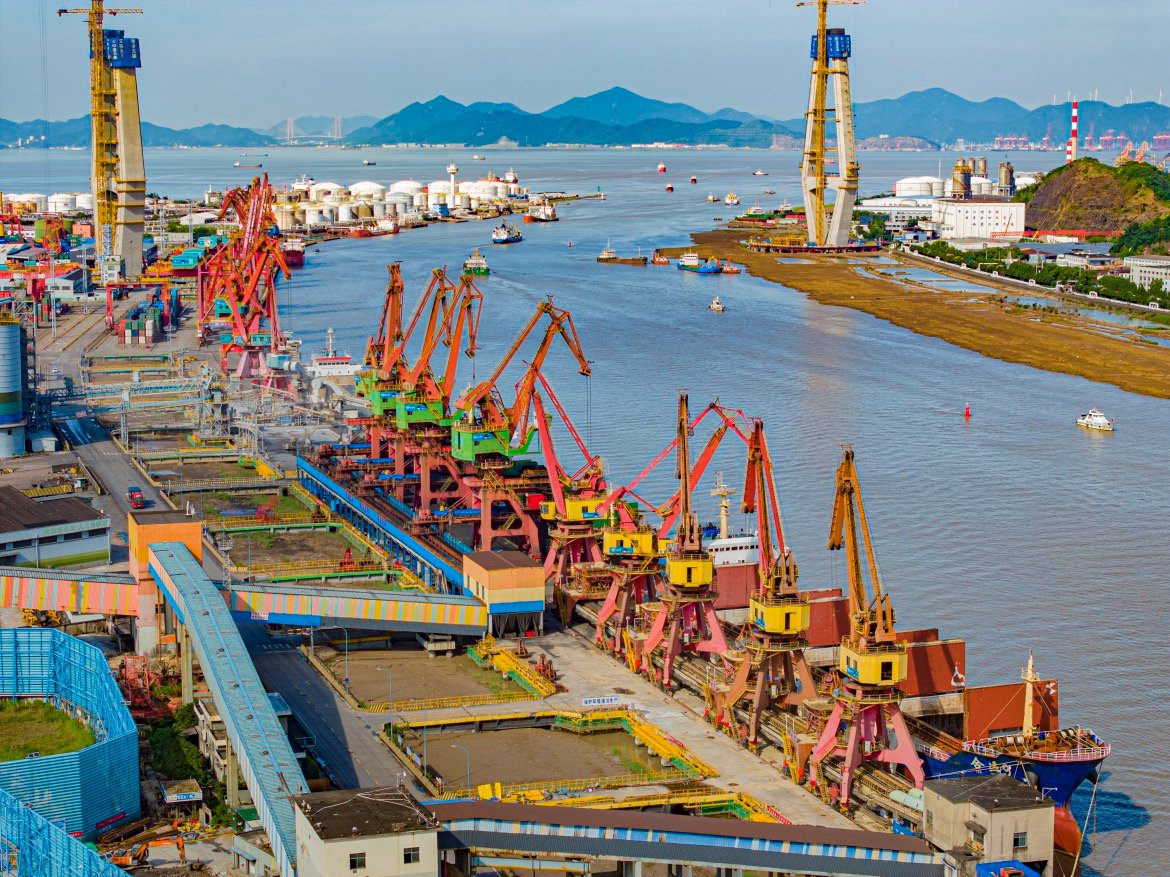
As global maritime trade moves on more uncertain ground, the Chinese port of Ningbo-Zhoushan is delivering a performance that redefines standards: more than 1.4 billion tons of traffic handled in 2025.
This symbolic threshold consolidates its position as the world leader in cargo volume and confirms an often underestimated point: a country’s logistical competitiveness depends as much on maritime corridors as on port capacity to absorb peaks, streamline rotations, and secure transit times.
Another strong signal: the port exceeds 40 million TEUs for the first time, placing it among the very large global containerized hubs. This progress is based on a significant increase in major infrastructure, notably “10 million” class container terminals and an organization capable of simultaneously managing very large-scale operations.
On the network front, Ningbo-Zhoushan is further strengthening its “global gateway” status: 309 services connecting 700+ ports in 200+ countries and regions, with nearly 300 ships handled each day. The message is clear: the battle of the ports is no longer just about docks, but also about connectivity, line density, and integrated logistics services.
Finally, the port is accelerating internationally with a network of services and logistical establishments, notably thru capacities outside of China and the opening of new support points abroad. For shippers and freight forwarders, this is a concrete indicator: major Asian hubs continue to invest to remain indispensable, even in a market cycle.