



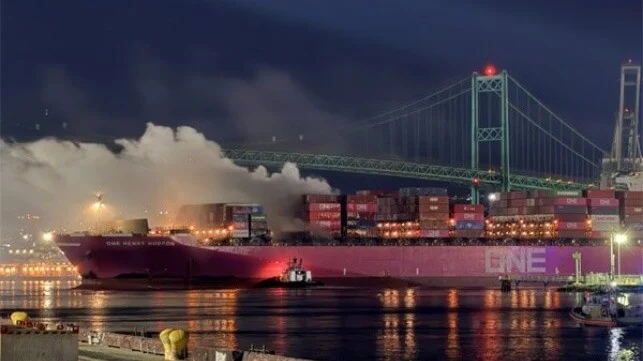
After several weeks of operational management, the container ship ONE Henry Hudson, severely impacted by a cargo fire that occurred while it was docked in Los Angeles, has finally left the American West Coast. The objective: to reach an Asian shipyard for repairs, after a long and sensitive phase of securing and handling the cargo.
The ship had the incident in late November, shortly after its arrival, which triggered a complex logistical process: gradual unloading, sorting, container storage, and then organizing the follow-up for the shippers. The company indicated that the handling of the affected units had been completed before departure, and that the containers were now positioned in a dedicated area of the port.
On the contractual level, the event recalls a reality often misunderstood outside the maritime world: the declaration of General Average. In concrete terms, this means that some shippers will have to provide guaranties before recovering their goods, while the responsibilities and costs related to the disaster are established and distributed according to the procedures in force.
Beyond the news, this case illustrates the fragility of a maritime chain in the face of an onboard incident: a single event can immobilize a ship, disrupt transpacific flows, and generate weeks of catch-up, between port constraints, insurance requirements, and documentation obligations.