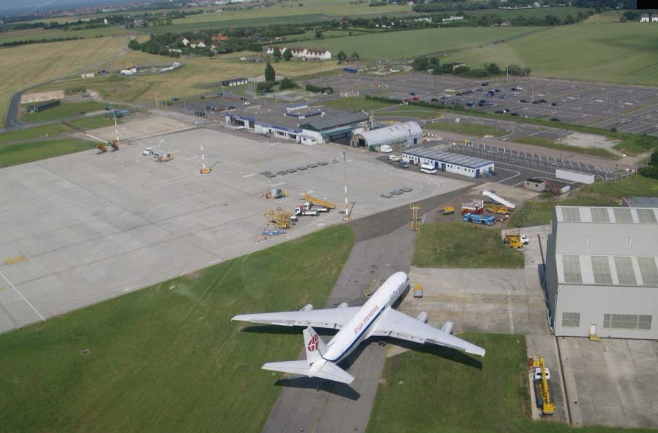
The project to transform Manston, a former strategic site in Kent, is back at the center of the cargo game in the United Kingdom — but with a major condition: finding additional funding. The project proponent indicates aiming for approximately £750 million in additional funding to finalize the revival and launch the ambition: a cargo-oriented airport capable of adding runway capacity to a British market in search of alternative solutions.
The stated objective is clear: if the funding is secured, the site could be operational by 2029, with a schedule already shifted compared to previous projections. The promoters explain these delays by a mix of factors: lengthy procedures, the complexity of studies, inflation of construction costs, and a more nervous financial environment.
But Manston remains a divisive project. Opponents highlight the potential impact in terms of congestion, noise, and pollution, and emphasize the issue of the climate trajectory: in their view, accelerating an airport project without significant progress on the decarbonization of the sector is a risky gamble. Another point of contention: the demonstration of need — some believe that demand alone does not justify a new platform of this size.
For the logistics ecosystem, the stakes go beyond Manston: it is a real-world test of the United Kingdom’s ability to balance cargo competitiveness, local acceptability, and environmental constraints — all while securing heavy capital over a long cycle.