


• Latest
  • Trending
Airfreight rates climb as Iran war disruptions cut capacity and reroute traffic

Airfreight rates climb as Iran war disruptions cut capacity and reroute traffic

March 16, 2026
Oman Air Cargo introduces fuel and war risk surcharges as Middle East conflict deepens

Oman Air Cargo introduces fuel and war risk surcharges as Middle East conflict deepens

March 16, 2026
Hong Kong forwarders warn fuel surcharge hikes could destabilise logistics market

Hong Kong forwarders warn fuel surcharge hikes could destabilise logistics market

March 16, 2026
ADVERTISEMENT
Swissport strengthens Eastern European cargo network with new Sofia facility

Swissport strengthens Eastern European cargo network with new Sofia facility

March 16, 2026

March 16, 2026
Atlas Air places record order for Airbus A350 freighters

Atlas Air places record order for Airbus A350 freighters

March 16, 2026
Tanker markets enter uncharted territory as brokers and charterers struggle to read next move

Tanker markets enter uncharted territory as brokers and charterers struggle to read next move

March 16, 2026
Liberian Registry rolls out electronic seafarer documents and new compliance tools

Liberian Registry rolls out electronic seafarer documents and new compliance tools

March 16, 2026
Tanker markets enter uncharted territory as brokers and charterers struggle to read next move

Tanker markets enter uncharted territory as brokers and charterers struggle to read next move

March 16, 2026
NYK acquires 50% of Avenir LNG in bet on small-scale fueling growth

NYK acquires 50% of Avenir LNG in bet on small-scale fueling growth

March 16, 2026
Marad chief calls for full rebuild of US maritime system

Marad chief calls for full rebuild of US maritime system

March 16, 2026
The Mar-a-Lago access story behind a Romanian trucking operator’s rise

The Mar-a-Lago access story behind a Romanian trucking operator’s rise

March 16, 2026
UK considers mine-hunting drones to help reopen Strait of Hormuz

UK considers mine-hunting drones to help reopen Strait of Hormuz

March 16, 2026
  • Home
  • About Us
  • Press Room
  • Podcasts
  • Media Kit
  • Contact Us
  • Careers
Tuesday, March 17, 2026
  • Login
  • Register
The Logistic News
  • Logistic
  • Air
  • Maritime
  • Land
  • World
  • Business
  • Tech
  • Events
  • Advertise
No Result
View All Result
  • Logistic
  • Air
  • Maritime
  • Land
  • World
  • Business
  • Tech
  • Events
  • Advertise
No Result
View All Result
The Logistic News
No Result
View All Result
Home Air

Airfreight rates climb as Iran war disruptions cut capacity and reroute traffic

WorldACD data shows global air cargo volumes declining as Gulf disruption slashes capacity, reroutes Asia–Europe flows and drives rates sharply higher across multiple corridors.

The Logistic News by The Logistic News
March 16, 2026
in Air, Cargo, Logistic
Reading Time: 4 mins read
0
Airfreight rates climb as Iran war disruptions cut capacity and reroute traffic
ADVERTISEMENT

Global airfreight markets are feeling the effects of the Iran war more intensely, with capacity cuts, rerouted flows and higher rates now visible across several major corridors.

According to the latest weekly analysis from WorldACD Market Data, global chargeable weight in the week ending 8 March fell 4% week on week and was 12% lower year on year. The sharpest contraction came from the Middle East and South Asia (MESA) region, where tonnage dropped 36% from the previous week. Africa followed with a 23% decline, while Europe slipped 7% and Central and South America were down 2%. Only Asia Pacific and North America posted weekly growth, rising 5% and 3% respectively.

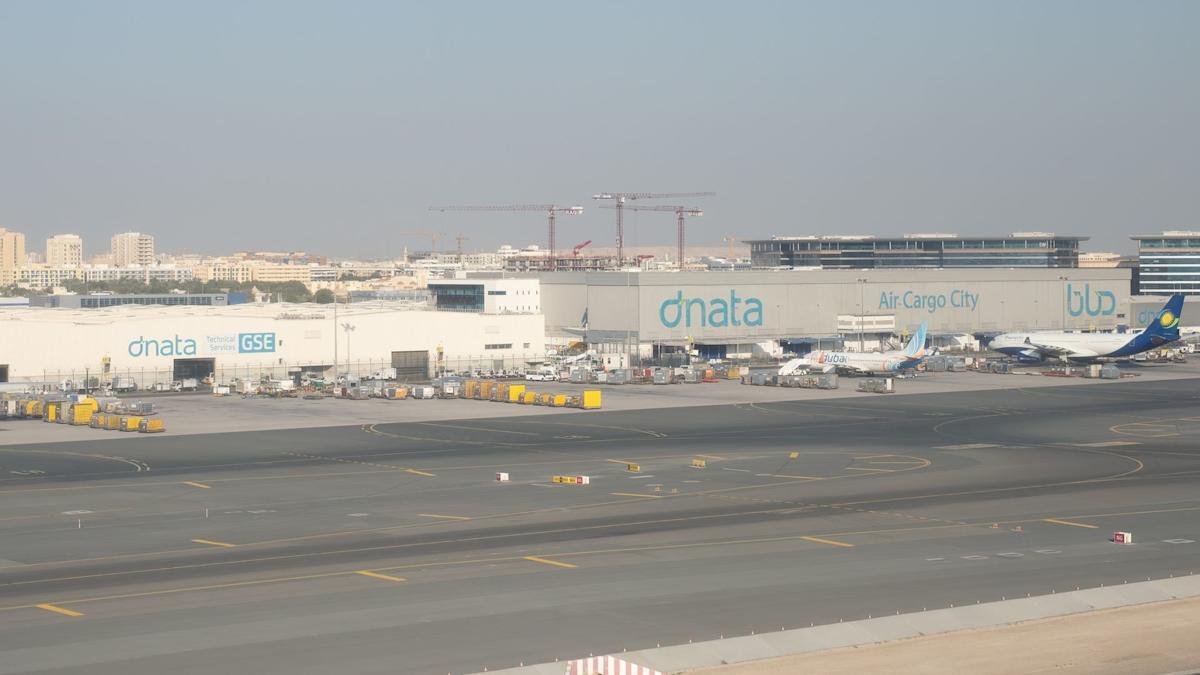
The deepest operational shock was felt around the Gulf, where drone-related disruption — including the temporary suspension of commercial flight operations at Dubai International Airport on 7 March — heavily affected both traffic and capacity. Although flights later resumed, operations remained below normal levels.

ADVERTISEMENT

Outbound cargo volumes from the Gulf plunged 62% week on week, while capacity dropped 70%. Inbound chargeable weight fell 47%. Traffic from Dubai to the United States and Europe declined 82% and 38% respectively.

Airlines and forwarders have tried to cushion the blow by redirecting traffic through alternative gateways such as Saudi Arabia, while also adding charter capacity and expanding trucking operations where possible.

The impact has extended beyond the Gulf itself. Chargeable weight moving from the Gulf region into Asia Pacific fell 59% week on week, alongside a 67% reduction in capacity, while flows in the opposite direction declined 47%. South Asia has also been hit hard. Cargo volumes from India, Bangladesh and Sri Lanka to Europe dropped 24%, 42% and 45% respectively, while shipments to the United States fell 13%, 32% and 50%.

Asia–Europe flows begin to shift

As transit capacity through the Middle East shrank, airlines increased direct lift between Asia and Europe. Capacity from Asia Pacific to Europe rose 20%, while direct lift from South Asia to Europe increased 13%. The return direction also expanded, with capacity up 26% from Europe to Asia Pacific and 18% to South Asia. Much of that increase came from added direct freighter services.

Tonnage from Asia Pacific to Europe rose 4% week on week, led by a 17% increase from Vietnam and 14% growth from China, helped by post-Lunar New Year factory recovery. Taiwan was the only other origin to record growth, rising 4%, while most other Asian origins softened.

Cargo volumes from Asia Pacific to North America also increased, rising 13% week on week. The biggest gains came from China/Hong Kong (+31%), Vietnam (+25%) and Singapore (+7%). However, the year-on-year comparison remains weaker, with Asia Pacific to North America down 4% overall, including 15% lower from China and 22% lower from Hong Kong. Analysts note that comparisons are distorted by the later post-Lunar New Year rebound this year, combined with heavy front-loading of US imports a year ago.

It remains unclear whether the recent US Supreme Court ruling on tariffs could trigger another short-term surge in exports from China and Vietnam, although most market observers currently expect only a limited effect.

Africa-Europe also under pressure

The rerouting effect has been much more visible between Asia and Europe than between Africa and Europe, where Gulf carriers typically play a central role. That imbalance helps explain much of the 23% weekly fall in African export tonnage, with nearly half of the decline linked to the disrupted Africa–Europe corridor, especially from East Africa, where volumes fell 23%.

Rates accelerate upward

With a large portion of Middle Eastern transit capacity temporarily removed from the market, pricing has moved quickly.

WorldACD said the average global airfreight rate rose 6% week on week to $2.40 per kilogram, up 3% year on year. Global spot rates jumped 10% week on week and were 13% higher than a year earlier, while average contract rates increased 3% week on week but remained 2% below last year’s level.

Central and South America was the only origin region to record a decline in weekly pricing, slipping 7%. Rates from North America, Africa, Europe and Asia Pacific all increased by single digits. But the sharpest move came from MESA, where average pricing surged 28% week on week, reaching 20% above year-ago levels.

The biggest jump was on MESA–Europe lanes, where rates climbed 57% week on week. Country-level increases included Sri Lanka (+93%), the UAE (+77%), India (+50%) and Bangladesh (+41%). Compared with a year ago, rates on those lanes were up between 21% and 89% depending on origin.

Rates from MESA to the US also rose sharply, increasing 22% week on week and sitting 17% above last year’s level. The UAE recorded the strongest weekly jump at 59%, followed by India at 24%.

The reduced transit role of the Middle East is now also showing up in pricing from Asia Pacific to Europe. Spot rates on those lanes climbed 10% week on week, reversing the 1% decline recorded the previous week. With the exception of Hong Kong (-1%), all major Asian origins recorded increases, with the strongest gains seen from Vietnam (+42%), Indonesia (+36%) and Singapore (+31%).

On the Asia Pacific to US corridor, spot rates rose just 1% week on week, but remained 6% lower year on year. Hong Kong and Singapore saw the strongest increases at 16% and 15% respectively, likely helped by the rerouting of South Asian exports across Pacific lanes. By contrast, Malaysia (-5%) and Korea (-2%) were the only origins in the region to record declines.

Outlook

The direction of the market now depends heavily on how long the conflict lasts.

Unless the US–Israeli war with Iran ends quickly, the upward pressure on air cargo pricing is likely to persist, even if Middle Eastern airline operations begin to recover gradually. Passenger carriers have already started raising fares in response to a 58% week-on-week increase in jet fuel prices, while rising war-risk insurance premiums are expected to add further cost across the air cargo market.

For shippers, forwarders and airlines alike, the market is becoming more expensive, less predictable and increasingly shaped by geopolitics rather than normal seasonal demand.


Previous Post

Hong Kong forwarders warn fuel surcharge hikes could destabilise logistics market

Next Post

Oman Air Cargo introduces fuel and war risk surcharges as Middle East conflict deepens

Next Post
Oman Air Cargo introduces fuel and war risk surcharges as Middle East conflict deepens

Oman Air Cargo introduces fuel and war risk surcharges as Middle East conflict deepens

Leave a Reply Cancel reply

Your email address will not be published. Required fields are marked *

A D V E R T I S E M E N T

Popular News

  • Drone Delivery Takes Flight: Amazon Partners with UPS for Trial Program

    Drone Delivery Takes Flight: Amazon Partners with UPS for Trial Program

    0 shares
    Share 0 Tweet 0
  • Rail Cargo Group Strengthens European Network with Captrain Netherlands Acquisition

    0 shares
    Share 0 Tweet 0
  • Automotive Inbound Logistics Market: Navigating Future Challenges

    0 shares
    Share 0 Tweet 0
  • Global Inflation Cools to Target After Three Years, Central Banks Face Policy Dilemma

    0 shares
    Share 0 Tweet 0
  • Dubai Mercantile Exchange Rebrands as Gulf Mercantile Exchange Following Saudi Tadawul Group Acquisition

    0 shares
    Share 0 Tweet 0

Recent News

Oman Air Cargo introduces fuel and war risk surcharges as Middle East conflict deepens

Oman Air Cargo introduces fuel and war risk surcharges as Middle East conflict deepens

March 16, 2026
Airfreight rates climb as Iran war disruptions cut capacity and reroute traffic

Airfreight rates climb as Iran war disruptions cut capacity and reroute traffic

March 16, 2026
Hong Kong forwarders warn fuel surcharge hikes could destabilise logistics market

Hong Kong forwarders warn fuel surcharge hikes could destabilise logistics market

March 16, 2026

Discover a new era of logistics reporting with The Logistic News, your go-to platform for breaking news, insightful features, and exclusive interviews shaping the global logistics and freight landscape. Trust us to deliver accurate, timely, and relevant information that empowers professionals and enthusiasts alike in navigating the intricacies of this vital sector.

Navigation

  • Home
  • About Us
  • Press Room
  • Podcasts
  • Media Kit
  • Contact Us
  • Careers
  • Privacy Policy
  • Terms of Use

© 2024 - thelogisticnews.com

Welcome Back!

Login to your account below

Forgotten Password? Sign Up

Create New Account!

Fill the forms below to register

All fields are required. Log In

Retrieve your password

Please enter your username or email address to reset your password.

Log In

SIgn Up Newsletter

This will close in 20 seconds

Manage Cookie Consent
We use technologies like cookies to store and/or access device information. We do this to improve browsing experience and to show (non-) personalized ads. Consenting to these technologies will allow us to process data such as browsing behavior or unique IDs on this site. Not consenting or withdrawing consent, may adversely affect certain features and functions.
Functional Always active
The technical storage or access is strictly necessary for the legitimate purpose of enabling the use of a specific service explicitly requested by the subscriber or user, or for the sole purpose of carrying out the transmission of a communication over an electronic communications network.
Preferences
The technical storage or access is necessary for the legitimate purpose of storing preferences that are not requested by the subscriber or user.
Statistics
The technical storage or access that is used exclusively for statistical purposes. The technical storage or access that is used exclusively for anonymous statistical purposes. Without a subpoena, voluntary compliance on the part of your Internet Service Provider, or additional records from a third party, information stored or retrieved for this purpose alone cannot usually be used to identify you.
Marketing
The technical storage or access is required to create user profiles to send advertising, or to track the user on a website or across several websites for similar marketing purposes.
Manage options Manage services Manage {vendor_count} vendors Read more about these purposes
View preferences
{title} {title} {title}
No Result
View All Result
  • Logistic
  • Air
  • Maritime
  • Land
  • World
  • Business
  • Tech
  • Events
  • Advertise

© 2024 - thelogisticnews.com