



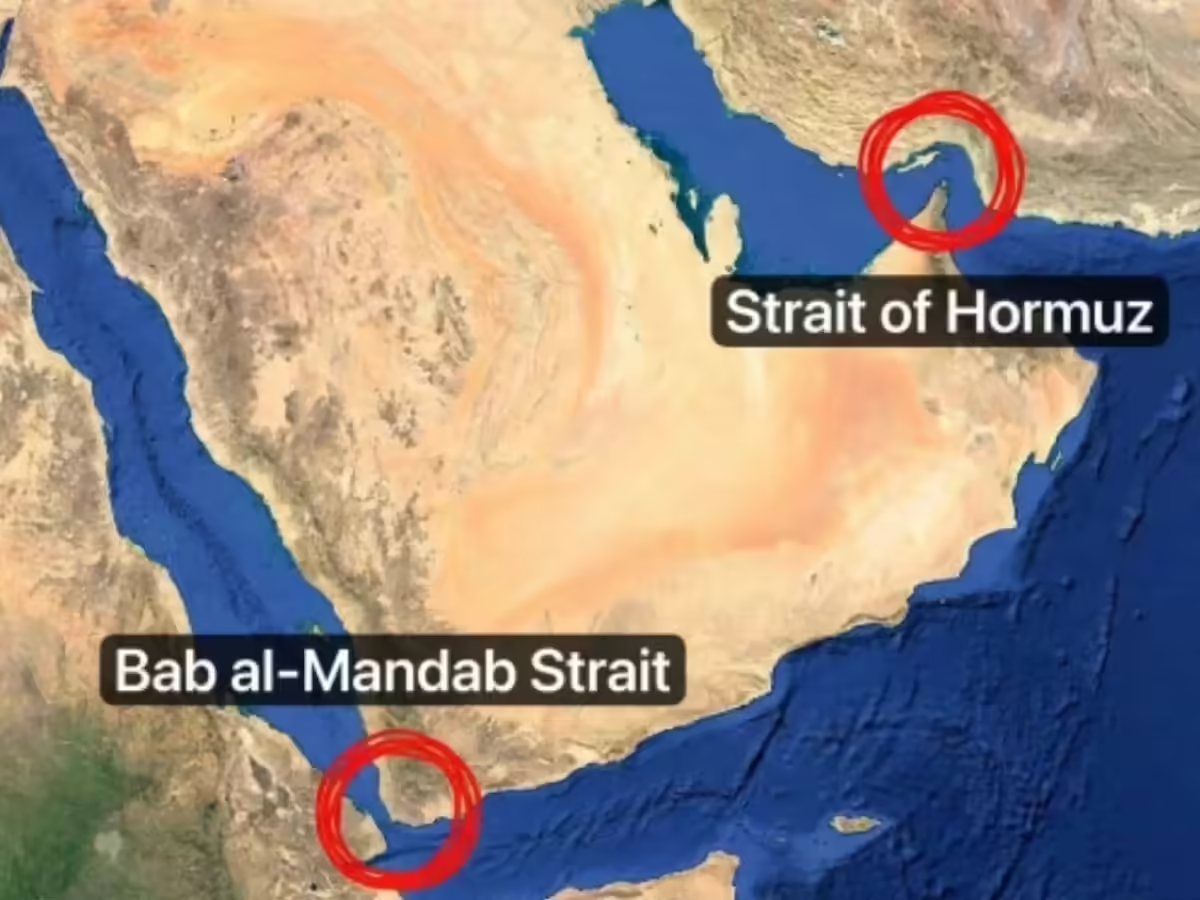
A possible Houthi blockade of the Bab al-Mandeb Strait is emerging as a fresh threat to global seaborne trade, following renewed attacks over the weekend and growing concern over security in the Red Sea.
Together with the Strait of Hormuz, Bab al-Mandeb is one of the most strategically important waterways for world trade. The 18-mile-wide passage links the Red Sea to the Gulf of Aden and is a critical route for dry bulk, tanker, gas, chemical and container traffic moving between Asia and Europe via the Suez Canal.
The stakes have risen further because tanker traffic out of the Arabian Gulf has already fallen sharply, while export infrastructure elsewhere in the region has suffered damage. That has increased the importance of Saudi Arabia’s Red Sea port of Yanbu, now a vital outlet for crude oil and petroleum product exports.
But Yanbu itself is also exposed. The port, connected to Saudi Arabia’s East-West pipeline, is now part of a route considered increasingly vulnerable to drone and missile attacks. The pipeline is said to be running at its full capacity of seven million barrels a day, but if Houthi threats make Red Sea transits too risky, that route too could come under severe pressure.
Such a development would put additional strain on the global energy supply chain and could drive already elevated prices higher.
Container shipping has already adjusted. Earlier this year, major carriers including CMA CGM, Hapag-Lloyd and Maersk rerouted vessels around the Cape of Good Hope. That diversion adds at least 3,500 nautical miles to a container voyage, typically extending transit times by 8 to 12 days and requiring hundreds of tonnes of extra bunker fuel. For slower dry bulk and tanker trades, voyages can stretch by 15 to 20 additional days.
A full disruption at Bab al-Mandeb would therefore not just affect one region. It would hit fuel markets, transit times, vessel deployment and the wider cost base of global trade.