




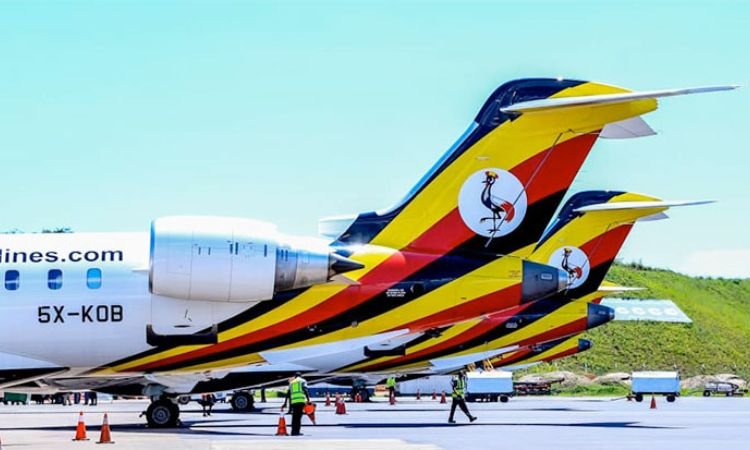
Uganda is injecting fresh capital into its aviation ambitions, committing UGX 422 billion, or roughly US$113 million, to support the expansion of Uganda Airlines with 10 additional aircraft.
The move is one of the largest state-backed investments in the carrier since its relaunch in 2019 and forms part of a broader plan to strengthen long-haul services, improve the role of Entebbe International Airport as a regional hub, and reduce dependence on foreign airlines for intercontinental connectivity.
Tourism is central to the strategy. Uganda is betting that stronger direct air links will improve access for visitors travelling from Europe, Asia and other long-haul markets, while also creating wider economic gains for hotels, tour operators and other businesses linked to inbound travel.
The airline’s growth plan is also intended to raise Entebbe’s profile as a more competitive transfer hub. By broadening both its long-haul and feeder network, Uganda Airlines hopes to capture a greater share of transit traffic and retain more aviation value within the country rather than routing it through foreign hubs.
That ambition has taken on greater urgency as geopolitical tensions continue to affect Middle Eastern aviation corridors. For years, airlines such as Emirates, Qatar Airways and Etihad have dominated long-haul connectivity between Africa and Europe, Asia and North America. Disruption in those corridors has exposed the vulnerability of relying too heavily on Gulf transit hubs.
For Uganda, that creates both a challenge and an opening. In the short term, connectivity is more fragile. In the longer term, the situation gives added justification for building independent long-haul capacity. The expectation is that Uganda Airlines will build around its current widebody platform, including the Airbus A330-800, while also expanding regional services to support hub traffic.
The plan reflects a broader pattern seen elsewhere on the continent. Ethiopian Airlines continues to reinforce Addis Ababa, while other African carriers such as Air Tanzania and Air Seychelles have also been adjusting their international strategies in an effort to gain more control over long-haul links historically dominated by non-African hubs.
Uganda’s push is not without risk. Fleet growth and new routes demand sustained traffic, disciplined cost control and the ability to compete against larger, better-established carriers. Even so, the government appears to be prioritising the wider economic upside, including tourism growth, stronger trade links and greater domestic value capture, over the short-term profitability of the airline itself.