




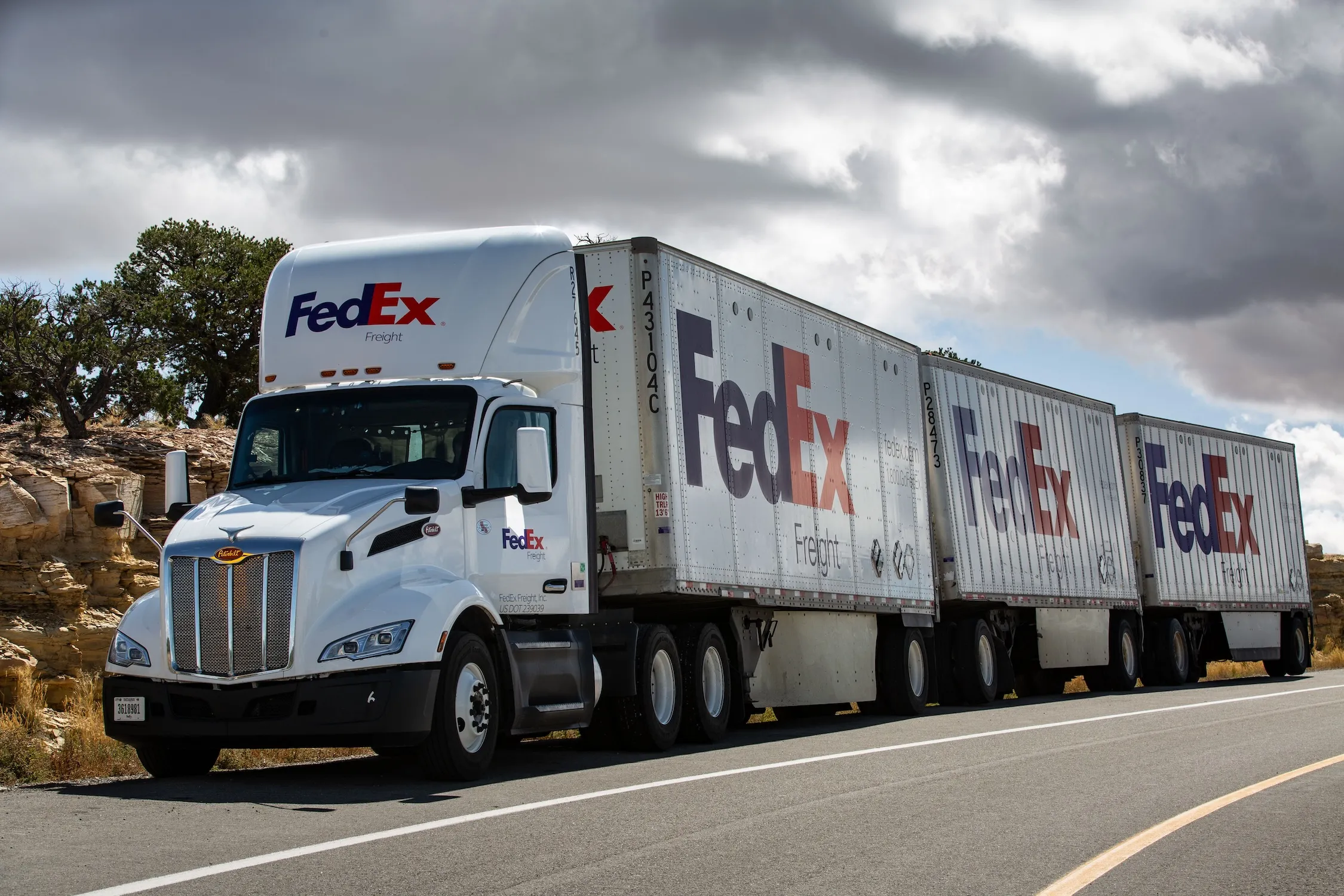
FedEx Freight has set out its strategic and financial roadmap ahead of its planned separation from FedEx Corp., scheduled for June 1, positioning the business for a more focused commercial approach and enhanced shareholder value as a standalone entity.
Speaking at an investor day in New York, the management team detailed medium-term ambitions that point to steady growth and improved profitability. The carrier expects annual revenue growth between 4% and 6%, alongside adjusted operating income growth of 10% to 12%. Based on a fiscal 2026 baseline of $8.7bn in revenue and $1.1bn in adjusted operating income — excluding $500m in estimated spinoff costs — the projections suggest incremental margins in the high-20% range.
Growth is expected to be driven by both pricing and volume expansion, with a clear emphasis on yield improvement. Combined with ongoing cost reductions, this is expected to deliver a 300 basis point increase in operating margin, lifting it from around 12% today to approximately 15% over the medium term. In the near term, however, margins are expected to face a temporary 50 basis point headwind linked to separation costs and the unwinding of existing service agreements.
Looking further ahead, management signalled additional upside potential. Direct support costs are expected to decline from around 70% of gross profit today to 60% in the medium term, with a long-term objective of generating $0.50 in operating income for every $1 of gross profit.
On the commercial front, FedEx Freight has already completed the build-out of its dedicated LTL sales force, now exceeding 500 representatives. The company is targeting small and mid-sized shippers — typically higher-margin accounts — while also focusing on key verticals including healthcare, grocery and energy, particularly data centre-related logistics.
As part of its repositioning, the carrier is modernising its pricing structure. It has already unwound 99% of bundled pricing agreements that previously linked parcel and freight services, while committing to honour existing contracts until expiry to maintain customer stability.
Incoming president and CEO John Smith said the company is leveraging its scale, reliability and transit-time performance to deliver a more differentiated LTL service offering. He added that FedEx Freight is entering this next phase from a position of strength, with renewed flexibility to accelerate growth and build on its competitive advantages.
Operationally, the company continues to invest in efficiency and technology. Over the past five years, it has reduced linehaul miles by 5% through optimisation initiatives, while improving cube utilisation by 12% in the past year alone. Fleet modernisation has also lowered the average tractor age from 5.6 to 4.5 years since 2023, contributing to a 3% gain in fuel efficiency. Looking ahead, technology upgrades are expected to cut manual touchpoints by 60%.
Capacity remains a key advantage. With approximately 30% available capacity across its network, FedEx Freight is well positioned to absorb new business without significant additional investment.
Capital expenditure is expected to remain disciplined at around 5% of revenue. Current allocations include 45% for equipment, 25% for facilities, 25% for technology and 5% for other investments. The company also indicated it will gradually shift from a lease-heavy terminal footprint toward ownership in key markets.
Financially, the carrier expects to generate more than $1bn in annual free cash flow, implying a conversion rate above 90%. At separation, it will carry $4.3bn in debt but aims to reduce leverage to 2.5x within 12 months while maintaining an investment-grade profile.
FedEx Freight’s evolution has been shaped over decades, beginning with the acquisition of Viking Freight in 1998, followed by American Freightways in 2001 and Watkins Motor Lines in 2006. In 2011, these operations were integrated into a unified network offering both priority and economy services.
Today, the company operates as the largest LTL carrier in the United States, with 40,000 employees, 365 terminals, 30,000 vehicles and approximately $9bn in annual revenue. Priority services account for 64% of revenue, with economy services contributing 32% and Custom Critical solutions around 3%.
Its customer base includes 140,000 clients, with the top 25 representing 17% of revenue. Notably, 90% of revenue comes from customers with relationships spanning more than a decade. Industrial sectors dominate, followed by transportation and logistics providers and consumer markets.
Once separated, FedEx Freight will trade on the New York Stock Exchange under the ticker FDXF.