



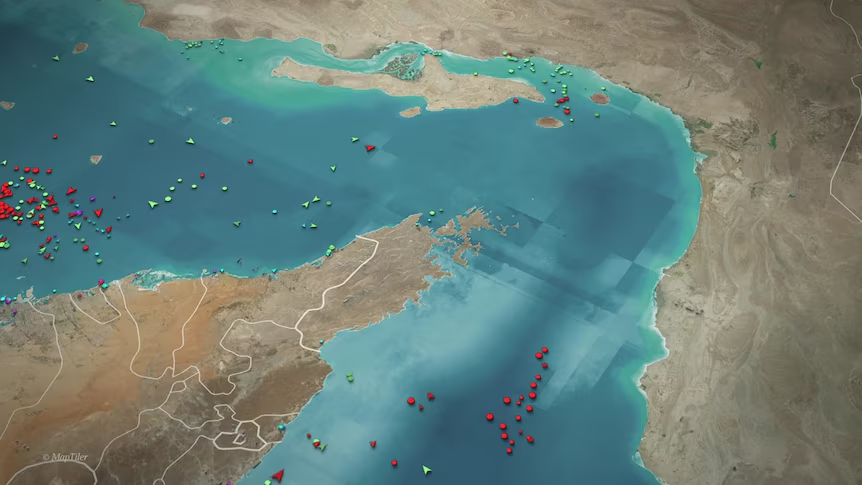
Hopes that the US-Iran ceasefire would quickly restore normal vessel traffic through the Strait of Hormuz have not materialised, with commercial shipping still moving only in very limited numbers more than 24 hours after the agreement was announced.
According to Seatrade Maritime News, the ceasefire declared by US President Donald Trump was said to be conditional on the reopening of the Strait, but AIS tracking data from Pole Star Global showed that only a small number of transits had taken place after the truce came into force. Most of the vessels that did pass through had reportedly called at Iranian ports.
Traffic levels appear to have fallen compared with a few days earlier. Windward recorded 20 transits through the Strait in the 24-hour period on 5 April, the highest level since the conflict began on 28 February. Those movements were said to involve vessels approved by Iran, either through payments under what has been referred to as the “Tehran Tollbooth” or via governments, mainly in Asia, that had negotiated safe passage with Tehran.
Rather than a return to freedom of navigation, shipowners and operators are facing a highly confusing operating picture. Iran has said it still controls passage through the Strait and will continue charging a toll. There have also been reports of VHF Channel 16 radio warnings threatening vessels with destruction if they attempt to transit without Iranian approval.
There are also ongoing concerns about whether the ceasefire will hold. Israel’s continued attacks on Lebanon have raised fresh doubts, despite mediator Pakistan reportedly saying Lebanon was included in the ceasefire terms.
Iran’s FARS news agency reported on Wednesday afternoon that tanker traffic had again been halted after Israel struck Lebanon in what Iran described as a violation of the temporary ceasefire. Earlier the same day, Iran had reportedly authorised two tankers to transit the Strait.
Iran’s Ports and Maritime Organisation has instructed vessels intending to pass through Hormuz to coordinate with Iranian naval forces. It has also designated alternative routing north of Larak Island for inbound traffic and south of the island for vessels departing the Gulf. The traditional southern route through the Strait has been described by the Iranian authorities as hazardous and restricted to all traffic, although it remains unclear whether the area is actually mined.
AXSMarine estimated that around 959 vessels were positioned west of the Strait of Hormuz inside the Gulf, down from a peak of 1,016, but still representing what it described as a significant backlog.