



March delivered one of the most dramatic tanker markets seen in recent shipping history, according to Mette Frederiksen, head of research and insight at Tankers International.
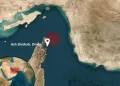
The escalation of Middle East tensions culminated in what many in the industry had long considered a worst-case scenario: the effective closure of the Strait of Hormuz. That shock sent the TD3C benchmark to unprecedented levels. At one point in mid-March, the route surged beyond Worldscale 600, equivalent to earnings of more than $600,000 per day.
Even so, Frederiksen cautioned that the spike needs to be interpreted carefully. Much of the move reflected limited genuine market activity, inflated war-risk premiums and fixtures that were either not repeatable or later failed. In many cases, what was reported as freight was as much about risk pricing as underlying transport economics. Still, activity outside the Arabian Gulf, where real fixtures did take place, confirmed that the tanker market was trading at levels never previously experienced.
Within the Arabian Gulf itself, activity became extremely constrained. Many March cargoes were delayed or cancelled as vessels either refused or were unable to pass through Hormuz. That pushed more attention toward alternative export points such as Fujairah and Mina Al Fahal, though both remained within a broader high-risk operating environment.
Saudi Arabia responded by maximising flows through its East-West pipeline to redirect crude to Yanbu on the Red Sea. Tankers International said this shift is clearly visible in loading data. Red Sea loadings rose from a normal monthly average of around 17 compliant liftings to 50 in March, with more than 40 already booked for April. While this route has provided a partial outlet for supply, the market remains exposed to transit risks linked to Houthi activity near Bab el-Mandeb. The market has effectively split into two camps: owners willing to participate in high-risk regional loadings and those staying away from the area altogether.
In the Atlantic Basin, the early part of the month was more mixed. West Africa started softer as more vessels ballasted from the East in search of safer employment, but underlying demand remained firm thanks to Asian refiners looking for alternative crude sources. Brazil followed a similar pattern. Increased vessel availability weighed on sentiment at first, but as tonnage adjusted, the country emerged as a key alternative supply route. Although short-term volatility persists, the Atlantic is becoming increasingly important in compensating for disrupted Middle Eastern flows.
The US Gulf also became one of the busiest regions during the month. While March began with fixture failures and operational uncertainty, activity accelerated sharply by mid-month across all crude tanker segments. Freight for VLCC voyages from the US Gulf to the Far East climbed by more than $6 million in a matter of days, reaching the mid-$20 million range and, in some cases, as high as $29 million.
Much of this fixing was for April cargoes. At present, 40 VLCC liftings are booked out of the US Gulf for April, against a baseline average of 27 per month. At the same time, governments also began responding to the wider supply disruption. The International Energy Agency announced the release of around 400 million barrels from strategic reserves, while the US temporarily waived sanctions on Russian oil already in transit until 11 April in an attempt to stabilise flows.
Another notable development has been the return of Venezuelan crude to more conventional trade channels. After several years dominated by sanctioned trade, March and April recorded seven and six compliant VLCC liftings respectively, pointing to increasing activity outside the traditional Gulf export system.
Looking ahead, Tankers International said some of these developments may ease supply concerns, but the immediate reality remains one of extreme volatility, operational disruption and heightened counterparty risk. With trade flows shifting, tonnage dislocated and risk premiums deeply embedded in pricing, the tanker market remains highly reactive. March, the company argued, is likely to be remembered as a defining month for the sector.