



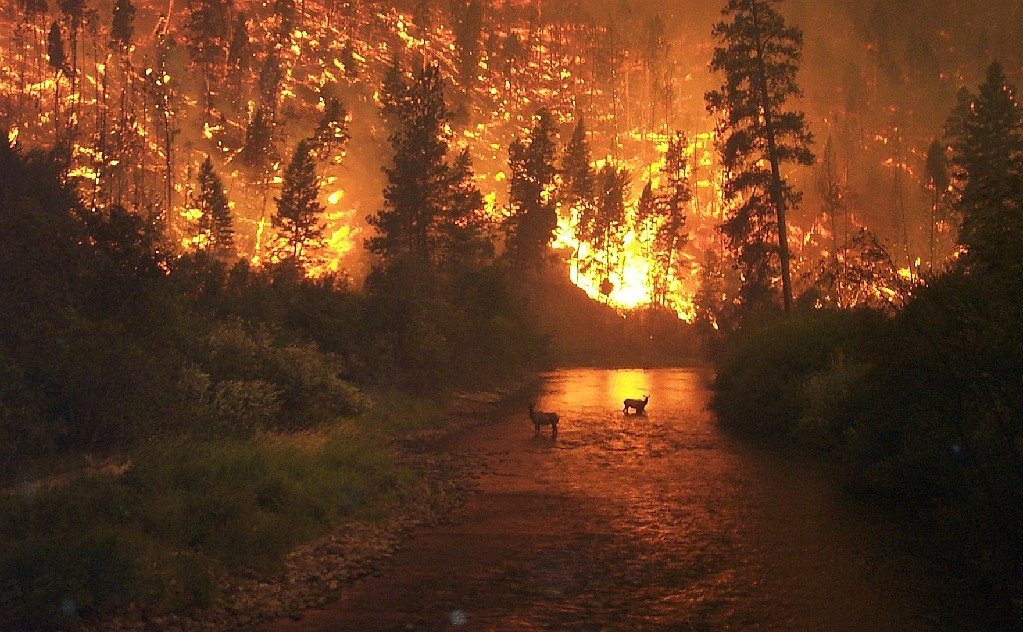
Wildfires continue to affect multiple regions across Canada, with emergency crews battling dozens of major blazes while thousands of residents remain displaced. Smoke from the fires has also significantly reduced air quality across large parts of Canada and drifted into several major U.S. cities.
Ontario
Northern Ontario remains one of the hardest-hit regions, particularly in the northwest, where dozens of wildfires continue to burn.
One of the most devastating incidents has been the destruction of Namaygoosisagagun First Nation, also known as Collins First Nation, located north of Thunder Bay, after flames swept through the community.
Officials report 136 active wildfires in northwestern Ontario, including 63 that remain out of control. Another 44 active fires are burning in northeastern Ontario.
In response to the worsening situation, both the Ontario government and the Assembly of First Nations have called on the federal government to provide immediate assistance.
British Columbia
In British Columbia, firefighters worked overnight to contain a rapidly spreading wildfire near the community of Pemberton, north of Whistler.
Strong winds complicated firefighting efforts, prompting evacuation alerts and evacuation orders in surrounding areas. Authorities said that, for the time being, no buildings were considered to be under immediate threat.
Elsewhere in the province, wildfires near Boston Bar in British Columbia’s southern Interior led officials to issue additional evacuation orders on Thursday, including for residents living within the townsite.
Nova Scotia
In Nova Scotia, authorities ordered the evacuation of up to 150 residents from a rural area northeast of Halifax as an out-of-control wildfire continued to expand.
The mandatory evacuation covers part of Mooseland Road, extending south toward Highway 7.
The wildfire, estimated to cover approximately three square kilometres, has been burning since Wednesday as firefighters continue suppression efforts.
Air Quality Deteriorates
Smoke from the ongoing wildfires has led Environment Canada to issue air quality warnings across a large portion of the country, including southern Ontario, where millions of residents are experiencing hazardous air conditions caused by dense wildfire smoke.
The smoke has also crossed the border into the United States, affecting major metropolitan areas such as New York, Chicago and Detroit.
As the smoke continues to drift across North America, the worsening air quality has drawn the ire of some U.S. lawmakers, who are slamming Canada’s forest management practices.