



The era when elegant software alone could define a defensible logistics business is coming to an end, according to John Loser, co-founder and general partner at early-stage venture firm Floating Point Capital.
Speaking about the rise of so-called “vibe coding” and AI-enabled product development, Loser said the real opportunity in FreightTech is no longer just building better software. It is redesigning old industries from the ground up using technology-native business models that make operations faster, stronger and more scalable.
Floating Point Capital focuses on what it calls full-stack businesses in legacy industries such as healthcare, financial services and trucking. Roughly one-third of its portfolio is tied to logistics. The firm launched its first fund in early 2021 and has concentrated on backing founders who combine operational ambition with new technology economics.
Loser brings a founder’s perspective to the investment thesis. Before launching the fund, he helped build Oscar Health from inception through its IPO and also worked at Bridgewater Associates. That experience shaped his view that the most valuable companies are often those that rethink how an industry functions, rather than simply digitising the old model.
He said the venture market has changed sharply since 2021. After the collapse of enthusiasm around crypto, NFTs and the metaverse in 2023 and 2024, investors have become more focused on companies with credible business models and practical real-world applications. In that environment, Floating Point is not competing to fund giant foundational AI companies. Instead, it is targeting startups that use rapid advances in technology to unlock entirely new economic models inside old sectors.
That shift also redefines what creates a durable competitive advantage. In Loser’s view, AI tools and vibe coding have made it much easier to build software quickly, which means the moat now lies elsewhere: in assets, workflows, regulatory complexity, customer integration and execution.
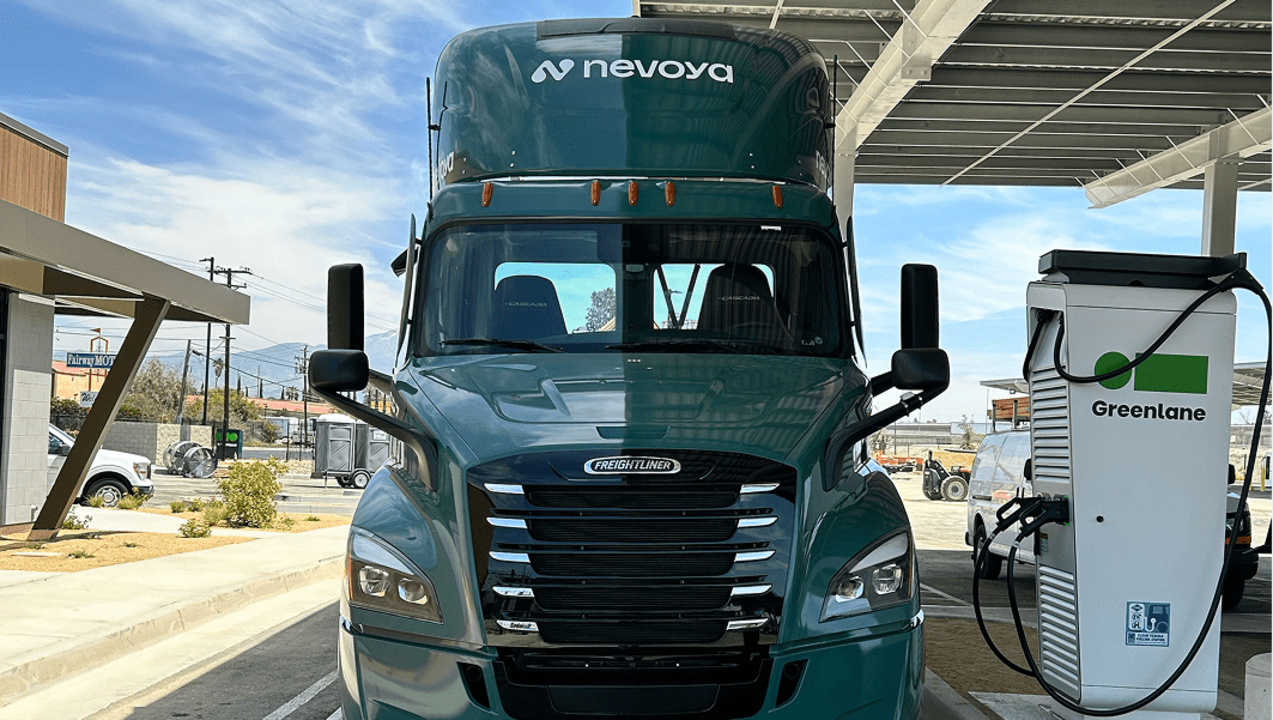
One example is Nevoya, a trucking company built around electric vehicle operations. Loser said EV trucking changes the economics of freight by moving from a variable fuel-cost model toward a more fixed asset-utilisation model. In that environment, the challenge becomes maximising the use of expensive trucks such as Tesla Semis, potentially by operating them nearly around the clock, rather than allowing them to sit idle overnight. The result, he said, is a path to lower per-mile costs without depending on a green premium.
Another example is Catena, which Loser described as a telematics infrastructure layer for trucking. He said a similar project might once have required a massive team and years of development, whereas today a small group of highly capable builders can produce the same outcome in weeks.
He also pointed to Ledgebrook, an insurance company that used autonomous AI agents to scale underwriting in specialty insurance and grow from zero to more than $100m in annual recurring revenue within two years.
Loser believes incumbents will struggle to move with similar speed because their structures are built to optimise existing systems rather than replace them. Large public companies may use AI to improve sales or operations incrementally, he said, but are far less likely to fundamentally dismantle and rebuild the functions those systems support.
That creates room for startups willing to ask bigger questions — not simply what can be automated, but what entirely new business can be created when technology changes the rules of an industry.