Tech Nov 17, 2026
Air Cargo Customer Service Is Shifting from Reactive Support to AI-Powered Prevention
In the e-commerce air freight market, the most successful carriers are increasingly judged by their ability to anticipate disruptions, resolve problems before they escalate and keep customers informed without waiting for them to make contact.
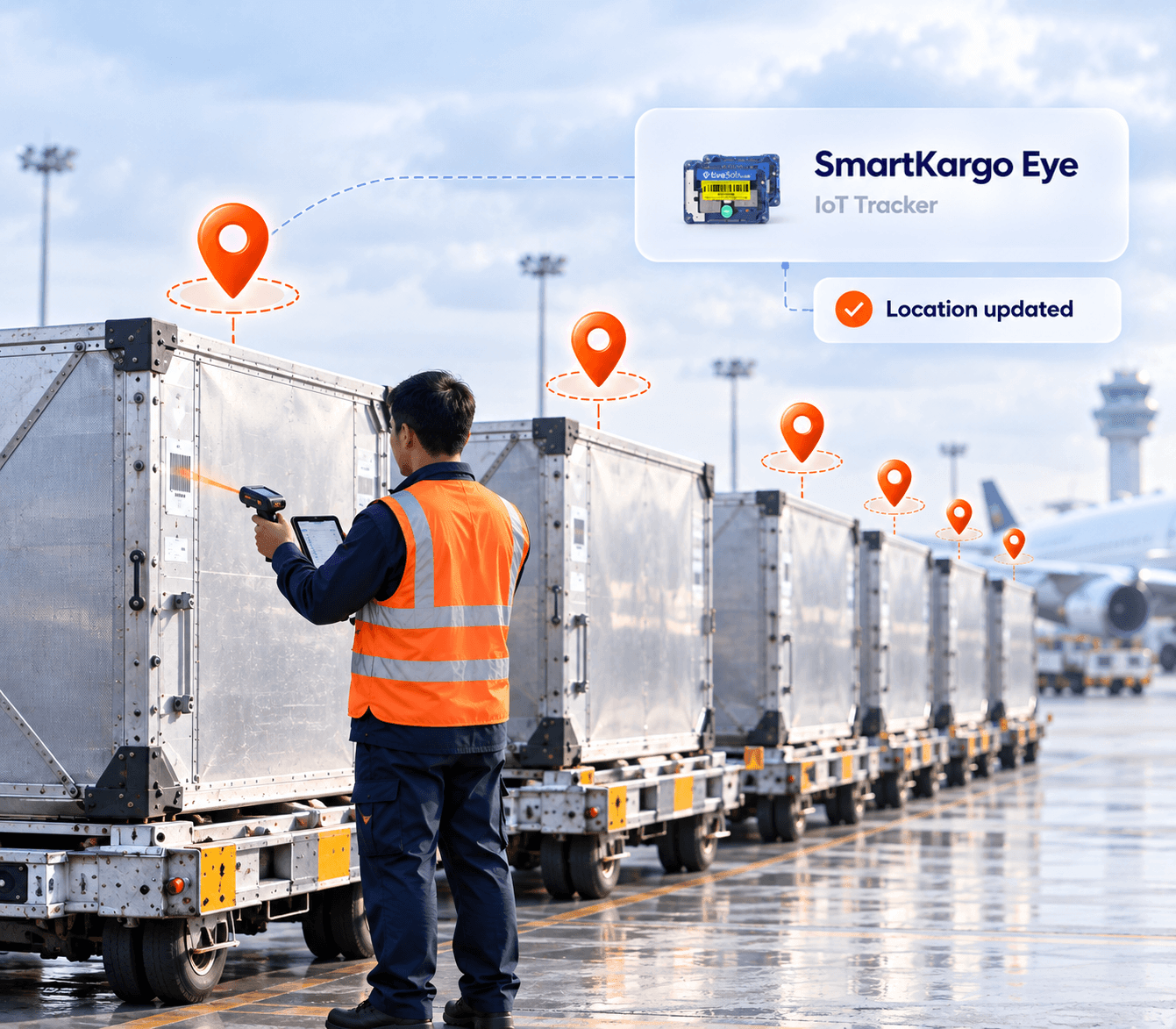
The clock reads 9:40 p.m. at a regional air-cargo hub. An inbound flight is delayed, threatening onward connections for LD-3 containers to three different cities. The teams that are in charge of the shipments have not yet detected the disruption. But the retailer will know there is a problem by the next morning, as will the customers waiting for their deliveries.
That’s how many air cargo customer service incidents start. Not with a complaint. Not with a phone call. But with an operational issue that plays out silently, often hours before the effects are known.
Airlines are rethinking their traditional customer service model as e-commerce delivery expectations become tougher. The goal is to prevent problems even before the customer is aware of them, rather than responding quickly to complaints. Artificial intelligence (AI) is emerging as an enabling technology for such a transition.
Going beyond traditional customer support
For decades, air freight customer service has been largely a reactive process. If a shipper sees a consignment has not moved, it calls the airline by telephone or email. The agent then has to look at booking information, flight movements and warehouse handling records to provide an explanation.
Usually by the time the investigation is complete the disruption has occurred. Instead of fixing the original problem, the airline is left dealing with unhappy customers.
This approach was more manageable when air cargo mainly consisted of heavy freight transported on relatively flexible delivery schedules. But the rise of domestic e-commerce has fundamentally changed those expectations. Customers are increasingly demanding next day delivery and retailers are watching transportation performance hour by hour. A missed connection that used to cause a one-day delay can now mean losing a customer.
Airlines also suffer consequences internally. Each question about the location of a shipment takes employees time to look up information and explain a current disruption. This limits the ability of customer service teams to focus on resolving operational issues and preventing further delays.
AI turns shipment visibility into predictive intelligence
It is no longer good enough to know where a shipment is now. Airlines are increasingly having to work out where it is likely to be next and whether its projected journey is likely to present a problem.
The information needed to do this has been around for years. It contains booking records, flight schedules, aircraft load factors, acceptance and handling scans, weather information and historical transit performance.
Today the difference is the ability to continuously analyze these multiple data sources and identify warning signs before an operational failure occurs.
For example, an AI-driven system can identify a highly vulnerable connection on those routes where Friday delays are a recurring problem. It can also identify a handling station that is becoming less effective as volumes increase or a flight that is approaching a weight restriction and may have to offload cargo.
These signals can be read continuously by AI models, without the constraints of human monitoring or shift changes. Rather than having to wait for a customer to call about a missing or delayed shipment, they can see which consignments are at risk while there’s still time to intervene.
But the ability to predict well is dependent on having the right technology infrastructure. SmartKargo is a cloud-native platform that enables end-to-end shipment visibility, tracking consignments from booking to final delivery. This enables AI applications to have a more complete real-time operational picture versus disconnected information residing in legacy systems.
The foundation is visibility, upon which predictive capabilities are built. SmartKargo has built its AINOC solution to address this operational need.
Predicting disruptions before customers notice them
Back at the regional hub at 9:40pm, the difference is obvious when predictive technology is built into the daily operations.
The system identifies 300 parcels with potentially affected onward connections as soon as the inbound flight is delayed. It then considers alternative departures with belly cargo capacity and suggests a rebooking solution. The proposed changes are reviewed and approved by the operations team within minutes.
The retailer has no reason to contact the carrier and so the customer service process starts at the same time.
The retailer gets an update with two shipments rerouted and new arrival times. Original delivery commitments remain in place. There is no need to log a customer inquiry. There is no agent that has to spend an hour trying to reconstruct the path of the shipment.
The disruption may never be noticed by the end user.
Airlines are also employing artificial intelligence to keep passengers informed about these developments. “If we see a potential problem, we can pre-build suggested messages for customer service reps.
For the retailer’s operations team, this could be a detailed email that lists the affected shipments, explains the cause of the disruption, provides updated arrival times and outlines recovery measures already planned.
For the person waiting for a parcel the system can generate a much more compact message with the key information and a new delivery time window.
Hence, the communications are customized to the target audience. Business customers get the operational information they need to manage their supply chains. End consumers get simple updates relevant to their deliveries.
When an operation goes wrong, agents can review, edit and send AI-generated communications in seconds, rather than drafting each message manually.
Confirmed rerouting information and other routine advisories can be disseminated automatically. “More sensitive situations, like a missed delivery commitment for a major customer, still have human supervision.
One way or another, the objective is the same: ensure that customers receive the correct information directly from the airline, preventing confusion from escalating into frustration.
Predictive customer service doesn’t mean you can eliminate every disruption. Some problems can be solved before they impact delivery schedules and some are unavoidable. What changes is the airline’s ability to communicate ahead of time, explain the situation and present a recovery plan.
When customers see that their logistics provider is already taking action and they know in advance, they are more likely to accept a delay.
Human knowledge is still irreplaceable
Artificial intelligence in air cargo customer service doesn’t eliminate the need for experienced employees. They do not take away their time and expertise.
By automating routine monitoring and initial alerts, customer service agents and operations controllers can concentrate on decisions that require human judgment.
For example, which shipment gets the last available cargo capacity on an evening departure, how to manage a high-value customer relationship and recognizing situations that require immediate escalation.
But airlines deploying predictive technologies need to understand their limits.
An AI-generated prediction is a probability, not a certainty. It depends very much on the quality and completeness of the underlying information. That makes accurate end-to-end shipment data all that more important, no matter how sophisticated the algorithms used.
Moreover, identifying a potential disruption is only useful if the operations teams have the authority and resources to respond. Technology can raise a red flag, but it takes people and processes to act on that information.
A different benchmark for air cargo customer service
Traditionally, airline customer service performance has been assessed through response times and the ability of agents to explain delays effectively.
That definition is gradually changing, particularly in the e-commerce segment. Carriers increasingly distinguish themselves through their ability to prevent operational problems from becoming visible to customers in the first place.
It represents a more demanding standard, but also one that reflects what shippers actually expect from their logistics partners.
Retailers are not looking for perfectly worded apologies after a delivery failure. They want consignments to arrive within the promised timeframe and a logistics provider capable of informing them about potential problems before they have to ask for an explanation.
With AI continuously monitoring shipments and identifying operational risks, this approach is moving beyond an ambitious objective. It is becoming an increasingly important requirement for airlines competing in the fast-moving e-commerce air cargo market.
The most effective customer service may ultimately be the one that requires the fewest interventions because the problems that would have triggered them have already been anticipated and addressed.
About SmartKargo
SmartKargo is a cloud-based logistics platform connecting airlines with the e-commerce economy. By automating shipment processes from end to end and transforming passenger flights into cargo revenue opportunities, the company enables airlines to introduce new products within weeks.
Its platform also provides shippers with faster and more reliable delivery solutions than traditional ground transportation networks can offer.
END OF REPORT