



Air cargo demand maintained a strong start to 2026 in February, but the market is entering a more uncertain phase as disruption in the Middle East threatens to drive up costs and tighten capacity on key international routes.
According to the latest figures from Xeneta, global air cargo demand increased by 6% year on year in February, following 7% growth in January. Capacity rose more slowly, up 4% over the same period. With demand once again outpacing supply, the dynamic load factor gained two percentage points to reach 62%.
Spot pricing also moved higher. The average airfreight spot rate rose 5% year on year to $2.58 per kilogram, marking the first monthly increase since May 2025.
Xeneta said the February performance was influenced by the timing of the Lunar New Year in Asia and by the continued depreciation of the US dollar compared with a year earlier. Even so, many market observers still expect growth to moderate over the full year, with consensus forecasts pointing to annual demand growth of around 2% to 3% in 2026.
Trade lane performance was mixed. Spot rates from Europe to North America rose 21% year on year, while Northeast Asia to North America increased 10%, supported by semiconductor demand. Xeneta noted that tariffs weakened air cargo demand from China to the United States, while China-Europe volumes remained relatively stable. Neither corridor, however, experienced the usual pre-holiday rush at the start of the year.
That pattern may offer an early indication of how 2026 could evolve. According to Xeneta, some Asia-based airlines with strong exposure to e-commerce remain positive about the year ahead, while others are adopting a more cautious wait-and-see approach.
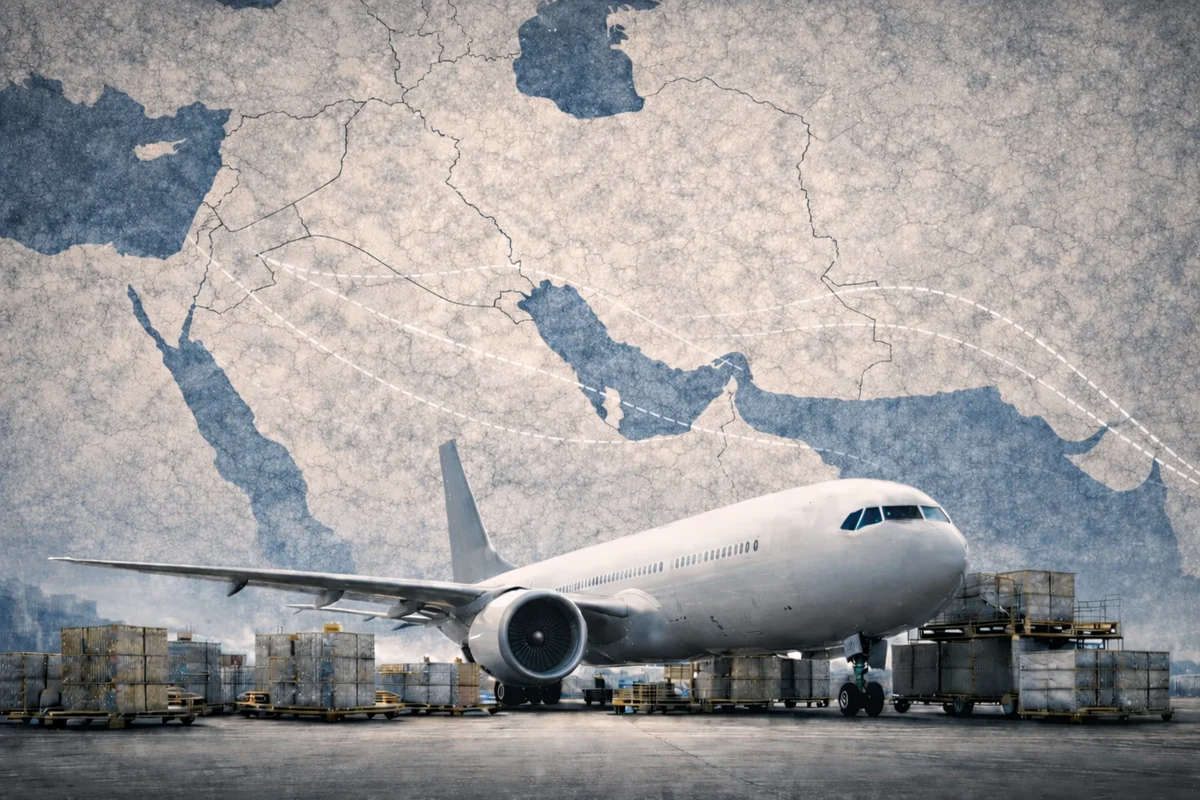
The biggest immediate risk is geopolitical. Xeneta said military strikes involving Iran, the United States and Israel removed 12% of global air cargo capacity from the market. At the same time, major regional hubs such as Doha, Dubai and Abu Dhabi temporarily suspended flight operations amid multiple airspace restrictions, disrupting the Asia-Europe corridor almost immediately.
If the conflict continues, Xeneta warned, rates on affected lanes could double or even triple. The risk is not limited to network disruption alone. Jet fuel prices may also rise further if crude markets continue to strengthen, adding another layer of pressure on airline operating costs.
Xeneta said that if the crisis proves short-lived and flights resume quickly, market conditions should normalise faster and concerns over oil-price escalation may ease. But a disruption lasting several weeks would likely trigger much steeper pricing and broader supply chain stress.
The company also warned that a wider escalation could produce an energy shock and stagflationary pressure reminiscent of the 1970s, with higher oil prices, more expensive logistics and increased strain on retail and trade flows.
In response to the situation, airlines are expected to deploy more direct Asia-Europe services or use technical stops in Central Asia, depending on traffic rights, airspace access and operational feasibility. And with container shipping continuing to divert around southern Africa to avoid the Middle East, air cargo could see an additional boost once operations stabilise and carriers resume more normal schedules.
Niall van de Wouw, Xeneta’s chief airfreight officer, said February on its own would have suggested a promising start to the year. But the market is now facing much bigger challenges. He said the airfreight sector has repeatedly shown its ability to find solutions during major disruption, though those solutions inevitably come with higher logistics costs for cargo owners. In the weeks ahead, he said, the industry’s resilience and vulnerability are likely to be on display once again.