




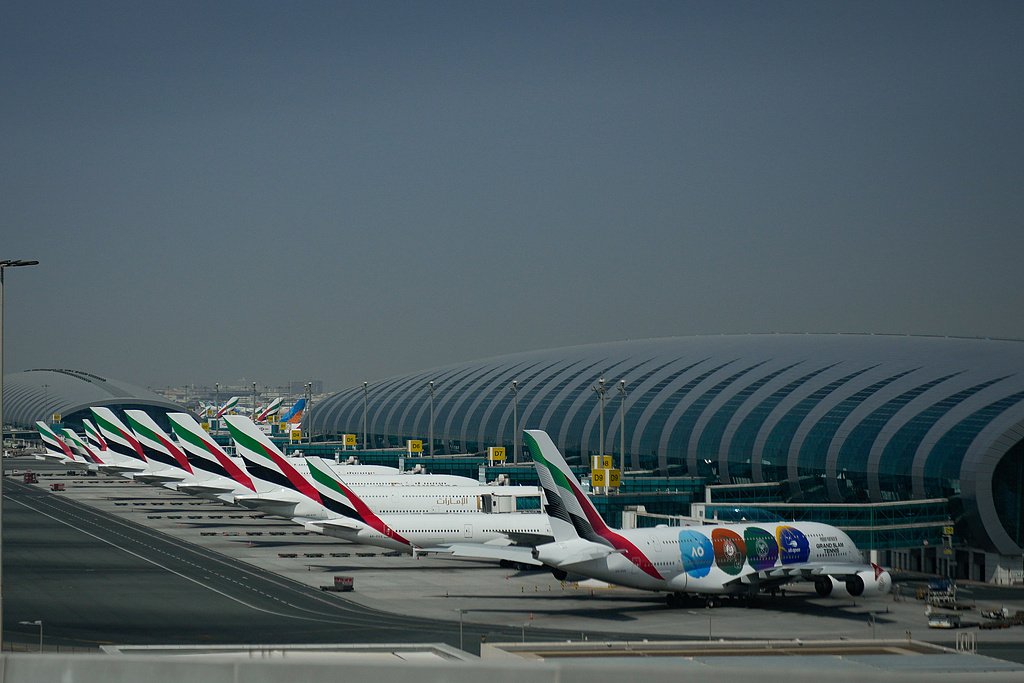
Air cargo networks across the Middle East have been severely disrupted following the rapid escalation of military tensions in the region, prompting major airlines to suspend operations and triggering a sharp decline in global capacity.
Several leading Gulf carriers — including Qatar Airways Cargo, Emirates SkyCargo and Etihad Cargo — announced temporary suspensions of flights as national airspace closures took effect.
Qatar Airways confirmed that cargo operations were halted due to the closure of Qatari airspace and stated that services would resume once the Civil Aviation Authority declared conditions safe. Emirates suspended flights until at least 1500 UAE time on 3 March, while temporarily restricting new cargo bookings for 24 hours. Etihad similarly halted all flights to and from Abu Dhabi pending further updates.
The disruption has not been limited to regional carriers. Lufthansa Cargo suspended flights to multiple Middle Eastern destinations including Tel Aviv, Beirut, Amman, Erbil, Dammam and Tehran through 8 March. IAG Cargo also placed several routes on hold, including services between London and key Gulf hubs.
Data analytics firm Rotate reported that global air cargo capacity fell by 18% within 24 hours compared to the previous week, reflecting both suspended services and rerouted aircraft. According to Tim van Leeuwen, vice president and head of consulting at Rotate, the decline was driven by three primary factors: Gulf carriers grounding flights, international operators suspending services to the region, and freighter aircraft rerouting via alternative technical stops — often with reduced payloads.
In some corridors, the impact has been even more pronounced. Research from Aevean indicated that capacity on the Asia–Middle East–Europe trade lane dropped by more than 40%, while overall capacity across that corridor fell 26% in ACTK terms.
Fuel markets have also reacted swiftly. With approximately 20% of global jet fuel flows passing through the Strait of Hormuz, regional instability has driven up prices. Premiums for near-term jet fuel deliveries reportedly doubled over the weekend.
The disruption is not confined to aviation. Major container shipping lines have also announced operational changes. MSC suspended cargo bookings to the Middle East, while CMA CGM instructed vessels in the Gulf to seek shelter and rerouted Suez Canal services via the Cape of Good Hope. Maersk paused Trans-Suez sailings through Bab el-Mandeb and diverted key services accordingly.
As airspace restrictions remain in place, industry stakeholders warn of extended delays, space constraints and rate volatility. The scale of cancellations underscores how rapidly geopolitical tensions can ripple through interconnected transport networks.
With no immediate resolution in sight, logistics operators are bracing for continued schedule instability and further adjustments across global trade lanes.