Business Nov 17, 2026
Amazon wins first North American union contract in Canada via arbitration
The three-year collective agreement covering workers at the Delta, B.C. fulfilment centre is an unprecedented development for Amazon. But the deal was forced through binding arbitration, without a disclosed employee vote and is still hotly contested by the company.
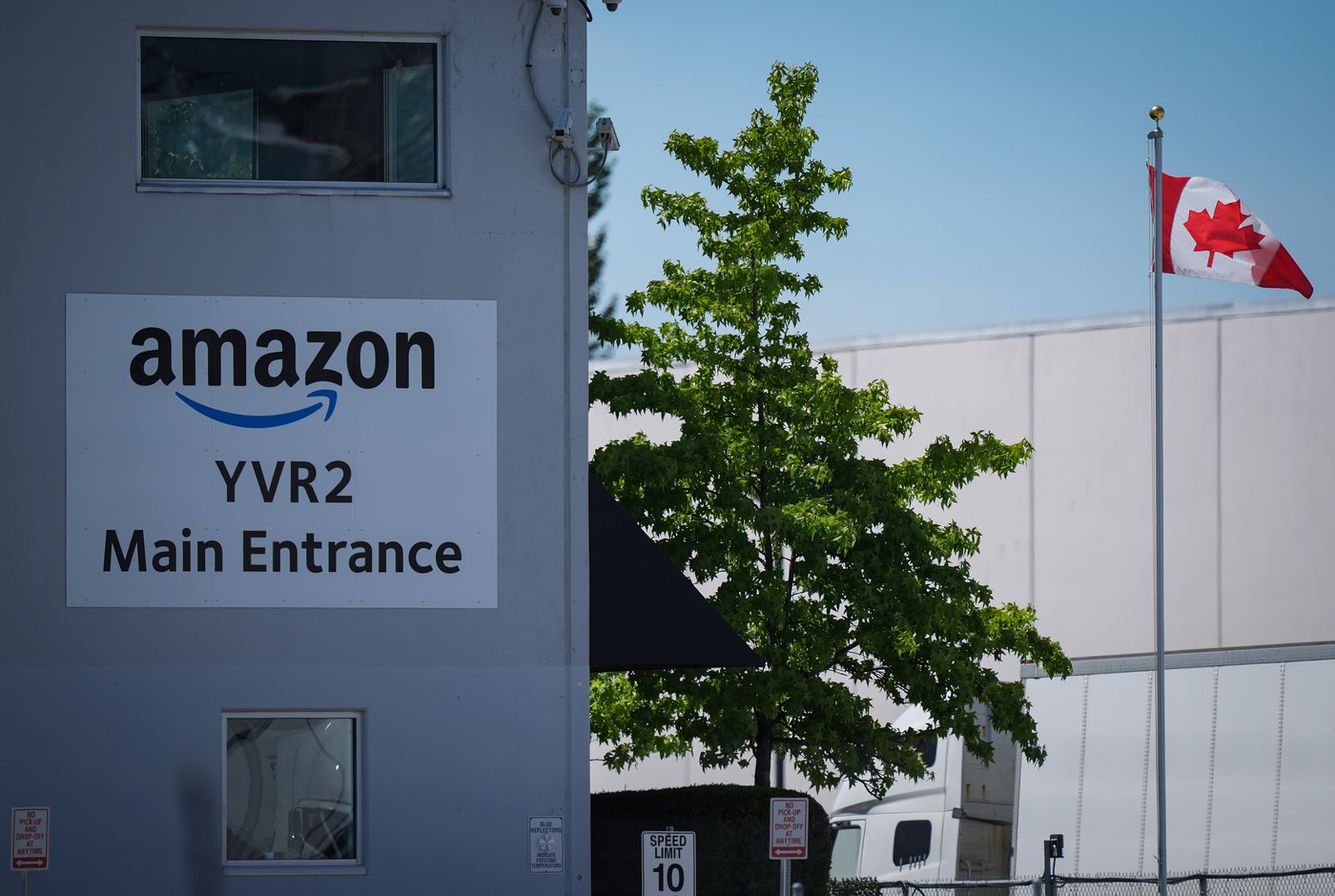
Amazon has entered into its first collective agreement with a union in North America, marking a significant development in the company's labor relations. However, the agreement was not reached through conventional collective bargaining. Instead, it resulted from a binding arbitration process in British Columbia, Canada, following months of disagreement between the company and the union representing workers at its Delta fulfillment center, near Vancouver.
The two parties have offered sharply different accounts of how the agreement came about.
For Amazon, the outcome raises serious questions about the legitimacy of the process. In a blog post, J. Ofori Agboka, Vice President of People Experience and Technology, described the agreement as having been imposed on the company without a single employee vote being counted. He also pointed out that some workers had initiated a separate effort to remove the union representing them.
Unifor, on the other hand, presented the development as a major labor victory, announcing that its members had secured the first union contract with the e-commerce giant in North America.
Established more than a decade ago through the merger of the Canadian Auto Workers and the Communications, Energy and Paperworkers Union of Canada, Unifor describes itself as Canada's largest private-sector union.
A 3-year deal with major ramifications
Whatever interpretation is put on the circumstances surrounding the deal, the implications are considerable. It will be the first time Amazon has operated a facility in North America under a collective bargaining agreement, and the agreement will last for three years unless a legal challenge overturns the decision.
Attempts to organize Amazon workers in the past have had limited success.
In 2022, workers at a warehouse in Staten Island, New York, voted to unionize through a grassroots campaign, before affiliating with the Teamsters. Amazon, however, has refused to bargain with the bargaining unit and that has led to a legal dispute that has now made its way to federal court.
Another high-profile organizing drive took place in Bessemer, Alabama, but ultimately failed to secure union representation.
There have also been efforts against Amazon’s Direct Service Providers (DSPs), the independent companies that deliver parcels. The Teamsters have recently been attempting to organize campaigns via card-check processes, but none of the DSPs involved have recognized them, except for one in California, who was subsequently fired by Amazon.
The Teamsters have been asking the National Labor Relations Board (NLRB) to get involved, because they say Amazon should be considered a joint employer with the delivery companies — but Amazon doesn’t directly employ DSP workers.
Unifor's take: certification then binding arbitration
“This agreement is a win for the workers at the Delta plant,” Unifor said in a statement.
The union said Unifor Local 114 was certified as the employees’ bargaining agent by the British Columbia Labor Relations Board in July 2025. The ruling followed a finding that Amazon had hired extra staff to sabotage the organizing effort and ran a massive anti-union campaign.
In August 2025, the Board ordered the parties into binding arbitration the following month. Unifor said the decision demonstrated the Board’s determination that Amazon’s conduct had an effect on the parties’ ability to negotiate an agreement.
The contract that comes out of this will be for a period of three years, until November 2029.
The result is being called an agreement by both Amazon and Unifor. But the fact that an arbitrator was involved means that its terms were finally settled by a formal dispute resolution process and not the usual negotiations ending in a mutually agreed settlement.
Amazon has questioned the legitimacy of the process
The Amazon account gives more details about what happened from 2024 onward and offers a rather different interpretation of events.
Agboka said Unifor has told the company it has enough employee support at the Delta facility, known as YVR2, to trigger a vote on unionization.
Reports said an officer of the provincial Labor Relations Board disagreed with the union’s assessment of its level of support. The Board, however, ordered the election to go ahead.
The vote then took place, but Amazon says the results were never released.
The Board certified Unifor as the workers’ bargaining agent in July 2025. Amazon appealed that decision arguing that employees should have had their say.
The appeal did not overturn the certification, meaning the representation process can go on without any employee votes being publicly counted, according to Agboka.
Amazon also cited a later vote to decertify, the results of which were also never released. The company also said legal proceedings by employees who were against the union hadn't moved forward in the British Columbia Supreme Court.
The Labor Relations Board also ordered Amazon and Unifor to try mediation. The talks did not lead to an agreement, so the Board appointed an arbitrator to make a final decision on the terms of the contract, Agboka said.
That arbitration decision ultimately led to the deal Unifor is celebrating.
Wage increases and additional benefits outlined
Although the complete implications of the contract remain subject to scrutiny, Unifor has disclosed several improvements secured for employees.
The union said the agreement will gradually increase hourly wages at the Delta facility to CA$29 by the end of the three-year period.
It also provides enhanced severance protections of up to 18 weeks and an additional week of annual vacation for employees with at least 10 years of service.
Amazon, however, has offered further details about the wage schedule through a company spokesperson who provided information to FreightWaves.
According to the spokesperson, employees will receive no wage increase during the first year. The scheduled increases are 3.25% in October 2027, followed by another 3.5% in October 2028.
The company also highlighted several employment conditions that remain unchanged under the agreement.
These include the existing arrangements for temporary and seasonal employees, attendance measurement procedures, the absence of a right to transfer to another Amazon warehouse and the current health benefits structure.
In other words, while the contract introduces certain improvements, several important aspects of working conditions will remain as they are.
Amazon considers further legal challenges
Amazon has made clear that it does not intend to accept the outcome without continued opposition.
In his blog post, Agboka outlined the company's intention to challenge decisions it considers inconsistent with established legal precedent. He also reiterated Amazon's demand that the ballots from the employee decertification effort be counted.
The company has indicated that it is prepared to take its concerns to the Supreme Court if necessary.
For now, the arbitration decision establishes an unprecedented situation for Amazon in North America: a fulfillment center operating under a union contract despite the company's continued opposition to the process that produced it.
The coming legal proceedings could therefore prove decisive, not only for the workers at the Delta facility, but also for the broader debate surrounding union representation and collective bargaining within Amazon's North American operations.
END OF REPORT