



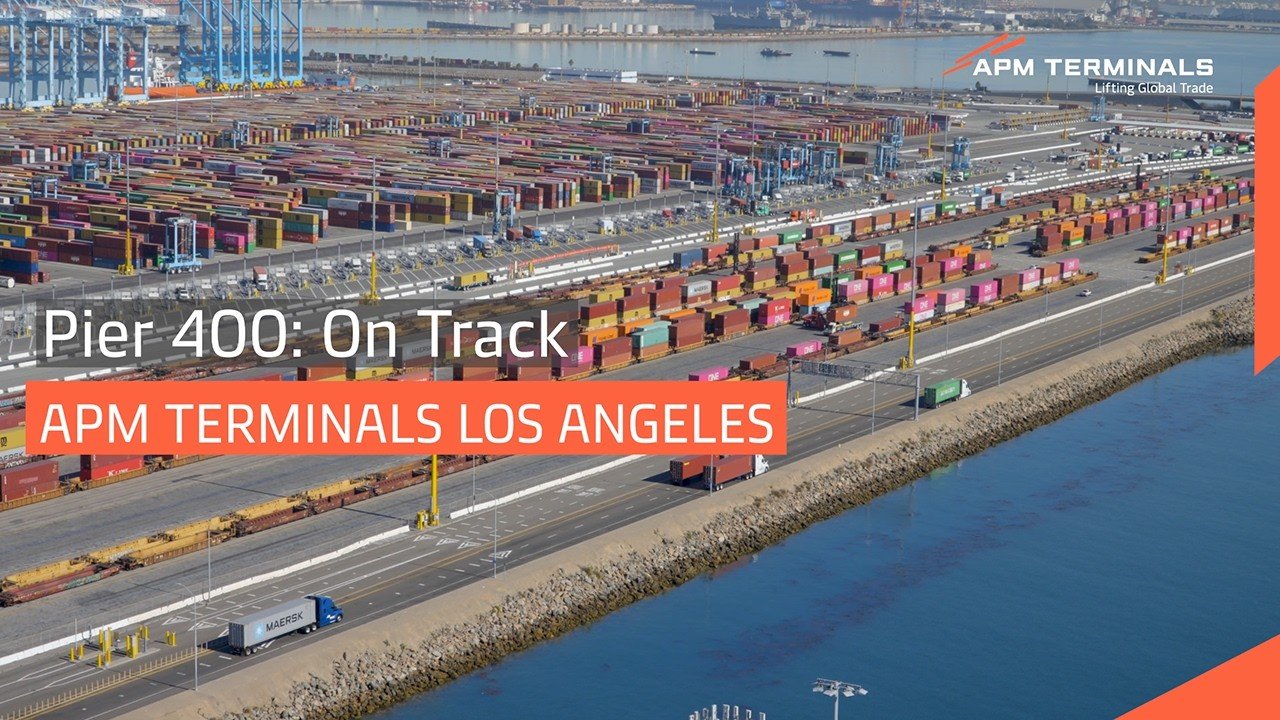
APM Terminals has completed a $73 million rail capacity upgrade at its Pier 400 facility in the Port of Los Angeles, a project the company says has effectively doubled the terminal’s rail capability and strengthened the port’s competitiveness as a cargo gateway.
The upgrade added 31,000 linear feet of new track and has helped lift rail movements by 104% since 2023. Weekly rail lifts at the terminal have increased from 5,000 to 11,000, placing Pier 400 among the busiest rail-connected facilities in the U.S. port system.
Jon Poelma, managing director of APM Terminals Los Angeles, said the investment improves the Port of Los Angeles’ appeal to cargo owners that rely on fast, efficient and well-connected supply chains to serve customers.
Pier 400 now has 12 working tracks and 11 storage tracks, with capacity to handle four full import trains each day for BNSF and Union Pacific. Eastbound containers typically leave the facility in less than two days.
Chris Brown, chief harbor engineer for design at the Port of Los Angeles, said the on-dock rail setup means containers can move directly from the vessel into the yard and then straight onto a train before leaving the terminal gate, reducing handling complexity and improving speed.
APM, which is part of Denmark-based Maersk, said the additional storage and rail flexibility at Pier 400 also benefit operations across Terminal Island, an area where multiple rail yards are served by a single bridge.
The company said the capacity gains are not only the result of physical infrastructure. It also credited an operating system built around lean manufacturing principles, with dispatch rates tied to planned move volumes, repeatable routes based on known cycle times, and structured yard observations aimed at removing bottlenecks before they become delays. In that sense, the company said, the rail terminal now operates more like a production line than a traditional port environment.
Camron York, director of operations for Rail & Gate at APM Terminals Los Angeles, said these are not theoretical process improvements but practical operating disciplines that support the terminal’s ability to maintain dwell times below three days.
The development comes as the neighbouring Port of Long Beach continues work on the Pier B On-Dock Rail Support Facility, a project designed to more than triple on-dock rail capacity to 4.7 million TEUs per year once complete.