Business Nov 18, 2026
Archer and Formula 1 take air mobility to the next level of the global experience economy
A multi-year partnership will explore electric air taxi services at Formula 1 Grands Prix, while Archer’s autonomous freight ambitions point to wider opportunities for the future of multimodal logistics.
Archer and Formula 1: Electric Aviation enter the live event economy
The worldwide experience economy is at the cusp of a new phase in which the journey to an event might become as important as the event itself. The crowds at major sporting events, music festivals and international conferences are ever larger and the strain on existing transport infrastructure is growing.
The industry has spent years trying to build bigger venues, bigger spectacles and to attract international visitors. But the ability to efficiently move hundreds of thousands of people to and from one location remains a major operational challenge.
Road networks, public transport systems and traditional airport connections often cannot accommodate such concentrated demand, especially when large numbers of visitors arrive within a limited time frame.
A new partnership between Archer Aviation and Formula 1 announced on 12 November 2026 could provide a different approach to the challenge.
Under the multi-year agreement, Archer will compete in selected Formula 1 Grands Prix in the United States, the Middle East, Asia, and Europe, with a focus on markets that align with its intended commercial activities.
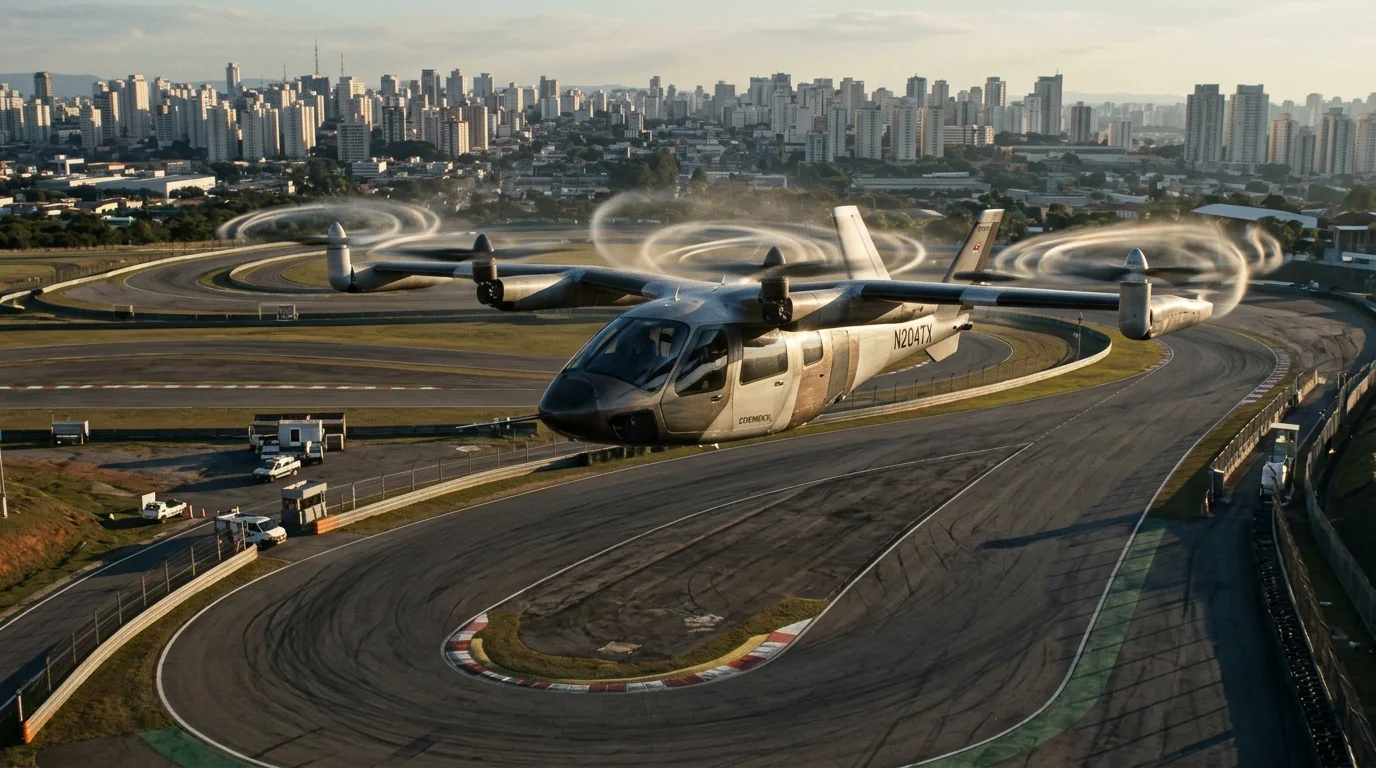
In addition to its presence at race events, the partnership will also look at how electric vertical take-off and landing (eVTOL) air taxi services could be integrated into Grand Prix weekends. The goal is to ferry VIP guests and fans between circuits and nearby destinations in minutes aboard Archer’s all-electric Midnight aircraft.
Integrating transport into the event experience
There is more to the commercial potential of this deal than shorter journey times. Event organizers are looking for more and more ways to create value across the whole visitor experience, and not just focus revenue on tickets, hospitality and activities inside the venue.
Transportation has been the outside factor, which has been traditionally associated with congested roads, long transfers and limited accessibility. Formula 1 and Archer are now looking at a model where the journey itself becomes another part of the event offer.
Among the options being reviewed are dedicated air taxi pick-up and drop-off points at the race circuits themselves, alongside the potential for including air transport in Formula 1's hospitality packages and ticketing services.
Spectators could have an alternative to regular road transport when Archer’s commercial air taxi operations are available in key Formula 1 markets. The services on offer would link major airports, business districts and key city destinations to the race venues.
The Midnight aircraft is a custom aircraft built for urban air mobility. The all-electric propulsion is designed to be quiet, have zero operating emissions and allow rapid consecutive flights - replacing journeys that might otherwise require significantly longer road transfers.
Formula 1’s Chief Commercial Officer Emily Prazer said the partnership was based on a shared interest in advancing technology.
“Formula 1 is about innovation and Archer shares our passion to push boundaries and explore what is possible,” she said.
She said the partnership would give the opportunity to explore how the new technologies could evolve and enhance the experience offered to fans at Formula 1 events.
A global infrastructure strategy aligned with the F1 calendar
The partnership also benefits from the geographical alignment between Formula 1's international calendar and Archer's planned commercial expansion.
In the United States, the company's proposed air taxi networks in Miami and Texas correspond with existing Formula 1 race locations where Archer has already presented infrastructure development plans.
The alignment extends internationally. Archer's intended commercial rollout across the Middle East, Asia and Europe could eventually support the development of aerial transport corridors in additional Grand Prix host cities.
The collaboration is also intended to introduce the aircraft to potential passengers before commercial services become operational.
Midnight was presented to spectators at the United States Grand Prix in Austin, where Archer participated as an Official Supporter of F1. Further appearances were scheduled for the Las Vegas Grand Prix and Abu Dhabi Grand Prix later in 2026.
For Archer, these events offer an opportunity to showcase its future aircraft to an international audience already familiar with advanced engineering and high-performance vehicles.
Adam Goldstein, Archer's founder and CEO, pointed to Formula 1's worldwide reach as an important commercial advantage.
“With 830 million fans worldwide, Formula 1 gives us a global audience of prospective passengers who are as obsessed with high-performance vehicles as we are,” he said.
Goldstein also emphasized the engineering similarities between motorsport and aerospace, describing the partnership as a natural fit. He said the two organizations would explore how innovation on the ground and in the air could combine to deliver a distinctive experience for spectators.
From passenger mobility to autonomous cargo operations
The implications of Archer's Formula 1 agreement extend beyond passenger transportation and premium hospitality. The infrastructure required to operate air taxi networks could also contribute to the development of the company's wider aviation strategy, particularly its ambitions in autonomous heavy freight.
Airport-to-venue connections, vertiport operations and commercial aviation supply chains represent important foundations for a broader vertical-lift ecosystem.
This is where Archer’s cargo aircraft, Halo, is particularly relevant to the logistics industry.
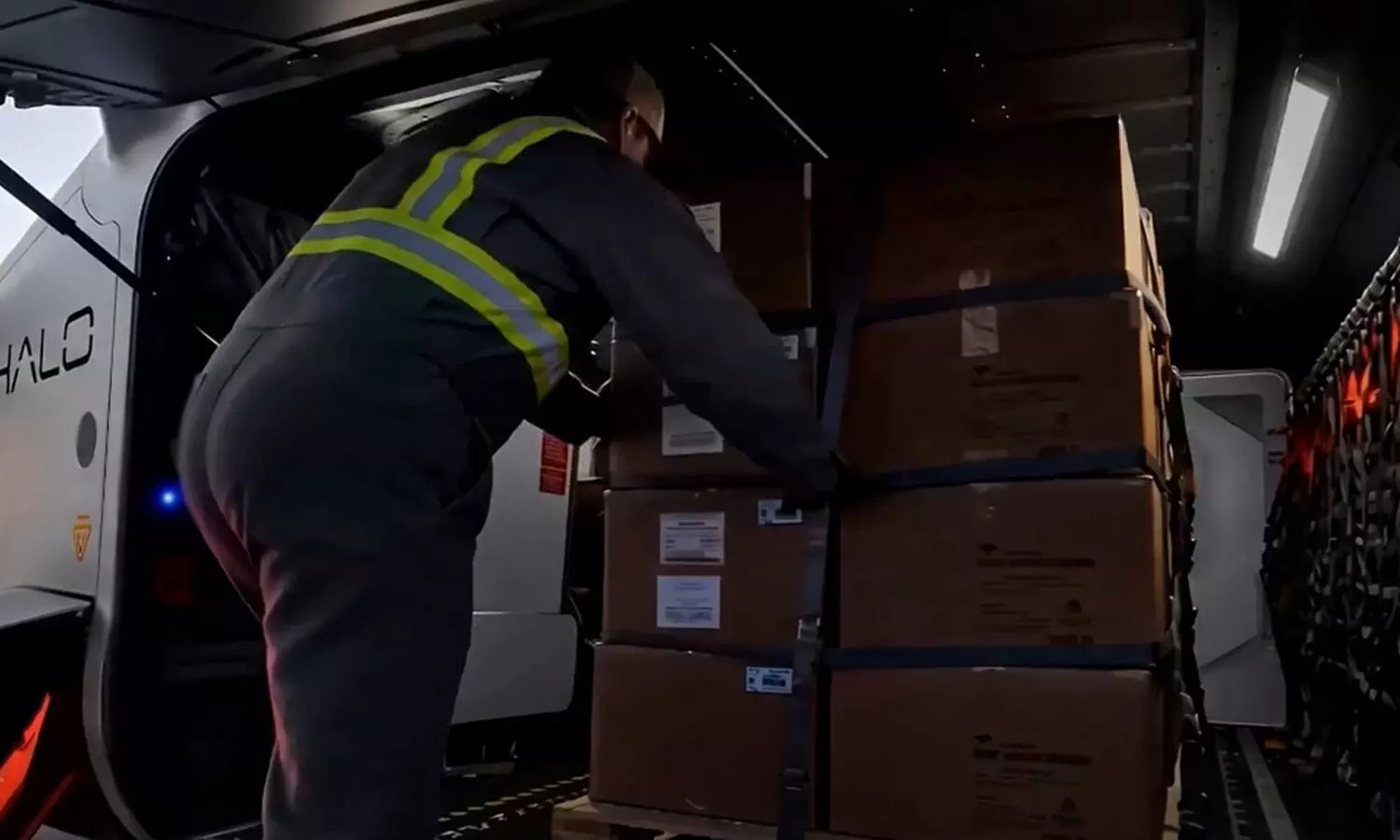
Unveiled in July 2026 at the Farnborough International Airshow, alongside defence partner Anduril Industries, Halo is the commercial counterpart to the dual-use Thunder autonomous aircraft.
Unlike Midnight, which is a piloted, all-electric air taxi designed to carry four passengers on short urban journeys of up to 100 miles, Halo has been developed around an entirely new unmanned architecture.
Its primary purpose is to transport heavy modular payloads over longer distances without depending on conventional airport runways.
The aircraft uses a series hybrid-electric propulsion system, with an onboard generator powering two tiltrotors. Its published performance specifications include:
Maximum speed: 320 mph (278 knots).
Maximum range: Up to 800 nautical miles.
Operating ceiling: 18,000 feet.
Propulsion: Series hybrid-electric system.
Configuration: Unmanned aircraft with dual tiltrotors.
The rotor system can adjust its rotational speed according to different flight conditions. This approach is intended to reduce fuel consumption during cruise while maintaining acoustic levels suitable for suburban and noise-sensitive environments.
A new offer for multimodal freight operators
For freight forwarders and logistics companies, Halo is one of the most important features, as it is designed for intensive daily operations and for multimodal deployment.
Removing the pilot on board could reduce operating costs, remove crew exposure on potentially dangerous routes and allow the aircraft to make more missions per day.
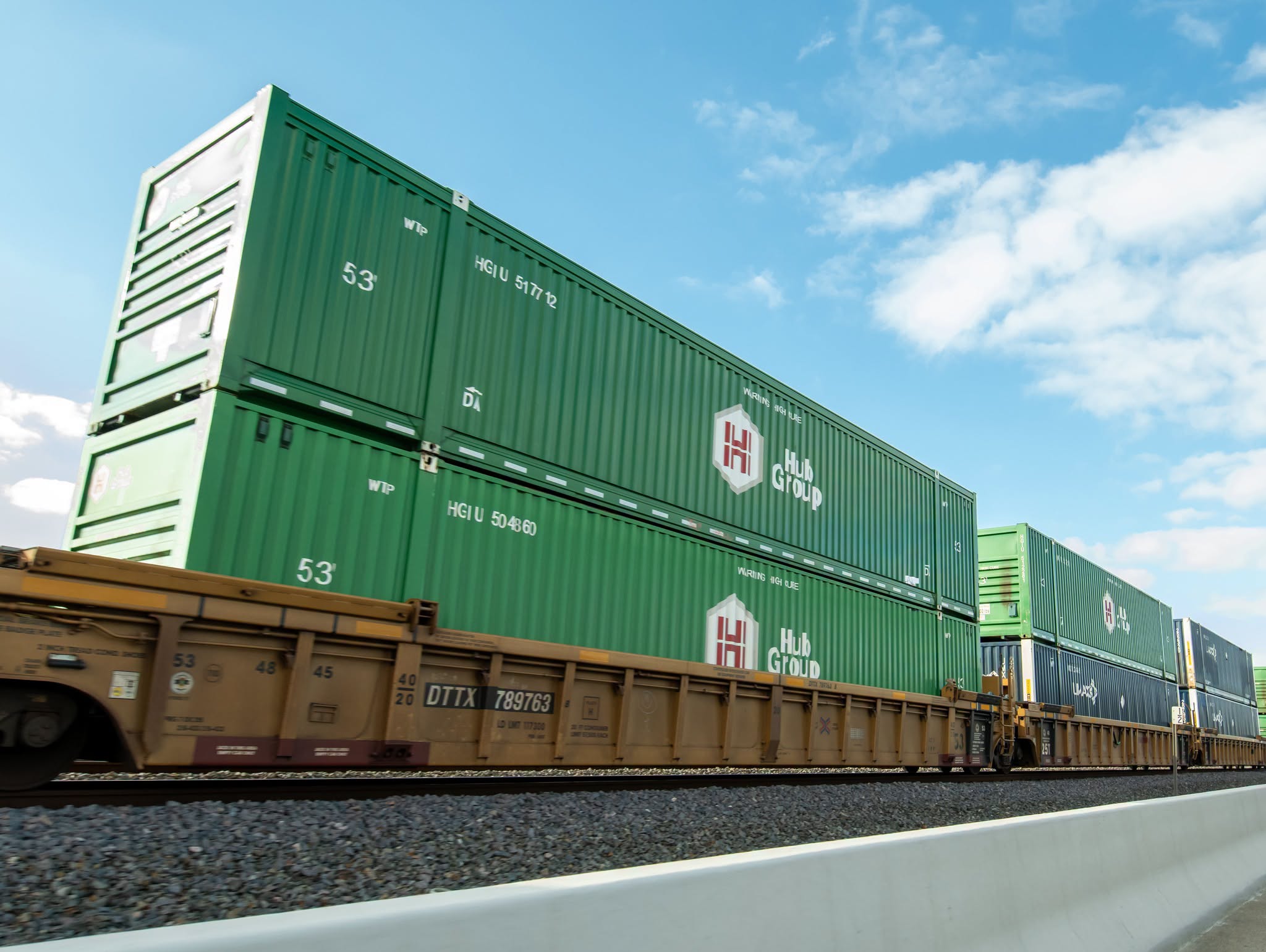
It's also physically sized to solve an important logistical problem. The airplane is designed to fit inside a standard shipping container.
This would enable operators to transport the airframe within existing global logistics networks by air, road, rail or maritime freight, making deployment between operating locations easier.
Archer has scored its first strategic launch customer for Halo: Japan’s Marubeni Aerospace Corporation.
The partnership is aimed at commercial logistics applications where conventional fixed-wing aircraft and helicopters have major cost or infrastructure constraints.
Possible missions include:
Regional logistics hubs and ports are connected by middle-mile freight transportation.
Jobs supplying offshore energy facilities.
Maritime logistics and deliveries
Humanitarian transport (time sensitive).
Direct delivery of medical & healthcare shipments from freight hubs to hospitals in one flight.
These applications showcase the potential use of autonomous vertical-lift aircraft in connecting places with limited traditional aviation infrastructure or where fast delivery is a priority.
Shared technology may accelerate the development of aerial logistics
Another significant link between Midnight and Halo is the technology underlying both.
Both aircraft benefit from Archer’s foundational engineering capabilities, including rotor dynamics, battery architecture, powertrain development and commercial supply chains.
Thus, the operational experience of passenger air mobility may have implications for the development and eventual deployment of autonomous cargo aircraft.
Archer will have another commercial environment to test rapid aircraft turnaround, integration into low-altitude airspace and connections with airport airside infrastructure at major international destinations through its partnership with Formula 1.
These capabilities also apply to the wider ecosystem necessary to scale autonomous vertical take-off and landing freight operations.
Such infrastructure could ultimately open up new possibilities for logistics operators for time-sensitive deliveries, regional distribution and connections between transport hubs.
The future of mobility is more than reaching your destination
The partnership between Archer and Formula 1 is more than just a way to get fans to the circuit faster. It's a bigger shift in how transportation, commercial aviation and premium experiences may become intertwined.
Electric air taxis could provide an alternative to congested ground transportation for Formula 1 as well as an extra dimension to event hospitality.
The deal provides Archer international visibility for its passenger aircraft as well as making more commercially relevant the infrastructure and technological capabilities that could support its future cargo operations.
What is longer term significant is the relationship between these developments. Passenger air mobility, airport connectivity, vertiport operations and autonomous freight could all be part of a much wider aviation ecosystem in the end.
Archer is working on both Midnight and Halo, and the difference between carrying people and cargo in vertical-lift aircraft is becoming more and more important to the future of the industry.
So, the next evolution of the global experience economy may therefore happen not only inside stadiums and racing circuits, but also in the airspace between them.
END OF REPORT