Cargo Nov 11, 2026
Atlas Air and Sharp expand Incheon operations with a third cargo terminal and a new MRO facility
The expansion strengthens Atlas Air’s cargo handling capacity at Incheon International Airport, while a dedicated four-bay widebody maintenance facility, scheduled to enter service in 2027, will reinforce the company’s technical capabilities across the Asia-Pacific region.
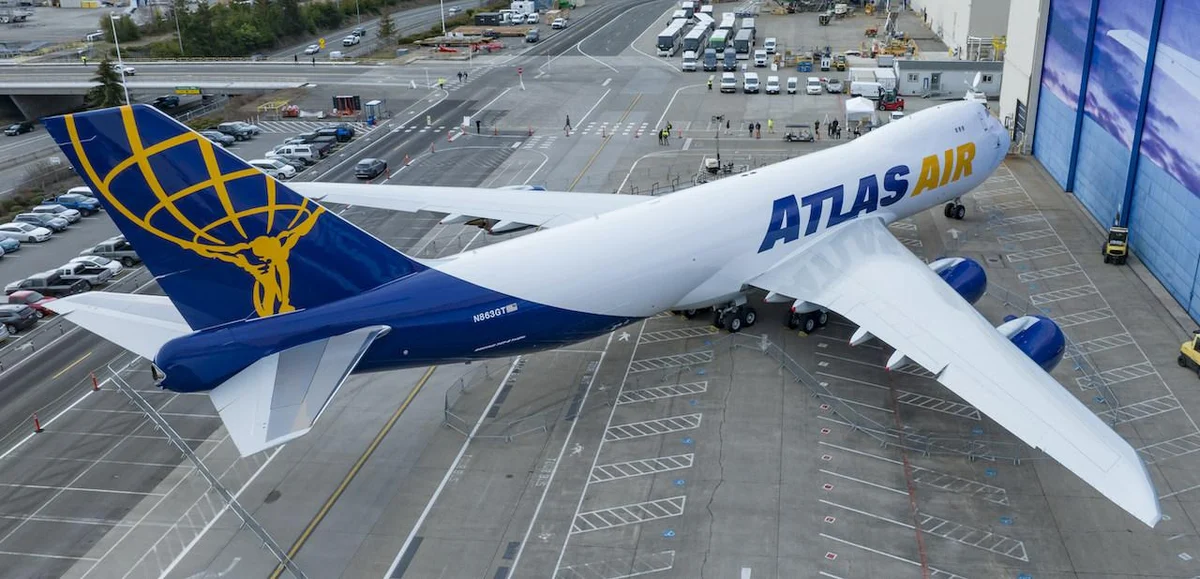
Atlas Air Worldwide and Sharp Aviation K are taking their long-standing partnership at Incheon International Airport (ICN) into a new phase with two major infrastructure projects. The companies have inaugurated a third cargo terminal through their joint venture, Atlas Air Cargo Terminals (AACT), while also progressing with plans for a dedicated four-bay maintenance facility for widebody aircraft under Atlas Air Technical Services (AATS).
The developments represent a major expansion of Atlas Air’s operational presence in South Korea. This will enhance its cargo handling and aircraft maintenance capabilities, reinforcing Incheon’s strategic position for the company and its customers in the Asia Pacific region.
The latest addition to the airport’s cargo infrastructure is Cargo Terminal 3, which provides 19,320 square metres (208,000 square feet) of additional space and increases annual cargo handling capacity by 180,000 tonnes. The facility is scheduled to become operational on November 2.
Beyond the increase in overall capacity, the new terminal is designed to address the growing requirements of specialised cargo markets. Its infrastructure includes a dedicated 2,900-square-metre cool-chain complex for temperature-sensitive shipments, particularly pharmaceuticals, alongside enhanced handling capabilities intended to accommodate changing customer demands.
Established in 2007 by Atlas Air and Sharp, AACT now operates three cargo terminals at Incheon International Airport. With the latest expansion, the joint venture manages nearly 49,000 square metres of dedicated cargo infrastructure, with a combined annual handling capacity exceeding 460,000 tonnes.
The companies are also investing in the technical side of their operations. Through Atlas Air Technical Services, Atlas and Sharp are developing a dedicated four-bay widebody maintenance facility at Incheon. Expected to become operational in 2027, the site will build on existing maintenance support capabilities and provide dedicated commercial freighter maintenance services for Atlas Air and its customers.
The project is intended to strengthen the company’s maintenance network in the Asia-Pacific region while giving it greater control over aircraft servicing and operational performance.
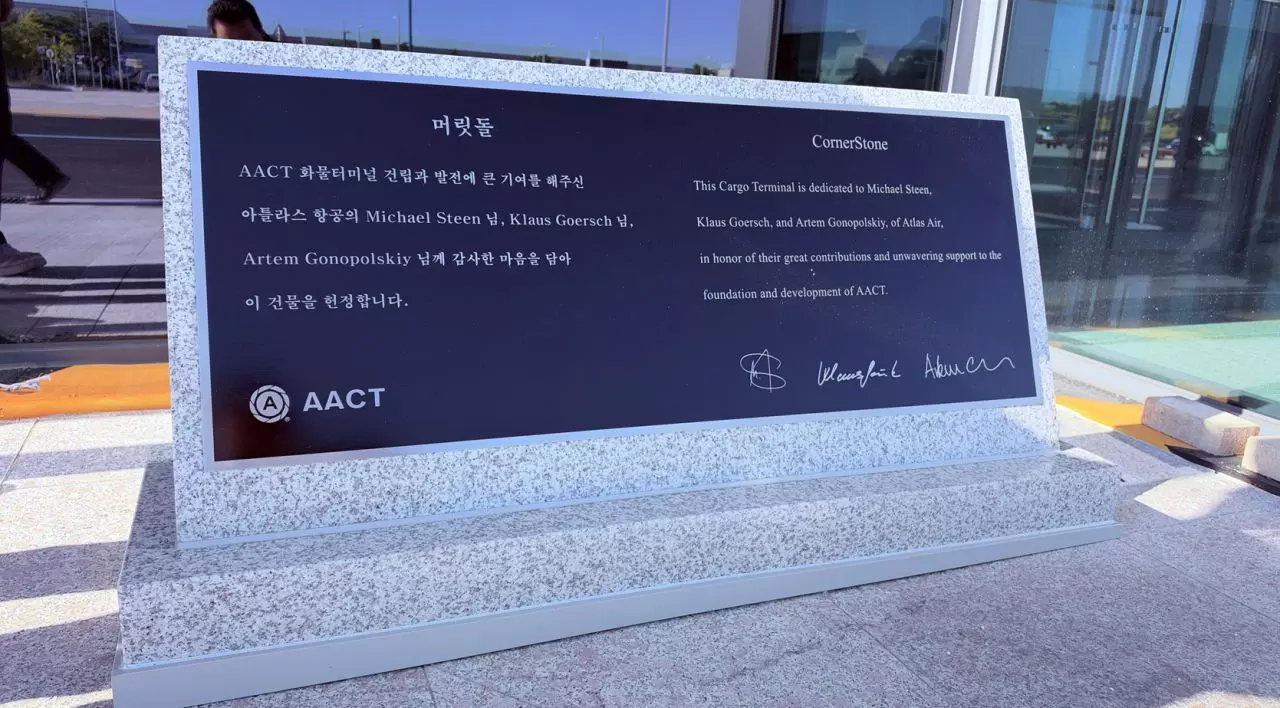
Michael Steen, Chief Executive Officer of Atlas Air Worldwide, described the developments as an important part of the company’s international growth strategy, highlighting the strategic importance of Asia to global trade and the value of its longstanding relationship with Sharp.
“Asia remains one of the most important regions for global trade, and our longstanding partnership with Sharp has enabled us to deliver high-quality ground handling services to our customers in Korea,” said Steen.
He also emphasised the role played by AACT in establishing a cargo handling platform capable of growing alongside customer requirements. The development of AATS, he added, marks a further step in Atlas Air’s strategy to bring approximately one-third of its heavy maintenance volume in-house.
According to Steen, this approach is expected to provide greater oversight of maintenance quality and turnaround times. He also underlined that the two investments demonstrate the company’s long-term commitment to the region and its intention to develop the infrastructure needed to support its customers’ expansion.
Klaus Goersch, Chief Operating Officer, highlighted the coordination and collective effort required to deliver projects of this scale. He credited the teams from both Atlas Air and Sharp for their contribution to the developments.
“These milestones are a testament to the expertise, commitment and hard work of our teams at Atlas and Sharp,” said Goersch.
He noted that bringing such complex operations to completion requires close cooperation across multiple functions, while recognising the contribution of everyone involved in establishing a stronger foundation for the companies’ continued activities at Incheon.
For Bobby Wood, Vice President of Ground Operations, the expansion of AACT illustrates how significantly the partnership has evolved since its creation. What began as a single-terminal operation has developed into a three-terminal cargo platform with substantially greater capacity and more specialised handling services.
Wood praised the work of Atlas Air’s Ground Operations team and its partners at Sharp, pointing to the operational expertise behind the expansion. He also stressed the importance of providing customers with the efficiency, flexibility and reliability expected from the company.
The maintenance project brings a complementary dimension to the investment programme. Rich Steer, Senior Vice President of Technical Operations, said the development of dedicated widebody maintenance capacity at Incheon would provide greater flexibility in fleet planning and aircraft servicing.
“Expanding our technical operations capabilities at Incheon is an important step in how we support our fleet and our customers,” said Steer.
He explained that the capabilities being developed through AATS should help increase aircraft availability, reinforce operational reliability and improve the company's ability to maintain its fleet across the region. Having dedicated maintenance infrastructure at such a strategically important location is expected to support more efficient maintenance planning and help ensure continuity for customer operations.
Taken together, the third cargo terminal and the planned four-bay maintenance facility represent two complementary investments in Atlas Air’s presence at Incheon. While the AACT expansion increases cargo capacity and strengthens specialised handling services, AATS is designed to provide additional technical support for the company’s widebody freighter fleet.
The projects reinforce the strategic importance of South Korea within Atlas Air’s Asia-Pacific network and extend a partnership with Sharp that has been developing for nearly two decades.
END OF REPORT