




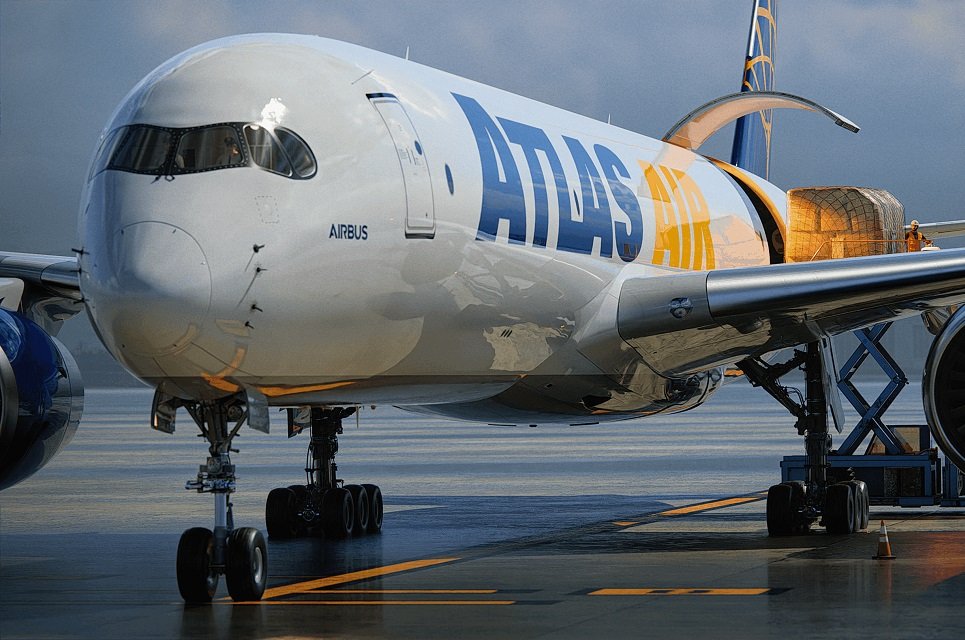
Atlas Air is entering a new phase of fleet strategy following what it describes as a landmark order for Airbus A350 freighters—while still leaving the door open to Boeing’s competing 777-8F platform.
The mid-March agreement, covering 20 A350Fs with options for an additional 20 units, represents the largest aircraft order in the company’s 33-year history. More significantly, it marks a structural shift away from Atlas Air’s historically all-Boeing fleet, which today comprises 113 aircraft including 747s, 777s and 767s.
Chief executive Michael Steen framed the decision as a reflection of a changing industry dynamic. For the first time, operators now have access to next-generation widebody freighters from two competing manufacturers—creating new opportunities in fleet planning.
Rather than replacing one platform with another, Atlas Air is building toward a diversified fleet model. According to Steen, each aircraft type will serve distinct operational profiles depending on trade lanes, cargo density and customer requirements.
The introduction of the A350F—expected to enter service slightly ahead of the 777-8F—was also a key factor. Atlas has secured early delivery slots, with aircraft scheduled between 2029 and 2034.
From an operational perspective, the aircraft promises high payload capability, extended range and significantly lower fuel consumption—factors that are increasingly critical for customers navigating cost pressures and sustainability targets.
Looking ahead, Atlas is not ruling out further fleet expansion, including a potential order for Boeing’s 777-8F. Steen indicated that additional aircraft acquisitions remain likely as market availability evolves.
Importantly, the majority of the A350F order is intended to support fleet growth rather than replacement. While some older 747-400 aircraft—currently averaging around 24 years—will eventually be phased out, they are still expected to operate well into their third decade.
The broader market context reinforces Atlas Air’s positioning. Steen has repeatedly warned of a coming shortage in widebody freighter capacity, driven by rising demand, ageing aircraft and a temporary gap in production as next-generation programmes ramp up.
Without regulatory extensions—such as a potential continuation of the 777-200F—capacity constraints could intensify over the next decade, making long-term fleet planning a strategic necessity.