Air Nov 18, 2026
Atlas Air strengthens its global freighter position with 49% stake in Air Atlanta
The investment gives Atlas Air Worldwide control of 15% of the global large widebody freighter fleet. Martin Drew outlines the strategic rationale behind the deal, shifting e-commerce flows, rising data centre cargo demand and the transformation driven by the One Atlas strategy.
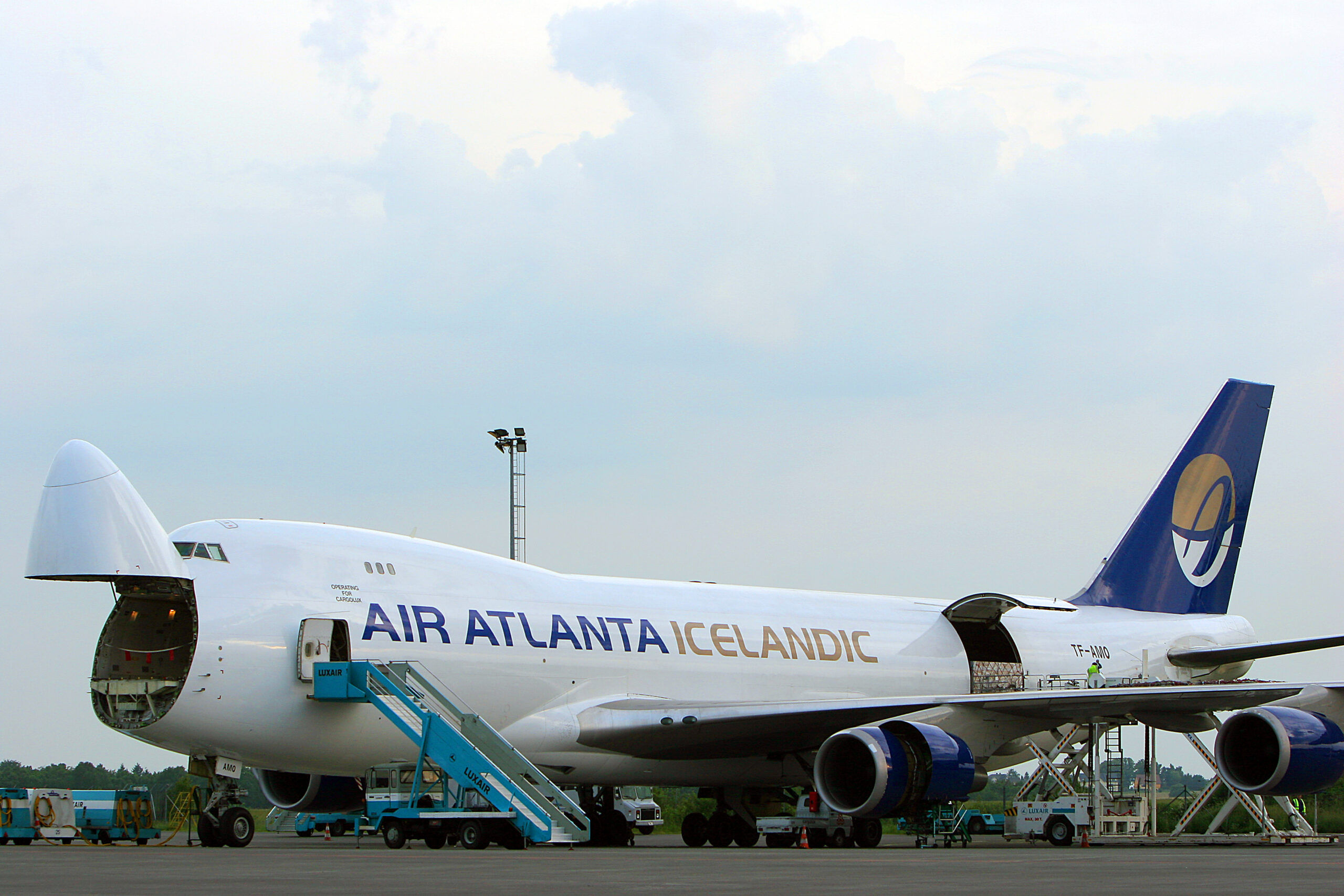
Atlas Air Worldwide has strengthened its position in the global air cargo market through its acquisition of a 49% stake in Icelandic carrier Air Atlanta. The investment gives the group control of approximately 15% of the world's large widebody freighter fleet, reinforcing its presence in a market where aircraft supply is expected to remain under pressure for at least another decade.
Martin Drew, Chief Strategy and Transformation Officer at Atlas Air Worldwide, discussed the transaction and the company's broader development during a Conversations interview with The STAT Trade Times, held on the sidelines of TIACA's Air Cargo Forum in Miami. He described the investment as a strategic move that made considerable commercial sense for Atlas.
The scale of the opportunity is closely linked to the ageing global freighter fleet and the constraints affecting aircraft manufacturing. According to Drew, the world currently has 635 large widebody freighters, more than 100 of which are over 30 years old. At the same time, approximately 17,000 passenger and cargo aircraft remain on order. At existing production rates, clearing that backlog would take at least 12 years.
Air Atlanta purchase increases fleet capabilities
Air Atlanta operates a fleet of 14 widebody freighters – 12 Boeing 747s and two Boeing 777s, and four Boeing 777 passenger aircraft.
Atlas Air’s leasing arm, Titan Aviation Holdings, purchased the planes and leased them back to Air Atlanta. The Icelandic airline will continue to operate independently after the transaction. The existing management team retains a controlling 51% interest.
Drew expects the two companies to benefit from economies of scale and a closer commercial and operational cooperation. He also pointed out Air Atlanta’s experience with older aircraft, describing the company as a very capable operator, especially with aircraft at the latter end of their operational life.
So for Atlas, it’s about more than just fleet growth. It also provides opportunities to share operational expertise and to build capabilities across the different phases of an aircraft’s lifecycle.
Further acquisitions remain part of the group’s growth ambitions. But Atlas also wants to grow organically. The company has added 11 large widebody freighters to its fleet since 2024.
Flexibility at the heart of customer relationships in volatile markets
The air cargo landscape has changed dramatically in the last 18 months. Tariffs, the loss of the US de minimis exemption, oil price volatility and geopolitical tensions have impacted customer expectations and supply chain decisions.
These developments have altered the nature of conversations between Atlas and its customers, Drew said. In a world that is becoming more unpredictable, companies have to plan for the unexpected, not the expected.
Flexibility is therefore an increasingly important factor in choosing logistics and air cargo providers.”
Atlas primarily operates dedicated aircraft for each customer, which allows it to work closely with multiple players across the supply chain. Its relationships include shippers, freight forwarders, e-commerce platforms, ocean carriers and other airlines.
“Customers are demanding more and more dedicated capacity,” Drew said. “They want more control over their transportation operations and business decisions. This need for secured capacity has also led to the signing of particularly long-term agreements.
E-commerce flows move to new international markets
Changes in US trade policy have had a big impact on international e-commerce traffic, especially shipments from China.
After Liberation Day and the end of the de minimis exemption in the United States, the volume of e-commerce from China to the United States dropped sharply. But Drew said the big Chinese platforms that work with Atlas didn't cut their overall production.
But instead they diverted shipments to other destinations, building up existing markets and creating new ones with amazing rapidity.
Latin America has been one of the beneficiaries of this rebalancing of geography. Atlas has started flights to Lima, Peru, for one of the largest e-commerce platforms. The destination was a new market for the platform, which had not previously served the country.
Since then the operation has grown to three flights a week. Drew cited this as an example of the speed and effectiveness with which Chinese platforms’ digital marketing strategies can generate demand in new markets.
Meanwhile, China-Europe e-commerce traffic has come under more pressure after the European Union revised its de minimis arrangements in July. Another regulatory change scheduled for November could also impact shipment volumes.
But Drew said the US e-commerce volumes rebounded to pre-exemption levels within three to four months of the exemption being lifted, demonstrating how these platforms can respond to changing market conditions.
Surge in air cargo market driven by data center investments
Data center development is also increasingly important as a source of demand for air freight capacity beyond traditional e-commerce traffic.
Drew pointed to the sharp rise in cargo linked to data center construction and expansion in recent years. Global segment transported some 1.2 million tons in 2025, with volumes forecast to increase to between 2.5 million and 2.7 million tons by 2027.
That would account for about 5% to 6% of total international air cargo volumes, highlighting the increasing importance of tech-related shipments for the aviation logistics industry.
The supply chain consists of two main stages. First, the plan is to shift semiconductors, graphics processing units (GPUs) and motherboards made in Taiwan, South Korea, China, Vietnam and Thailand to assembly plants, including Guadalajara.
Finished server racks are assembled and shipped to destinations throughout Europe, Asia, the Middle East and other international markets.
For these shipments, the capacity of the aircraft is of particular importance. Server racks are big and heavy, Drew said, and can only be put on a Boeing 747 or Boeing 777.
Atlas has thus established direct relationships with hyperscalers, many of whom are entering into very long term capacity agreements to underpin their data center expansion programs.
Atlas’s growth prospects are also bolstered by the emerging cargo segment, which is finding demand for specialized air transportation, especially as the investment in digital infrastructure continues to surge globally.
One Atlas approach powers technology & operations transformation
Drew came to Atlas Air from a combination carrier where he worked for 18 years. Since taking up the role he has been heavily involved in the company’s One Atlas strategy, which he described as a successful framework for aligning the organization.
The strategy aligns commercial, operational, financial and IT functions on four main priorities: service excellence, winning in the market, developing a thriving culture and sustainability.
The goal is to build common purpose across the business and bring together employees and operations teams, including the company’s more than 3,000 pilots.
Drew also pointed out the big changes Atlas has undergone since becoming a privately held company. The group has speeded up technology adoption, enhanced data use and developed artificial intelligence tools to strengthen business operations.
He thinks the biggest potential for AI is not just automating individual tasks. Its real value is in improving decision making across the whole organization, enabling teams to move faster, use better information and find better solutions.
He feels that Atlas has made good progress in the last three years, but there are still many opportunities to improve efficiency further.
“Strategic acquisitions, organic fleet growth, long-term customer relationships and investment in technology are shaping the next phase of Atlas Air’s evolution. With aging freighter capacity and shifting trade flows, along with the rapid growth of data center infrastructure driving global demand, the company is positioning itself to capture opportunities across an increasingly complex air cargo market.
END OF REPORT