



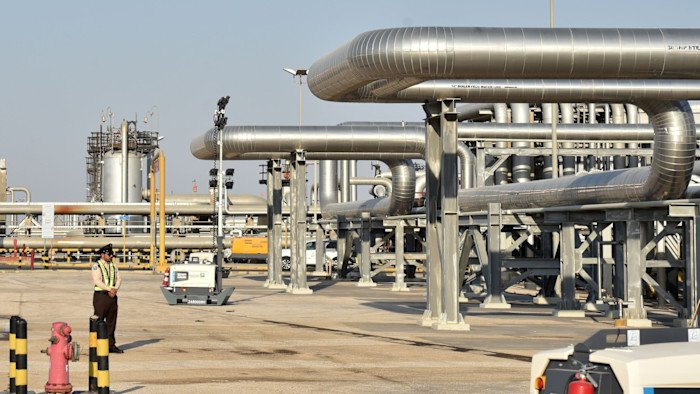
Saudi Arabia’s East-West Pipeline, also known as the Petroline, was reportedly attacked by Iran on Wednesday, only hours after the ceasefire between Washington and Tehran came into force.
The pipeline has become the Kingdom’s most important crude export route since the effective blockage of the Strait of Hormuz. It links oilfields in Saudi Arabia’s Eastern Province with Yanbu on the Red Sea coast, which has emerged in recent weeks as a major export outlet. Volumes through the system have risen sharply, with up to seven million barrels a day reportedly being pumped toward the Red Sea.
Initial reports reaching London on Wednesday afternoon came before any assessment of damage could be confirmed. However, analysts warned that any serious disruption to exports from Yanbu would immediately affect oil prices, potentially reversing the sharp decline seen after the ceasefire deal was announced.
Some market observers said the situation could deepen what is already being described as the world’s worst-ever energy crisis if Red Sea exports from Saudi Arabia are significantly impaired. Of the seven million barrels moved through the line, roughly five million barrels a day have reportedly been exported, creating demand equivalent to around 15 to 20 VLCCs each week.
Signal Ocean data showed 47 VLCC loadings at Yanbu in March, compared with only 11 to 12 in January and February, as Saudi Arabia relied more heavily on the Red Sea route to bypass Hormuz. The pipeline was also reported to be operating at full capacity.
Iran’s Islamic Revolutionary Guard Corps said it had struck multiple targets across the region, claiming missiles and drones had targeted oil facilities of US companies in Yanbu. Reuters sought comment from Saudi Aramco, but by late afternoon the company had not responded to requests.
If the damage proves significant, the impact would be especially pronounced for larger crude carriers, including VLCCs and Suezmax tankers trading eastbound and westbound.
Reports from elsewhere in the region also suggested that the ceasefire had not held. According to those reports, the IRGC carried out further attacks on energy infrastructure in other Gulf states, including Kuwait and the UAE.