



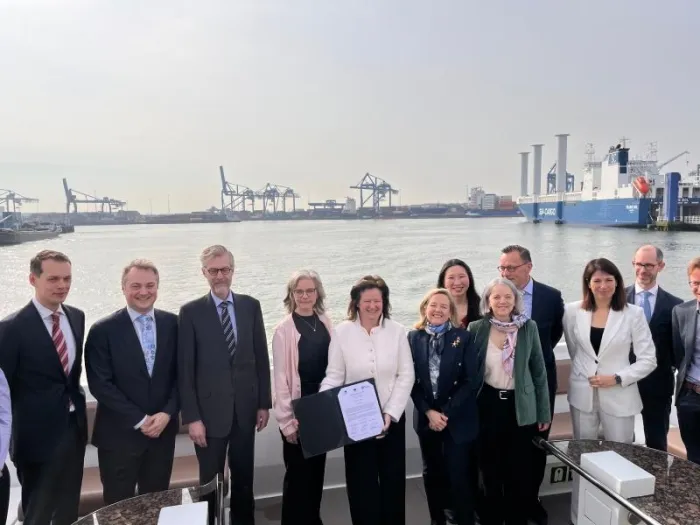
Executives from the ports of Los Angeles and Long Beach joined politicians, longshore labour representatives and other stakeholders in calling on California to allocate $1 billion in fiscal 2027 for a coordinated infrastructure investment strategy across the state’s 11 deepwater ports.
Speaking at a media briefing overlooking Los Angeles Harbor on 20 March, the group stressed that global suppliers need predictable, sustained investment if California’s port system is to remain competitive.
Mike Gipson, representative for Carson and chair of the Select Committee on Ports and Goods Movement, urged the state to make a major spending commitment in 2027 covering five investment categories. He noted that activities at ports such as the Port of Los Angeles support 3.1 million jobs, generate $134 billion in worker income and contribute $38 billion in tax revenue.
At the same time, Gipson warned that California’s competitiveness is at risk without port modernisation. He said uncertainty around federal funding and the continuing impact of tariffs mean the state must step in with $1 billion to help modernise the ports, create local jobs and keep California competitive both nationally and internationally.
Gene Seroka, executive director of the Port of Los Angeles, said California’s ports are essential gateways for global trade and major economic engines for the state. He argued that strategic infrastructure and modernisation investment would help ports handle rising cargo volumes, deploy sustainable technologies and preserve high-quality jobs in surrounding communities.
Port of Long Beach chief executive Noel Hacegaba said California’s ports play a critical role not only in the state economy but also in national and global supply chains. He said they must become more efficient, more reliable and more resilient.
Gary Herrera, president of International Longshore and Warehouse Union Local 13, said infrastructure improvements should not come at the expense of jobs. He pointed out that the proposed budget would support zero-emission equipment, provided those assets continue to be operated by people.
Gipson concluded that, as the world’s fourth-largest economy, California has the capacity to advance the work its ports do, and he called on lawmakers to make this year’s budget transformative for both port leaders and workers.