



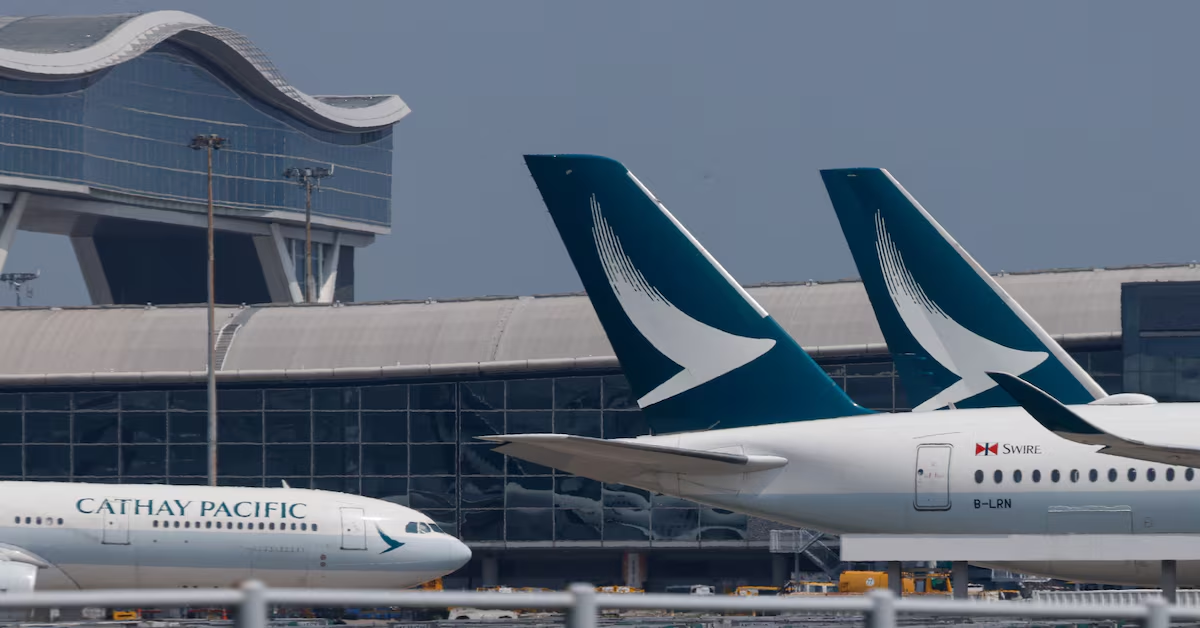
Cathay Cargo is reviewing alternative stopover points on the Asia-Europe trade lane as Middle East-related service changes continue to strain capacity and reduce payload flexibility.
In its latest monthly newsletter, Cathay Cargo director Dominic Perret said the airline has suspended passenger services to Dubai and Riyadh until the end of May, while freighter flights to those destinations remain halted until further notice.
Before the disruption, eight of the airline’s freighter services on the Asia-Europe corridor routed via Dubai. Perret said five of those flights are now operating direct, but the change has introduced payload restrictions. Cathay is therefore evaluating other mid-point options that could remove those limitations and restore more efficient operating conditions.
At the same time, the airline is facing mounting pressure from sharply higher jet fuel prices. Perret said both the crude oil and refinery components of aviation fuel have risen significantly in recent weeks. He cited IATA data showing the average global jet fuel price climbed to $197 per barrel in the week ending 20 March, compared with $95.95 per barrel just one month earlier.
Fuel represented around 30% of Cathay Pacific’s total operating costs in 2025, Perret said. Although the company uses hedging to reduce exposure to price swings, it has limited protection in 2026, covering only around 30% of the crude oil component and none of the refinery component. Given the scale of the recent increase, he said that was no longer sufficient.
As a result, Cathay Cargo has raised its fuel surcharges, joining other airlines that have taken similar action in response to the rapid increase in operating costs.
Perret said the carrier remains committed to maintaining as much capacity as possible despite the difficult market conditions, stressing the importance of cargo services both for customers and for Hong Kong, which remains the world’s busiest cargo airport.
He added that Cathay would continue to work closely with partners across the supply chain as the industry navigates what he described as exceptionally challenging conditions.
Despite the current disruption, Perret said the airline had made a positive start to the year. Market activity was softer in Hong Kong and mainland China during February because of an extended Lunar New Year holiday, but the situation became far more volatile from the end of that month as tensions in the Middle East intensified and aviation fuel prices surged.