



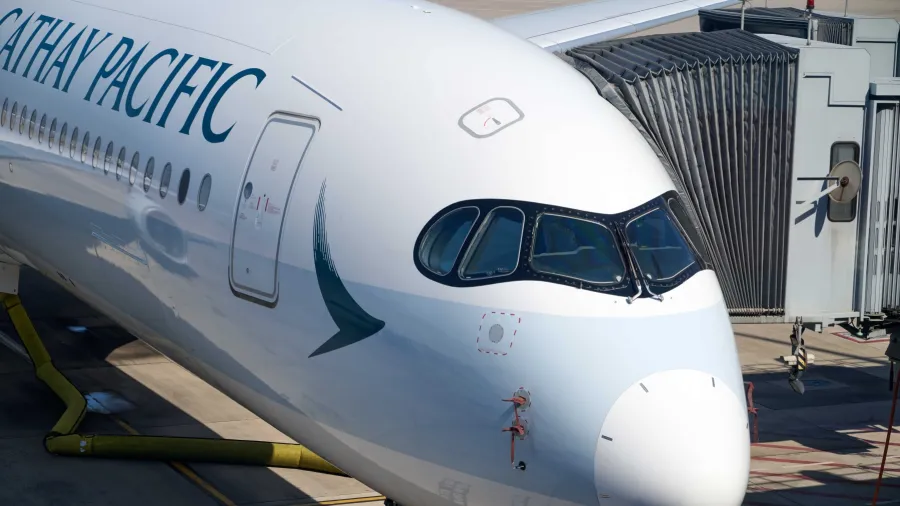
Cathay Cargo has suspended all freighter services to Dubai and Riyadh until May, citing the ongoing conflict in the Middle East and the need to provide greater planning certainty for customers.
The Hong Kong-based airline said its passenger flights to the two destinations would also remain suspended over the same period.
In a statement, Cathay said the decision was taken in view of the volatile regional environment and reflected its priority of safeguarding both customers and staff. The airline added that it would continue to monitor developments closely and remain flexible in its operational response.
Cathay’s affected freighter services had been operating between Hong Kong and Al Maktoum International Airport (DWC) in Dubai. Flights that would normally transit the impacted region are now being rerouted.
The carrier is not alone in extending restrictions. IAG Cargo recently said that flights between London and Amman, Bahrain, Doha, Dubai and Tel Aviv are suspended until June, while services between London and Abu Dhabi are suspended until October. Flights between Madrid and Doha are paused until March 31, while Madrid-Tel Aviv remains suspended until March 28.
Lufthansa Cargo has also announced a series of regional restrictions. Group-wide flights to and from Tel Aviv are suspended through April 9, while Lufthansa itself is suspending services to and from Riyadh through April 5, though ITA Airways continues scheduled flights to the Saudi capital.
The Lufthansa Group has also suspended services to and from Abu Dhabi, Amman, Beirut, Dammam, Dubai and Erbil through March 28, while flights to and from Tehran are suspended through April 30. In addition, until April 19, the carrier is not accepting bookings for a number of destinations including Abu Dhabi, Amman, Beirut, Dammam, Dubai (DWC and DXB), Erbil, Riyadh, Tel Aviv and Tehran.
The market impact is spreading. Air cargo rates have begun to rise, and freight forwarders in Hong Kong have reacted angrily to newly imposed fuel surcharges by some airlines. Oman Air Cargo has also introduced a war surcharge.
As the conflict drags on, carriers are being forced to balance service continuity, network safety and customer planning in an increasingly fragile airfreight environment.