



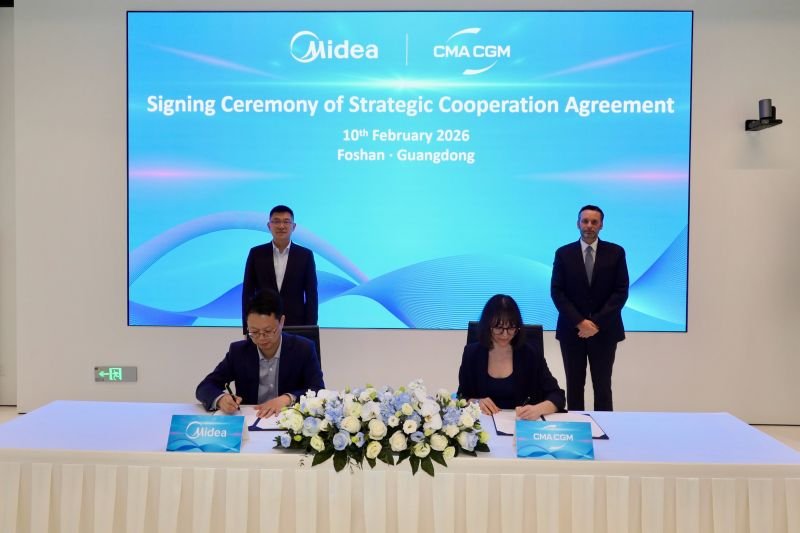
CMA CGM and the Chinese group Midea, globally known for its home appliances, announce a strategic cooperation agreement focused on a clear objective: to build a more “intelligent,” more integrated, and more sustainable logistics. Behind this type of memorandum, the market signal is important: manufacturers want supply chains driven by data, capable of absorbing shocks and securing end-to-end service.
The agreement is not limited to “putting more boxes on ships.” The two groups mention a collaboration that combines logistical innovation and technological innovation, with the ambition to optimize operational efficiency, streamline international flows, and strengthen the resilience of transport routes.
On the shipowner-logistics side, the logic is consistent: CMA CGM emphasizes its priorities (decarbonization, digitalization, innovation) and its integrated service system. On the global shipper side, Midea is pursuing a globalization strategy and seeking solutions that align performance, visibility, and sustainability.
In a context where shippers want clearer commitments on deadlines, availability, and carbon footprint, this type of agreement reflects an evolution: competitiveness is determined as much by capacity as by the quality of orchestration (forecasting, tracking, optimization, exception management). For the logistics community, this is an additional indicator: major accounts are accelerating on the “smart supply chain” — and expect the same level of maturity from their partners.