



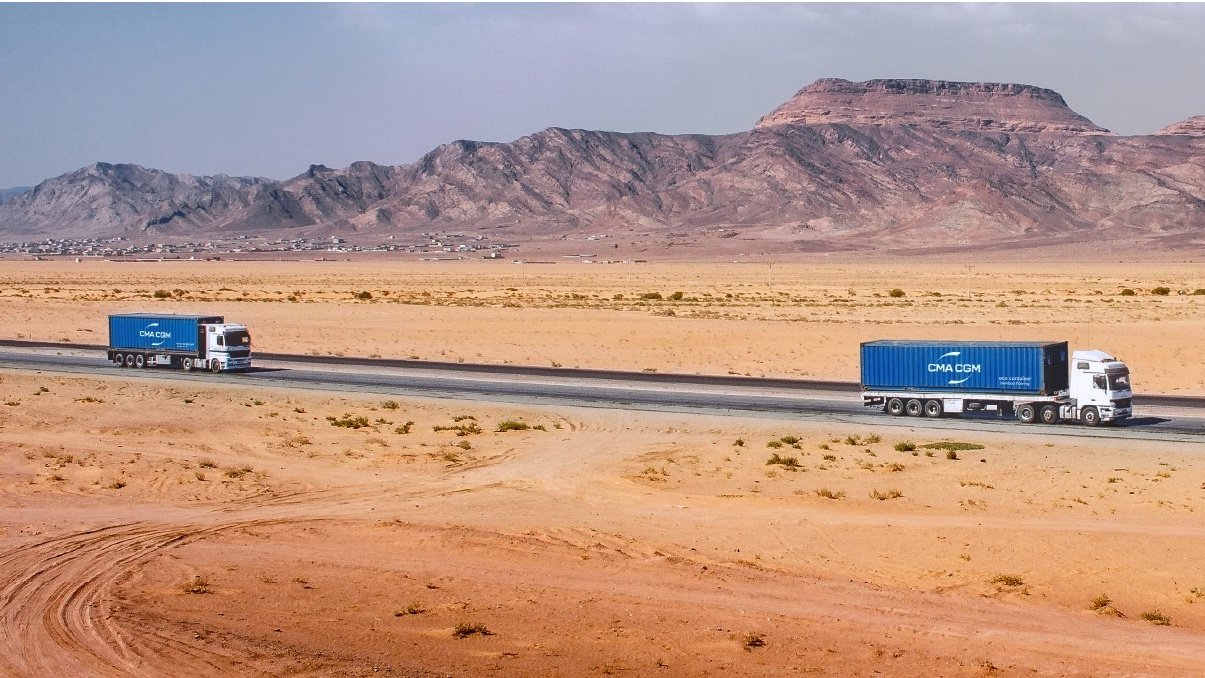
With the Strait of Hormuz effectively closed to most commercial shipping, CMA CGM has launched a series of multimodal logistics solutions designed to maintain cargo flows into and out of the Gulf region.
The Marseille-based container line announced the deployment of alternative routes combining sea, rail and road transport to bypass the restricted maritime corridor.
The measures aim to ensure continuity of supply chains while prioritizing the safety of crews and operational staff.
Iran restricted access to the strategic waterway shortly after being attacked by the United States and Israel on February 28, trapping hundreds of ships in the Persian Gulf and sending global energy prices soaring.
Although the strait is approximately 20 miles wide, commercial vessels typically pass through two narrow channels only two miles wide, making the corridor highly vulnerable to disruption.
Under the new logistics setup, CMA CGM is redirecting cargo through alternative ports including Khor Fakkan and Fujairah in the United Arab Emirates, Sohar in Oman, and Jeddah in Saudi Arabia.
From these locations, the company is deploying inland logistics corridors combining road and feeder shipping services to reach major regional markets.
The routes connect six Gulf countries — including the UAE, Saudi Arabia, Qatar, Bahrain, Kuwait and Iraq — via road and rail networks that bypass the strait entirely.
Cargo entering through Jeddah on the Red Sea can then be transported by road to key Gulf destinations including Dammam, the UAE, Qatar and Kuwait.
According to CMA CGM, the configuration also enables cargo flows to connect with Mediterranean and Asian trade lanes without exposing vessels to the Hormuz chokepoint.
Ports in Oman provide another strategic alternative, allowing goods to move through a combination of feeder services and overland transport to reach markets across the northern Gulf.
The company said the initiative demonstrates how multimodal logistics can help maintain supply chain resilience during periods of severe geopolitical disruption.