Maritime Nov 16, 2026
CMA CGM triples its third-quarter profit as shipping revenues surge on higher rates and volumes
Stronger freight rates and rising container volumes fuel maritime earnings, while weaker margins in logistics highlight contrasting performances across the group.
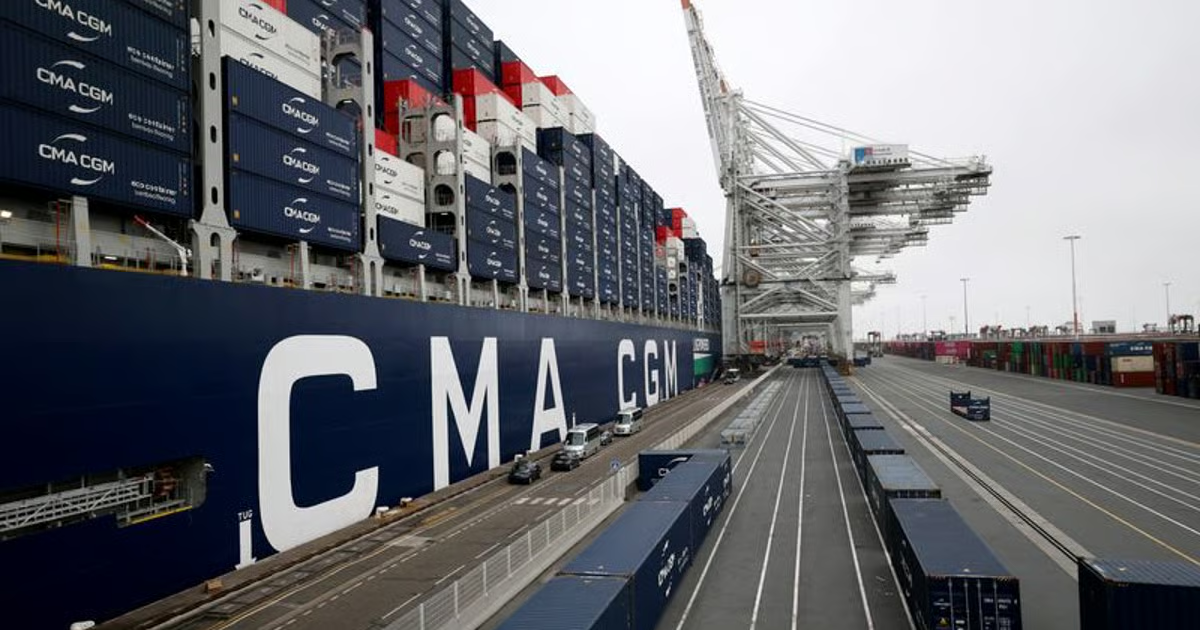
CMA CGM posted a strong third-quarter performance, with net profit more than tripling year on year as higher freight rates and increased container volumes boosted its maritime operations. The group's logistics division, however, had a different trend, with lower earnings but higher revenue.
The French shipping group, the world's third-largest container liner, based in Marseille, reported net profit of $2.32 billion, up from about $760 million in the same period a year earlier.
Revenues jumped 31.1 percent to $18.4 billion and earnings before interest, taxes, depreciation and amortization (EBITDA) surged 61.6 percent to about $4.8 billion. Group EBITDA margin stood at 25.9%, an improvement of 4.9 percentage points versus the third quarter of 2025.
Chairman and Chief Executive Rodolphe Saadé commented on the results, saying: “The group has maintained strong momentum despite geopolitical uncertainty.
“The Group performed well in the third quarter in a geopolitical environment of uncertainty, underpinned by the momentum and growing volumes of our maritime activities,” he said in the earnings announcement.
Group growth driven by maritime operations
CMA CGM shipped 6.5 million twenty-foot equivalent units (TEUs) in the quarter, a 5.5% increase from the same period a year earlier. The company said the performance was among its best volume gains in recent years and beat overall market growth.
Shipping division generated revenues of $12.3 billion, up 37.3% YoY. Revenue growth was significantly higher than the increase in volumes transported, due to an increase in average revenue per TEU of 30% to $1,891.
Profitability improved markedly too. The division’s EBITDA rose to $4 billion from $2.2 billion a year ago, and its EBITDA margin grew 7.5 percentage points to 32.4%.
Its margin was higher than that of major rivals Maersk, which posted 29.4%, and Hapag-Lloyd, which recorded 24.9%.
CMA CGM cited numerous reasons for the strength of shipping demand. Against a backdrop of geopolitical uncertainty, companies have kept rebuilding inventories, while investment in AI infrastructure and data centers has generated additional cargo flows. Growth in clean technologies and electric vehicles, especially in China, has also underpinned demand.
Another major factor impacting the market has been disruptions to maritime routes and international supply chains. Existing tensions in the Middle East continue to affect shipping operations and compound elevated freight rates.
In the last few years CMA CGM has been one of the relatively few big global carriers still running some services via the Red Sea. The group and other shipping lines have recently restored scheduled services on the full Suez Canal route.
Logistics revenue growth but profitability under pressure
The group’s logistics arm fared not quite so well. Revenue grew 19.2% to $5.46 billion reflecting organic growth and changes in the scope of operations. EBITDA was down 14.4% to $366 million.
This caused the division's EBITDA margin to contract 2.6 percentage points to 6.7%.
CMA CGM blamed difficult conditions in freight forwarding and continued weakness in the automotive sector for the weaker performance. These pressures were offset by stronger profitability of its maritime business.
After the acquisition of FedEx Supply Chain, CEVA Logistics continued to expand its international footprint within the division. Furthermore, as part of the overall development strategy the company started to simplify the organizational structure.
In addition to these activities, CMA CGM continued its investment program in shipping, port terminals and air freight capacity.
The fleet expansion includes three new 24,000 TEUs LNG-powered containerships deployed to the group’s flagship Asia-Europe FAL service.
Shipping demand remains supportive despite geopolitical uncertainty
Looking ahead, CMA CGM expects the strong demand for maritime transport to persist over the next few months. Freight rates have been trending upwards since the second quarter, and are expected to continue to be a key driver of business growth.
However, the group is still cautious about the operating environment. Ongoing tensions in the Middle East interrupt maritime routes and raise operating costs. Changes in trade policies could change international cargo flows and add to uncertainty for global supply chains.
END OF REPORT