



After the first wave of disruption triggered by the Middle East conflict, pressure at several key Asian container hubs is beginning to ease—but the market is far from back to normal.
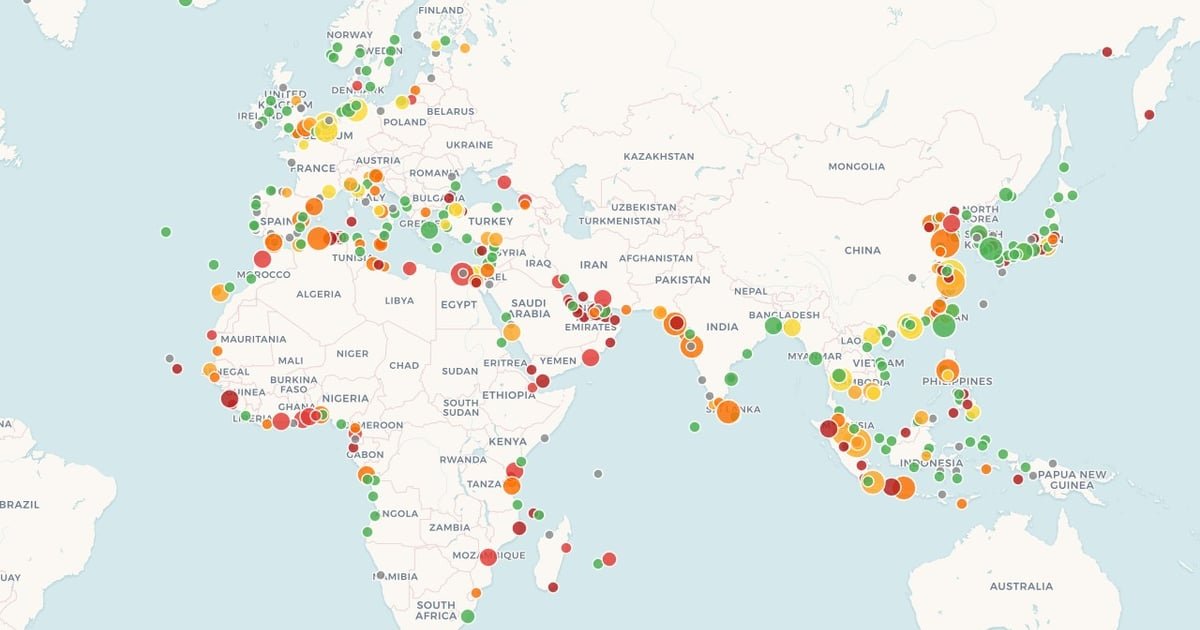
According to Linerlytica, congestion at major ports across South Asia and Southeast Asia has started to improve following the initial disruption caused by the closure of the Strait of Hormuz. The sharpest early impact was felt in Singapore, where delays peaked at 3.5 days, though the situation there is now clearing. Elsewhere in Southeast Asia, delays at major hubs have largely remained below one day.
On the Indian subcontinent, Mundra and Colombo have both seen cargo build-ups, but Linerlytica says delays have so far been kept under control at around two days.
A somewhat more cautious view comes from Xeneta. Senior analyst Destine Ozuygur said congestion in Colombo, Port Klang and Singapore had eased around five days ago, but levels in Colombo and Port Klang remained high and were now rising again. According to Xeneta, more than 40% of vessels were waiting in both locations, with congestion ratios recently climbing back to 55% in Colombo and 44% in Port Klang. Singapore, by contrast, has held below 35% since March 10, reflecting its stronger ability to handle sustained disruption.
The congestion is feeding directly into freight pricing. Xeneta said spot rates from China Main to Northern Europe were averaging $2,583 per FEU, up nearly 23% from February 28 and 13% higher than one week earlier. Rates from China Main to the Mediterranean were even more elevated at $4,089 per FEU, a 30% increase from February 28 and 22% above the prior week’s level. The China Main to US West Coast trade rose 11%, from $1,855 to $2,065 per FEU, before flattening.
Linerlytica sees similar pricing patterns, but notes that mid-March rate increase attempts have failed on Asia-Europe trades and have also struggled on the transpacific, where market attention is now turning toward US contract negotiations.
While spot rates have not surged as dramatically as some feared, bunker-related costs remain a major pressure point. Xeneta pointed to a sharp jump in fuel prices, citing data from MABUX. VLSFO in Singapore peaked at $1,450 per metric ton on March 9, compared with $515 on February 27, a rise of 180%. It has since eased to $1,097 per metric ton. In Zhoushan, prices were around $1,040, or roughly $60 lower. For HSFO in Singapore, the pattern was similar: prices rose from $439 on February 27 to $1,200 on March 9 before falling back to $840.
That means even if spot freight remains somewhat contained, carriers are likely to seek compensation through higher bunker surcharges.
According to Dynamar analyst Darron Wadey, only a sudden halt in hostilities would materially ease bunker pressure. And even if the war ended quickly, he cautioned, oil and refined fuel prices would not necessarily fall straight back to pre-war levels.
The consequences, he said, will not stop at ocean freight. Higher fuel costs will cascade into air cargo, road transport, manufacturing and ultimately the price paid by end consumers across supply chains.