



FedEx is expanding its reusable shipping offering for US B2B customers following a pilot program developed in partnership with packaging specialist Returnity.
The goal is straightforward but ambitious: create a reusable container that performs inside the FedEx logistics network as efficiently as a traditional corrugated box, without creating operational friction.
That is no small challenge. Global logistics systems have been built around corrugated packaging for decades, from sorting to labeling to handling. Replacing that standard requires more than a sustainability pitch. It requires operational compatibility.
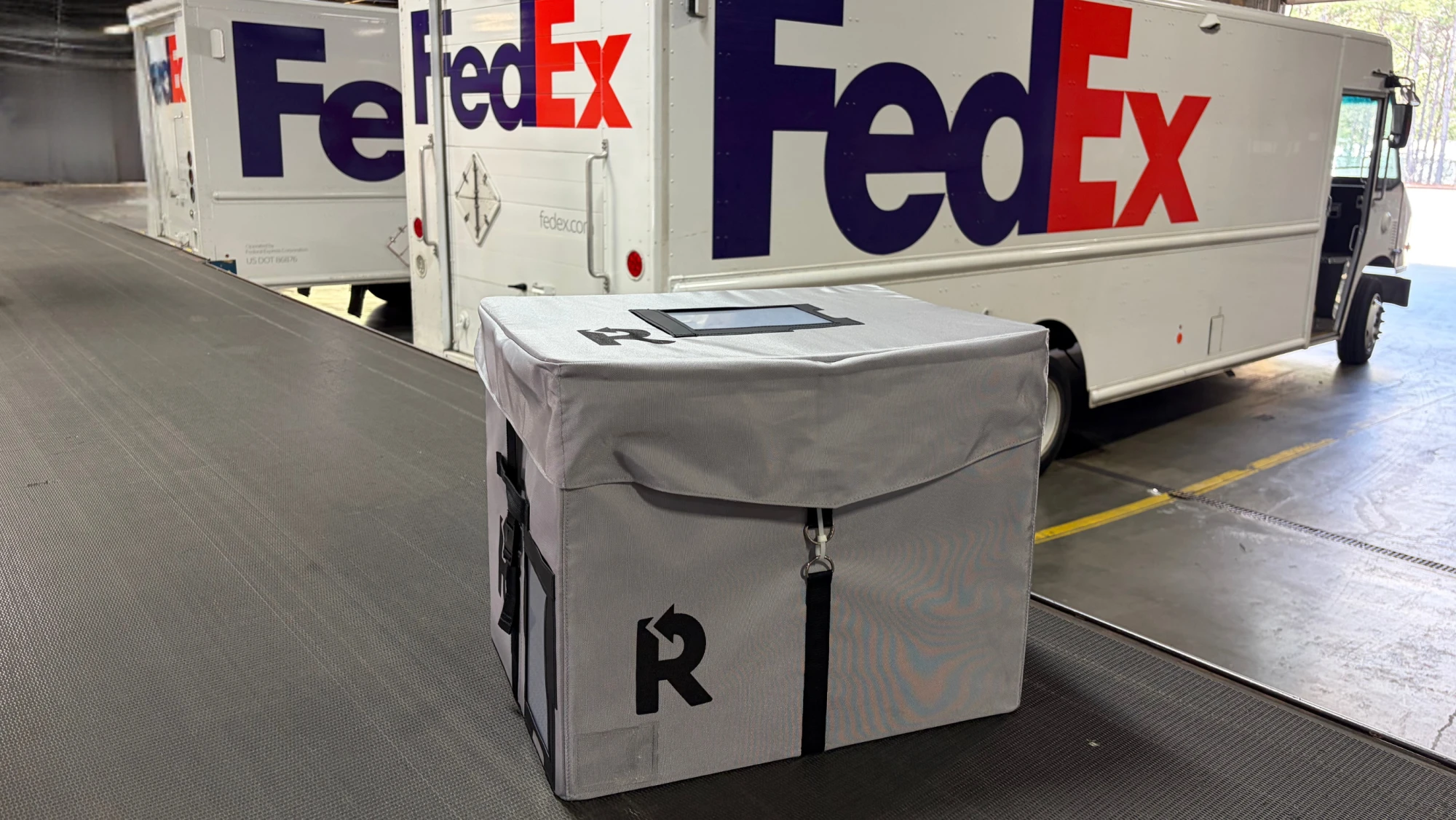
The new container developed for FedEx is designed to be durable, collapsible, easy to scan, easy to unpack and compatible with automation systems. Manufactured in Southeast Asia, it is made from corrugated plastic with a fabric wrap and is guaranteed for 50 uses. Customers also have the option to pay Returnity for end-of-life demanufacturing.
FedEx is initially targeting B2B shipments, which make up around 45% of its US domestic revenue base. That strategy matters because reusable packaging tends to work best in closed-loop systems where containers can be recovered and reused consistently. Retailers, especially those handling soft goods such as apparel or linens, appear to be a key early use case.
The containers are designed for store replenishment, reverse logistics from stores and inventory balancing between retail locations. While FedEx and Returnity have not disclosed early adopters, they say initial results have been strong where regular route structures make it easier to control packaging flows.
The business case goes beyond sustainability. Returnity says some pilots showed about 30 seconds of labor savings per unpack compared with single-use boxes. The reusable format opens more easily, collapses flat and reduces reliance on box cutters, which can also lower the risk of product damage.
The two companies say some customers could see cost savings of around 30% versus corrugated, along with improved predictability in a supply chain environment where packaging prices and availability can fluctuate sharply.
FedEx also says the reusable boxes could cut carbon emissions by 64% to 88% compared with single-use corrugated under typical conditions, assuming a non-return rate of 40% or less. The initiative supports the company’s broader goal of reaching carbon-neutral operations by 2040.
A key part of the project has been engineering the details that make repeated use viable in practice. Labels are inserted into a pouch-style affixation rather than applied directly as adhesive stickers, helping avoid residue buildup over time. The partners also worked on closures, tamper security and barcode visibility to ensure the containers remain effective deep into their life cycle.
For FedEx, the message is clear: reusable packaging will only scale if it is as operationally practical as it is environmentally appealing. For Returnity, the project could become a model for broader B2B reuse across logistics networks.