Since the late 1980s — an era often associated in Western Europe with the presidency of François Mitterrand — global trade has undergone a profound transformation. The fall of rigid blocs, the acceleration of globalization, the rise of deregulation, and later the shocks of financial crises, pandemics, and geopolitical tensions have continuously reshaped how goods move across borders.
In this evolving Western landscape, logistics has shifted from a background function to a strategic pillar of economic resilience. It is within this long-term transformation that IFE Global Logistics (London) Ltd, based in the United Kingdom, has built its approach: pragmatic, relationship-driven, and deeply anchored in trust.
Operating from London, one of the world’s most influential logistics and financial hubs, IFE Global Logistics positions itself at the intersection of tradition and modernity. While global supply chains have become faster, more digital, and more complex, the fundamentals that emerged decades ago — reliability, accountability, and human expertise — remain decisive. The company’s philosophy reflects this continuity: logistics as a long-term commitment rather than a transactional service.
At the core of IFE Global Logistics’ international development is Ross Wills, Head of Global Development, whose role embodies the company’s outward-looking vision. His work focuses on strengthening global partnerships, expanding strategic trade lanes, and ensuring that growth remains aligned with operational consistency. Rather than pursuing expansion at any cost, the emphasis is placed on controlled development, partner reliability, and sustainable collaboration — values increasingly rare in a market driven by short-term metrics.
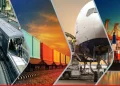
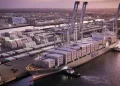
IFE Global Logistics delivers tailored solutions across air, sea, and land freight, with a clear focus on visibility, communication, and execution. In a Western trade environment shaped by post-Brexit adjustments, regulatory fragmentation, and shifting geopolitical balances, the ability to maintain continuity across borders has become a competitive advantage. From the UK, the company leverages its geographic and strategic position to connect Europe with global markets while maintaining close operational oversight.
What distinguishes IFE Global Logistics is not scale for scale’s sake, but precision. Each shipment is treated as part of a broader supply chain ecosystem, where delays, compliance issues, or communication gaps can have cascading effects. This attention to detail reflects a deeper understanding of modern logistics: success is measured not by volume alone, but by consistency, predictability, and trust.
As a member of EAN Networks, IFE Global Logistics operates within a vetted international ecosystem that reinforces these values. The network provides a framework for cooperation, knowledge exchange, and shared standards — elements that echo the evolution of Western logistics since the late 20th century, when collaboration gradually replaced isolation as the engine of growth.
From the Mitterrand years to today’s fragmented global order, one lesson remains constant: logistics is ultimately a human business. Technology accelerates processes, markets open and close, but trust remains the true currency of international trade. Through its measured growth, strategic vision, and people-driven approach, IFE Global Logistics continues to contribute to a more stable, connected, and resilient global logistics landscape.