Air Nov 27, 2026
Heathrow expansion faces renewed political uncertainty as parliamentary committee challenges third runway plans
A House of Commons committee has questioned the Government’s economic case for Heathrow’s third runway, calling for a rethink of the project. However, the airport’s leadership, business organisations and politicians across party lines continue to argue that expansion is essential to the UK’s economic growth, international connectivity and job creation.
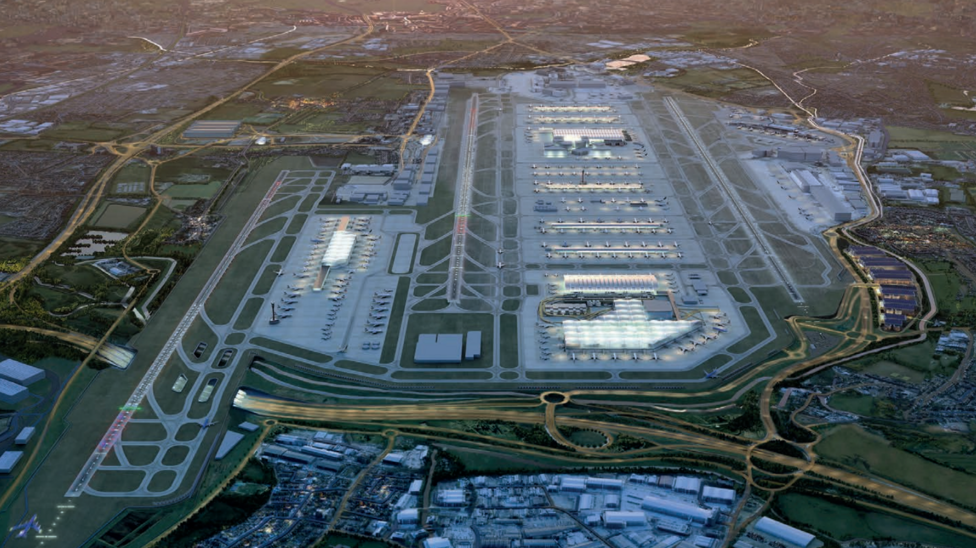
The future of London Heathrow Airport’s (LHR) proposed third runway has entered another period of political uncertainty, following the publication of a critical report by the House of Commons Transport Select Committee. While the committee has questioned the Government’s justification for the expansion, Heathrow’s leadership and a broad coalition of political and business figures maintain that the project remains crucial to the United Kingdom’s long-term economic prospects.
The committee’s report, released today, examines the Government’s Heathrow Expansion National Policy Statement and concludes that ministers have not sufficiently demonstrated the case for proceeding with a third runway.
Committee chair Ruth Cadbury went further, arguing that the current proposals should be put on hold while the Government revisits its approach.
“Plans for a third runway should be grounded for now and the government should go back to the drawing board before proceeding any further,” she said.
Cadbury has long opposed Heathrow’s expansion. As the Member of Parliament for Brentford and Isleworth, she represents an area of London directly affected by aircraft movements along Heathrow’s flight paths.
Her position comes amid the airport’s considerable importance to British international trade. Heathrow is the UK’s largest port by value and is estimated to have handled approximately £166 billion in imports and £127 billion in exports in 2025, representing around 1.59 million tonnes of freight.
For the committee, several aspects of the Government’s proposals require further examination. One of the principal concerns relates to economic modelling commissioned by the Department for Transport (DfT), which reportedly indicates a marked reduction in projected benefits compared with previous assessments, alongside what the committee considers a relatively modest increase in economic growth.
Opponents of the expansion have also challenged the Government’s decision to describe the project as critical to national economic development. Further criticism concerns the environmental consequences of increasing aviation capacity and the absence of a comprehensive national aviation strategy to support the proposals.
Although the Transport Select Committee cannot independently terminate the Heathrow expansion project, its findings carry political weight through its scrutiny and advisory responsibilities. The report therefore adds another obstacle to an already lengthy decision-making process, with uncertainty continuing over when the Government will reach a definitive position.
Heathrow defends the economic case for expansion
Heathrow chief executive Thomas Woldbye has rejected the suggestion that the committee’s conclusions should undermine the expansion programme. Instead, he has emphasised the extensive support behind the project and its potential contribution to employment, investment and economic competitiveness throughout the UK.
Woldbye pointed to backing from trade unions, business organisations, airlines, regional airports, senior Cabinet ministers and a majority of MPs, arguing that the third runway represents a strategic investment in the country's future.
“The overwhelming weight of evidence and support remains strongly behind Heathrow expansion. Trade unions, business groups, airlines, regional airports, senior Cabinet ministers and the majority of MPs back expansion because they recognise it is vital to creating quality jobs and supporting long-term economic growth across the UK,” he said.
He also argued that Heathrow’s expansion has already undergone extensive examination, with successive governments, independent commissions and industry specialists repeatedly identifying the need to increase capacity if Britain is to maintain its position in international markets.
“The case for expanding Heathrow has been examined more thoroughly than almost any infrastructure project in modern Britain. Successive governments, independent commissions and industry experts have repeatedly concluded that you either expand Heathrow so the UK can compete and grow, or you accept a steady erosion of the UK’s connectivity and global competitiveness.”
According to the Heathrow chief executive, attention should now shift towards delivering the privately financed development, subject to clear requirements covering affordability, financial viability and sustainability.
“The focus now should be on delivering this privately financed project which will unlock opportunity across the country while meeting clear tests on affordability, finance-ability and sustainability. That is what Heathrow remains committed to achieving,” Woldbye concluded.
Employment and economic growth strengthen the expansion argument
The employment dimension has also become an important part of the debate, particularly following the recent Milburn Review, which examined the number of young people in the UK who are not in employment, education or training (NEETs).
Former Government minister Lord David Blunkett has used the findings to reinforce the argument for proceeding with major infrastructure investments, highlighting the employment prospects and professional development opportunities that Heathrow’s expansion could generate.
The latest YouGov polling provides further evidence of parliamentary support, with 68% of MPs reportedly in favour of expanding Heathrow. This support also extends to the Government’s Heathrow Expansion National Policy Statement, which is expected to face a parliamentary vote early next year.
Economic projections associated with the development suggest that the additional runway could contribute £17 billion annually to the UK economy once operational. The project is also expected to support 108,000 jobs nationwide, alongside 5,000 apprenticeships, traineeships and other work opportunities.
Lord Blunkett has argued that the committee’s report should not become an excuse for further delays, particularly given the estimated one million young people classified as NEETs.
“This report cannot be used as a reason for the Government to delay – with one million NEETs, we need the jobs and opportunities infrastructure projects bring, especially when they’re privately financed, as is the proposed Heathrow expansion.”
He also underlined the importance of protecting Heathrow’s position as the UK's principal hub airport, arguing that sufficient capacity is necessary to prevent passengers travelling through competing European hubs such as Amsterdam Schiphol and Paris Charles de Gaulle to access international connections.
Blunkett further recalled that Parliament had previously approved the project, warning that continued hesitation over major infrastructure developments risks damaging Britain's international reputation and economic standing.
“There is no time to waste in getting this project started and we should crack on so that we can start to unlock the much-needed jobs and economic growth.”
Cross-party backing puts pressure on the Government
Support for Heathrow’s third runway is not confined to the governing Labour Party. Politicians from across the parliamentary spectrum have continued to advocate for the project, presenting it as an opportunity to strengthen national infrastructure, attract investment and improve the UK's international connectivity.
Antonia Bance MP, speaking on behalf of the Labour Growth Forum, highlighted the benefits that expansion could bring to communities and businesses beyond London.
“Labour MPs from all over the country can see the prize here. Good jobs, investment across Britain and the global connections our firms need to compete. Backed by trade unions, Heathrow expansion is a chance for Labour to show we can get big things built and deliver growth people can feel. Let’s get on with it,” she said.
Support has also emerged from the Conservative benches, where Andrew Griffith has called for the Government to overcome the obstacles preventing construction from moving forward.
He argued that international competitiveness depends on having the infrastructure and transport links necessary to support economic development, adding that Heathrow should be given the capacity required to maintain its position as the country's main international aviation hub.
“Conservatives will do whatever it takes to sweep away the blockers and get Heathrow’s third runway built. Countries on the rise have the best infrastructure and connectivity to the rest of the world. If we want growth, we must end the delays and give our national hub airport the capacity it needs. With no cost to the taxpayer, it’s time to get on with it. If the government won’t, we Conservatives will,” Griffith stated.
The expansion has also attracted support from Northern Ireland. Democratic Unionist Party MP Jim Shannon believes the investment could deliver benefits across the entire United Kingdom, particularly for regions that depend on strong international connections.
“Heathrow expansion is exactly the kind of major national project that the country should be getting behind. This is private investment that will deliver significant economic benefits for all parts of the United Kingdom, especially in Northern Ireland, so it’s no surprise that it commands such widespread backing from MPs from across Parliament. We’re on board, it’s time to take-off!” Shannon said.
Environmental concerns remain a major obstacle
Opposition to the development remains strong on political and economic grounds, especially from organizations concerned about the environmental and social impacts of aviation.
Celeste Hicks, of the Aviation Environment Federation, asked whether the estimated economic gain is sufficient to compensate for the wider impacts of increased airport capacity.
This criticism reflects wider concerns expressed by the Transport Select Committee, in particular the need to address climate considerations and develop a more comprehensive national aviation policy.
So the argument goes beyond the question of whether Heathrow needs more capacity. It also involves the balance between economic development, environmental responsibilities and the long term direction of British aviation.”
A decision is becoming increasingly urgent
Heathrow’s third runway has once again become the subject of a political divide, with parliamentary scrutiny intensifying just as supporters are calling for the project to move towards implementation.
On one side, the committee is demanding stronger justification, clearer environmental considerations and a reassessment of the Government’s economic projections. On the other, Heathrow, business representatives and politicians from Labour, the Conservatives and the Democratic Unionist Party argue that further delays could undermine investment, employment and the UK's international competitiveness.
The parliamentary vote expected early next year could provide greater clarity over the Government’s position and the future of the Heathrow Expansion National Policy Statement.
Nevertheless, until a final decision is taken and construction can either proceed or be definitively abandoned, uncertainty will continue to surround one of Britain's most significant proposed aviation infrastructure projects.
For an airport that plays such a central role in the UK's passenger connectivity and international freight activity, the stakes extend well beyond the construction of another runway. The outcome will also help determine how Britain intends to protect its position in an increasingly competitive global aviation and logistics market.
END OF REPORT