Air Nov 11, 2026
IATA calls for stronger protection of CORSIA at ICAO Air Transport Conference
The association intends to put the future of the global aviation carbon offsetting scheme at the centre of discussions, urging governments to strengthen implementation, authorize sufficient emissions units and avoid fragmented regional climate policies.
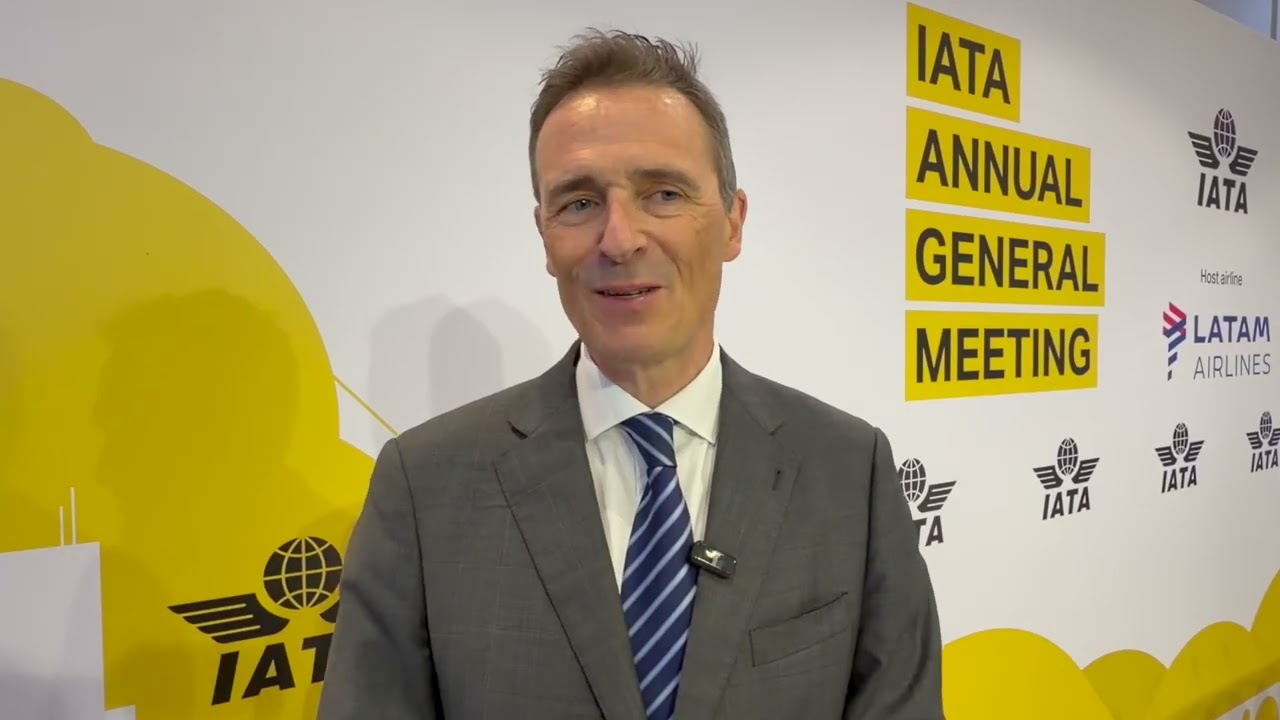
The International Air Transport Association (IATA) will make protection of the Carbon Offsetting and Reduction Scheme for International Aviation (CORSIA) a major issue at this month’s International Civil Aviation Organization (ICAO) Air Transport Conference. Thomas Reynaert, IATA’s senior vise president external affairs, outlined the association’s priorities, stressing the need for a globally coordinated framework to reduce emissions from international aviation.
“We also need to protect CORSIA, the only globally-agreed market-based measure to address international aviation emissions,” said Reynaert.
In Working Paper 31, IATA urges governments to approve sufficient eligible emissions units to cover the scheme’s requirements. The association said the necessary mechanisms and guidance are already in place, but states now need to provide the authorizations needed to ensure the system works effectively.
Reynaert also cautioned against expanding the European Union Emissions Trading System (EU ETS) outside of Europe’s borders, saying it could undermine the global framework put in place through CORSIA. IATA says European climate measures should be complementary to the international scheme, not competitive. As aviation and climate change are global issues, a coordinated international response is essential, according to the association.
CORSIA: a global scheme for aviation emissions
CORSIA was the first global market-based measure agreed by an entire industry sector to address climate change, and was adopted by the International Civil Aviation Organization (ICAO), the United Nations agency responsible for international civil aviation, in 2016.
The scheme sets a limit on carbon dioxide (CO2) emissions from international aviation. Airlines can continue to grow beyond this threshold, but will have to pay for any emissions above the relevant limit. This is done by buying and retiring carbon credits, known as CORSIA Eligible Emissions Units, that fund emission cuts elsewhere or in other sectors.
Under the scheme, these credits must be real and permanent emissions reductions, and not double-counted under other schemes.
The implementation of CORSIA is organized in different phases. The emissions baseline was established at 2019 levels for the pilot phase (2021 to 2023). Since the first phase began in 2024, the relevant baseline has been set at 85 per cent of 2019 emissions. This framework will remain in place until the scheme ends in 2035.
Also, airlines that emit more than 10,000 tons of CO2 per year from international flights have reporting obligations. They must monitor and report their emissions and have the figures independently verified by a third party.
So far participation in CORSIA has been voluntary. The scheme had 130 participating states as at 1 January 2026. From 2027, offsetting requirements will apply to all international flights, with exemptions for certain small island states, landlocked developing countries and least developed countries unless they voluntarily opt in.
Other priorities for IATA include SAF production and energy security
Reynaert referred to CORSIA protection, but also to the growing economic and operational pressures on the aviation industry.
"Air transport is undergoing stress-testing like it has never known before. “Fuel prices have doubled, supply chain issues are delaying more efficient aircraft and conflict-related diversions mean longer flights burning more fuel,” he said.
Airlines are still committed to decarbonization despite these challenges. “But IATA is disappointed with the current level of Sustainable Aviation Fuel (SAF) production, especially considering the industry’s increasing demand for credible alternatives to conventional jet fuel.
The recent uncertainty around jet fuel supplies has also brought the role SAF can play in improving energy security back into focus. Limited supply buffers mean some locations could be vulnerable to possible disruptions, although widespread shortages are not expected.
Working Paper 30 tackles this problem by urging a coordinated policy response from governments to support the development and deployment of SAF, lower-carbon aviation fuels and other cleaner energy sources.
IATA believes that harmonized sustainability criteria and certification requirements will be needed to develop a transparent and competitive international SAF market. The association also stresses the need for purchase-based accounting, backed by a reliable registry. It identifies the CADO SAF Registry as an example of the infrastructure that is needed to improve the accessibility and traceability of SAF across international markets.
The role of ICAO in fostering cooperation in world aviation
For Reynaert, the upcoming conference is an opportunity to reinforce international cooperation at a time when geopolitical divisions and fragmented regulatory approaches are becoming ever more challenging for the aviation sector.
He pointed out that ICAO's role is more than just a platform for governments and industry representatives to discuss priorities. The primary benefit of this is the ability to bring together stakeholders to establish common standards and policies that can be applied globally.
“In a world that is becoming more fragmented, ICAO is where governments and industry come together not simply to discuss priorities, but to agree global standards and policies. That is multilateralism with a pragmatic purpose,” he added.
IATA expects the Air Transport Conference to reinforce the ability of aviation to connect people, support economic growth and build resilience. For the association, safeguarding global mechanisms such as CORSIA, speeding up the development of sustainable aviation fuels and maintaining consistent international policies are necessary to guaranty the benefits of air connectivity can continue to expand worldwide.
END OF REPORT