



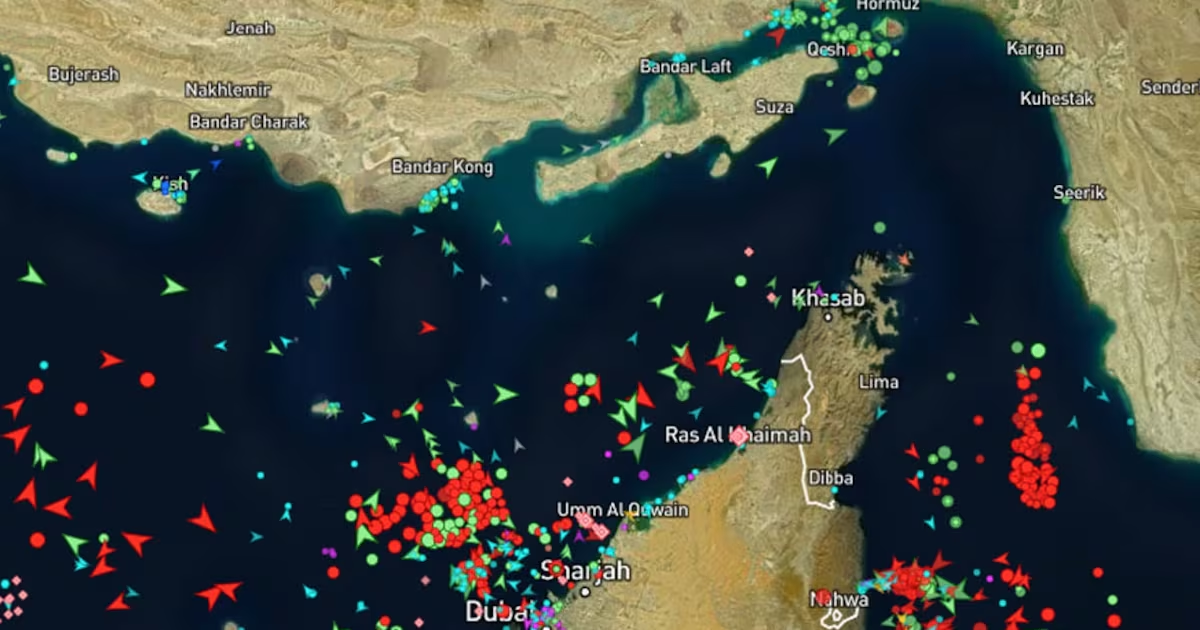
Thousands of seafarers remain trapped aboard vessels in the Arabian Gulf as the Israel-Iran conflict escalates and security risks make transit through the Strait of Hormuz unsafe, according to the International Maritime Organization (IMO).
In a video interview with The National in the UAE, IMO Secretary-General Arsenio Dominguez said the Strait of Hormuz remains legally open but is not safe for ships to navigate and operate in the region. The Iranian Islamic Revolutionary Guard Corps (IRGC) claims to control the strait and has threatened to burn ships attempting passage, even though the waterway connecting the Arabian Gulf to the Gulf of Oman has not been formally closed under international law.
Nearly 150 container ships, 450 oil and gas tankers and 200 bulk carriers trading internationally were estimated to have been inside the strait when the conflict erupted, leaving large numbers of crews stranded. Dominguez said around 20,000 seafarers are affected, along with 15,000 people on passenger ships. Seatrade Cruise News reported six cruise ships were in the Gulf with passengers onboard.
With air travel shut down across much of the region and only a small number of repatriation flights starting, crews remain stuck at sea. Even if some seafarers could fly out, shipowners are reluctant to leave high-value vessels uncrewed.
At least 10 commercial ships have been struck or involved in near misses since Feb. 28. International Chamber of Shipping (ICS) chairman Emanuele Grimaldi said he is deeply concerned about the danger faced by crews who are simply trying to do their jobs, calling on states to take steps to ensure their safety. He also expressed sympathy for families of seafarers who have lost their lives and for those still stranded.
War risk insurance has tightened rapidly. Dominguez said insurers are either withdrawing cover or increasing premiums sharply—sometimes to five times prior levels—making coverage unaffordable for many operators.