



As the global container market appears to move further away from the supercycle that delivered billions in profits to the world’s top carriers earlier in the decade, several intra-Asian operators are still seeing gains.
Cosco Shipping, SITC and RCL all posted stronger earnings linked to Asia, even as the wider global liner market has faced declining income since 2022, aside from a temporary recovery in 2024 driven by Red Sea diversions around the Cape of Good Hope.
That relief now appears to have faded. New vessel capacity and US tariffs are weighing on demand and putting profits under renewed pressure.
In its latest market review, Alphaliner said Cosco’s EBIT dropped from 26.4% in the first quarter of last year to 9.2% by the fourth quarter. Group profits fell 41% year on year to $4.3 billion, although the company received a significant boost from domestic and intra-Asia activities.
According to Alphaliner, Cosco recorded a 12% rise in earnings on its Mainland China activities, while revenues on the Transpacific and Asia-Europe trades both declined by 17%.
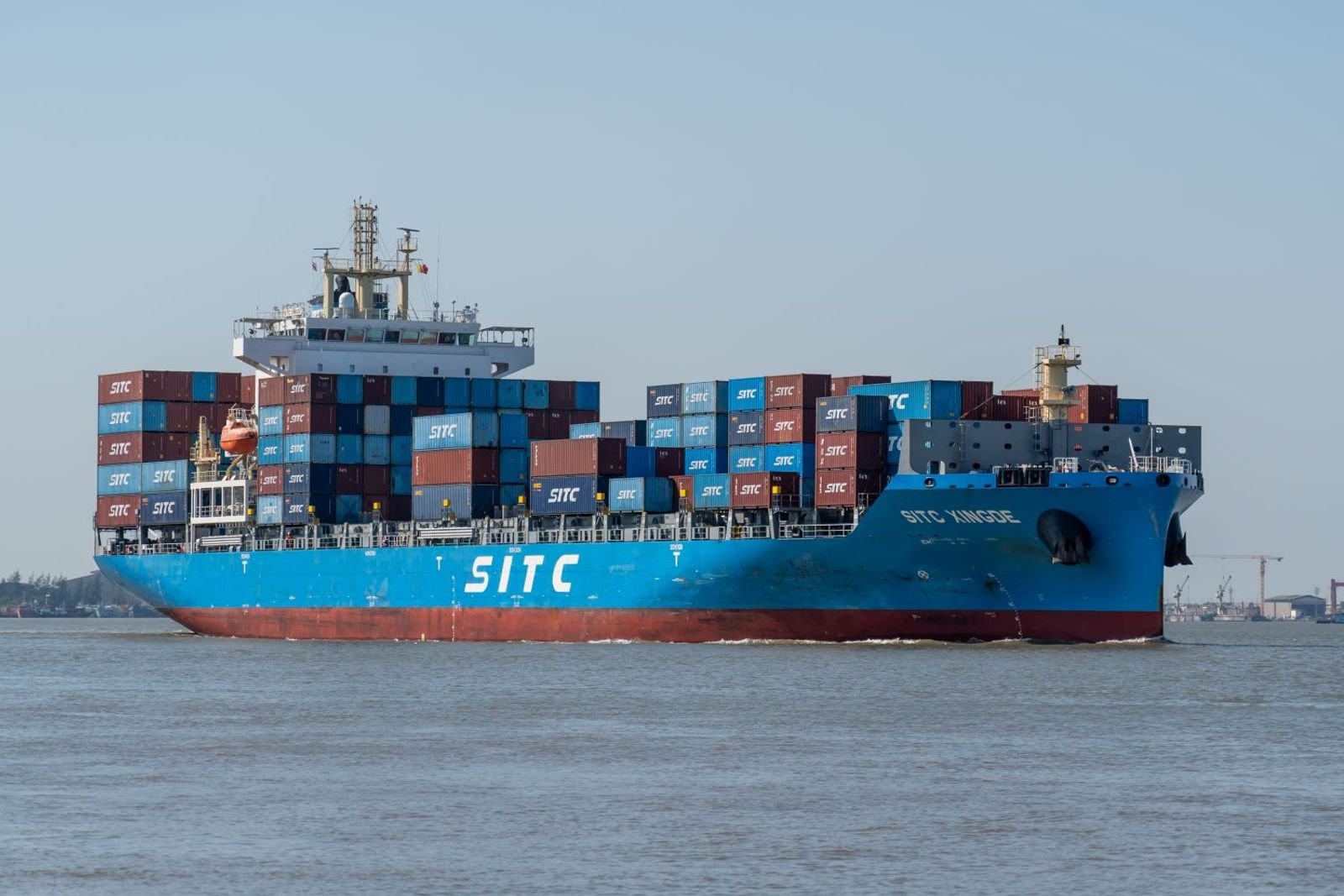
Hong Kong-based SITC, widely viewed as an intra-Asia specialist, posted a 20% rise in profits in 2025. Average freight rates increased from $721 per teu to $753 per teu, while volumes rose from 3.57 million teu to 3.85 million teu. During the year, the carrier launched new services linking China with India, the Philippines, Indonesia, Thailand and Vietnam, including a self-operated direct service between northern China and East India.
Not all intra-Asian carriers performed as strongly. In some cases, extraordinary circumstances rather than core freight demand or rates shaped the financial outcome.
Another Hong Kong carrier, TS Lines, saw profits fall 10% year on year to $329 million after ending its Asia-US West Coast service. The line is now concentrating on Asia-Pacific routes, including the Red Sea and the Middle East, with Mexico remaining its only transcontinental service.
Regional Container Lines reported 2025 profits of $906 million, down 11% from the previous year. Alphaliner said the decline was mainly due to appreciation of the Thai baht. Even so, the consultant noted that RCL’s freight income rose 5.2% in 2025, driven by improved fleet efficiency and network expansion, which enabled an additional 215,547 teu in liftings, up 8.8% year on year.
By contrast, the top nine global container lines recorded a sharp drop in EBIT. Together, they generated operating profits of $13.9 billion in 2025, down from $32.6 billion in 2024. While those results remain well above the pre-Covid decade average, they also underline how profits have been trending downward.
Alphaliner still argues that container shipping remains in a profitable supercycle. But given the steady decline in profits since 2022, that conclusion is open to debate. Without the Red Sea diversions, several lines might already have slipped into losses. As it stands, only Maersk, Yang Ming and Ocean Network Express recorded EBIT losses in the fourth quarter of last year, but every line saw margins weaken significantly from Q1 to Q4.
CMA CGM, which does not report EBIT, and MSC, which does not publish profit-and-loss figures, are not included in Alphaliner’s dataset.