



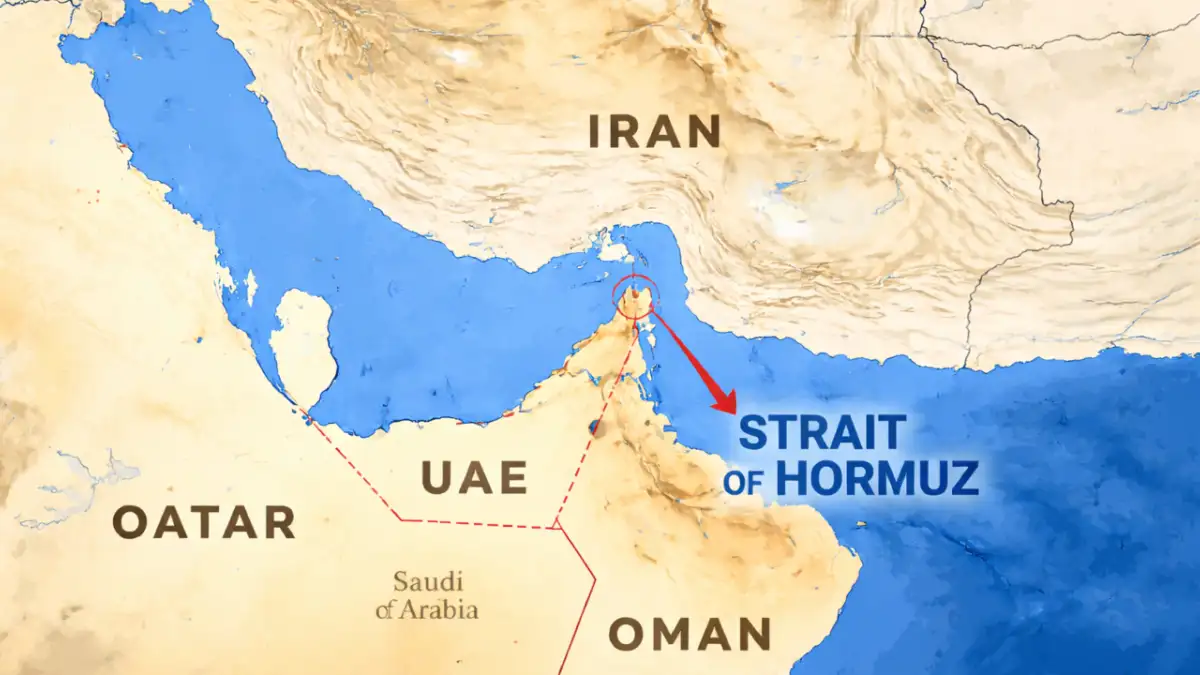
A two-week ceasefire between the United States and Iran has raised hopes of limited relief for shipping after weeks of paralysis in the Strait of Hormuz, one of the world’s most critical maritime chokepoints.
The truce was reportedly secured through mediation by Pakistan just minutes before a deadline set by US President Donald Trump at 8pm EST on 7 April. Under that ultimatum, Washington had threatened to strike Iranian bridges and energy infrastructure unless Tehran fully reopened the Strait.
Pakistan’s Prime Minister Shehbaz Sharif announced that Iran and the United States, together with their allies, had agreed to an immediate ceasefire covering all areas, including Lebanon and elsewhere.
Before the agreement was confirmed, Trump had posted that the US would suspend planned attacks on Iran provided Tehran agreed to the complete, immediate and safe reopening of the Strait of Hormuz.
However, Iran’s foreign minister, Seyed Abbas Araghchi, described the arrangement in notably different terms. According to his statement, safe passage through the Strait would be possible for two weeks only through coordination with Iran’s armed forces and with due regard to technical limitations. That statement was later reposted on Trump’s Truth Social account.
The difference in language matters. While Washington framed the issue as a reopening, Tehran presented it as a tightly controlled transit regime under Iranian authority.
According to Associated Press, citing a regional official, the ceasefire arrangement may also allow Iran and Oman to charge ships for passage through the Strait. In recent weeks, reports have suggested that Iran was already receiving around $2m per approved transit, paid in either Chinese yuan or cryptocurrency.
Trump later said that the United States would assist with the traffic build-up in the Strait, although no further details were provided on how that support would be delivered.
Iran’s position is also tied to wider negotiations. One point in its 10-point framework for talks is the continued assertion of Iranian control over the Strait of Hormuz, according to the country’s Supreme National Security Council. Formal discussions between the two sides are expected to begin in Islamabad on Friday.
Since the conflict began on 28 February, Iran’s effective closure of the Strait has triggered a global energy shock. About 20% of the world’s crude oil and LNG exports move through the Arabian Gulf via Hormuz, and the disruption has had immediate consequences for supply and pricing.
Oil markets reacted sharply to the ceasefire news. WTI crude fell to $97.36, down 13.8%, while Brent dropped to $95.36, down 12.73%, both retreating from much higher levels seen earlier in the crisis.
Even so, the security situation remains fragile. Despite the ceasefire announcement, strikes have continued to be reported in Iran, Israel and elsewhere in the region, including Bahrain, Qatar, the UAE and Saudi Arabia.
For shipowners and operators, one of the main questions is how much traffic will actually move through the Strait even if the truce holds. There is strong pressure to evacuate the estimated 1,000 internationally trading ships and 20,000 seafarers stranded in the Gulf since late February. But westbound transits to reload cargoes carry obvious risk if hostilities resume and vessels once again find themselves trapped.
The ceasefire may have opened a narrow window, but it has not restored normality. For now, shipping remains caught between diplomacy, security risk and uncertain rules of passage.