



Maersk has confirmed that 10 of its vessels are effectively stranded in the Persian Gulf following the closure of the Strait of Hormuz, highlighting the gravity of the current shipping crisis in the region.
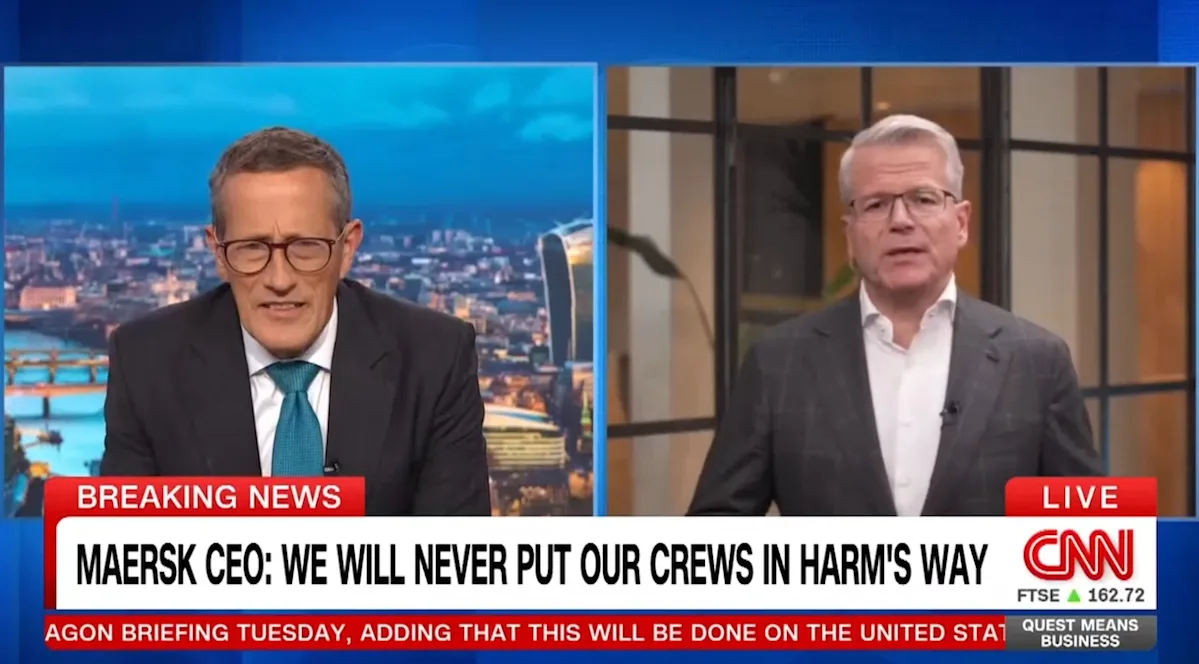
In separate media interviews, chief executive Vincent Clerc said the ships are unable to leave and remain stuck in what he described as the Upper Gulf. As a precaution, the vessels have been grouped offshore and kept away from ports considered exposed to attack. At least one of the affected ships is understood to be operating under charter to the US Military Sealift Command.
Clerc said that even if a ceasefire allowed movements to restart, it would still take Maersk between one week and 10 days to restore normal operating conditions. That delay alone illustrates how fragile the system has become.
The situation has deepened frustrations among global carriers, many of whom have sought naval escorts only to be told that transit through the strait remains too dangerous. The security environment deteriorated further after attacks involving unmanned boats, missiles and drones hit tankers, ports, airports and other infrastructure across the Gulf. A ONE containership was also reported damaged.
Maersk said its immediate priority is the safety of its crews, vessels and customer cargo. The group will only resume normal sailings when it is confident that those conditions can be guaranteed.
Industry participants attending the Connecticut shipping conference this week said the war has left around 10,000 merchant seafarers and hundreds of vessels idle in the Gulf. With many airlines having suspended services to and from the region, crew mobility has become another major concern.
Like other major carriers, Maersk has suspended or rerouted some Gulf-related services and is using alternative hubs to stage cargo until traffic can safely pass through Hormuz again. Emergency surcharges have also been introduced.
Clerc described the combined disruption in Hormuz and the Red Sea as having profound consequences for global shipping and supply chains, warning that the sector is now operating in what he called “uncharted territory”. He added that fuel supply chains are also under strain, raising the risk of shortages at bunkering hubs in Asia and the Middle East, while the costs of diversion and delay are set to be transferred to customers.