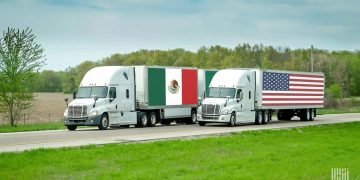





As the American trucking market continues to emerge from a period of pressure, one corridor stands out as an area of resilience: the USA–Mexico border. According to Uber Freight executives, these flows could stabilize North American logistics demand in 2026, even if the rest of the market remains exposed to low margins, economic uncertainty, and the effects of trade policies.
The data mentioned in the article shows a notable dynamic: Mexico’s exports to the United States are said to have increased by about 15%, in a context where shippers are adapting their strategies (sourcing, industrial arbitrations, tariff management). In other words, even when some categories slow down, the industrial and regional structure maintains a robust transport volume.
On the capacity side, the market is showing signs of tension: carrier exits, weak equipment orders, and a shrinking capacity buffer. But the article clarifies: even if spot prices may rise, operating costs and “empty miles” complicate the return to healthy profitability for some carriers.
Finally, the text emphasizes the operational reality of Mexico: risks of disruptions, security, cargo theft, compliance. The difference in 2026? Many shippers now integrate these risks into a scenario planning approach: alternative routes, multiple ports of entry, business continuity, trust programs — rather than facing the uncertainties without a plan B.