



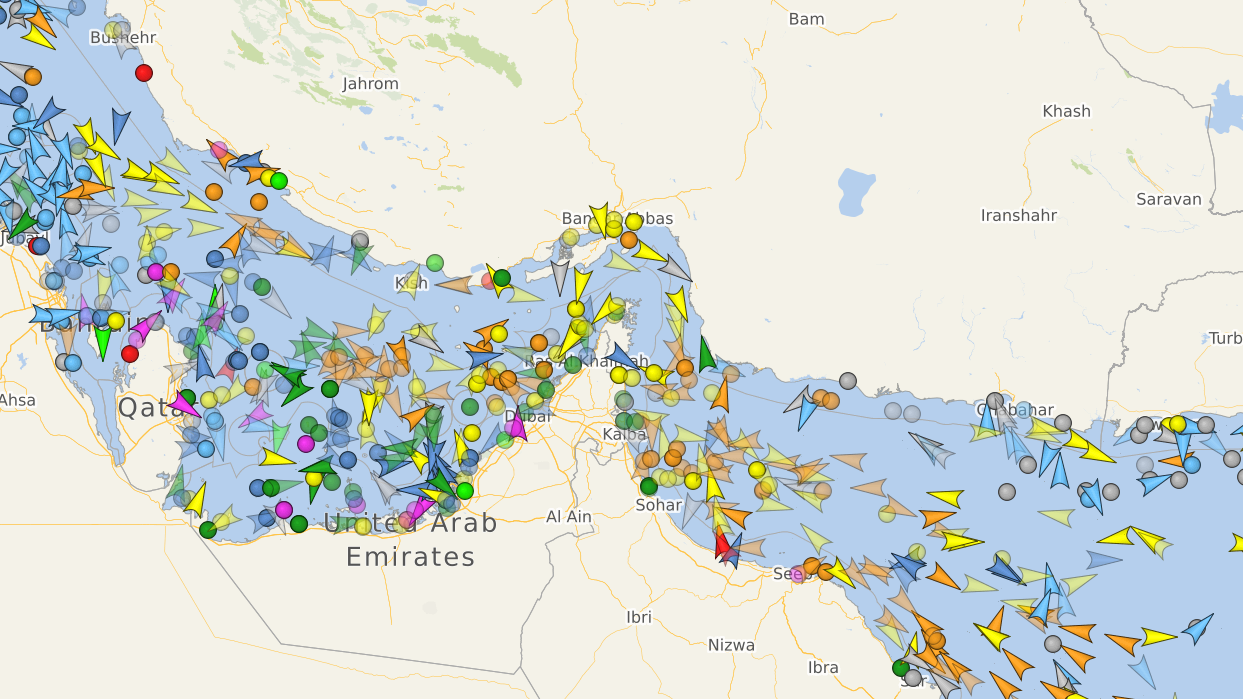
Proposed tolls for vessels transiting the Strait of Hormuz could add as much as $1 per barrel to crude oil moving through the waterway, even as container shipping in the Persian Gulf remains heavily disrupted despite the ceasefire between the United States and Iran.
According to Destine Ozuygur, senior market analyst at Xeneta, commercial shipping activity is still well below pre-conflict levels and remains skewed toward outbound departures. In a LinkedIn post, she said the more important reality is that movements through the Strait are taking place within what she described as the selective guardrails of an Iran-operated toll system.
Washington and Tehran announced a two-week ceasefire on Tuesday evening ahead of President Donald Trump’s deadline threatening Tehran with major retaliation.
The crisis has had major consequences because around 20% of the world’s crude oil passes through the Strait of Hormuz. Iran’s blockade sharply constrained supply and sent fuel prices soaring.
Reports suggest that operators of some very large crude carriers, which are among the most common ship types in global oil trade, have already been paying around $2m per vessel to secure safe passage. Under a possible toll arrangement involving Oman and Iran, analysts estimate that a typical VLCC carrying 2m barrels of oil could see delivered costs rise by roughly $1 per barrel.
Oil prices have reacted sharply to the ceasefire news. Brent rose as high as $110 a barrel on Monday before falling back to just over $90 after the truce was announced.
At the same time, the US Federal Maritime Commission has rejected several requests from ocean carriers seeking waivers from the standard 30-day notice period to impose emergency fuel surcharges.
Ship traffic through the Strait has begun to recover gradually. Ozuygur said reports indicated that 21 vessels transited over the weekend. But Xeneta has not yet confirmed any inbound or outbound container ship movements since the ceasefire announcement.
She said the monetisation of passage through the Strait is a deeply unsettling development that will shape both the pace and scale of any market recovery. She also noted that recent vetoes by Russia and China against a United Nations Security Council resolution aimed at reopening the waterway increase the likelihood that the present system becomes an enduring operating model.
Tankers have fewer routing alternatives because of where oil is produced, but container shipping is already adapting more structurally. Since 1 March, Ozuygur said at least five liner services have added new calls at Jeddah and King Abdullah in Saudi Arabia, or at Mersin in Turkey, while weekly capacity into Jeddah has risen by 19%.
A return to previous routing patterns remains possible, but liner operators have already committed future schedules to these alternate networks, with bookings more than two weeks ahead showing clearly defined revised destinations.
Those changes are likely to come at a cost. Hybrid routings that depend on trucking and rail are more complex, slower and less efficient for large container flows than traditional all-water services.
Persistent congestion could also create knock-on effects for US-bound cargo moving through Indian ports such as Nhava Sheva and Mundra.
Meanwhile, volatile fuel prices are adding pressure across the supply chain, even as they improve margins for some carriers.
Ozuygur said shippers should not expect immediate or lasting relief. Even if the ceasefire holds, bookings made now for the Persian Gulf still carry the risk of renewed disruption once the two-week window closes. For the market, that means caution is likely to remain the dominant mood.