

• Latest
  • Trending
Ocean carriers and shippers clash again over emergency fuel surcharges

Ocean carriers and shippers clash again over emergency fuel surcharges

March 18, 2026
CMA CGM launches land corridors to bypass the Strait of Hormuz

CMA CGM launches land corridors to bypass the Strait of Hormuz

March 18, 2026
Rail freight outlook improves as economic indicators stabilize

Rail freight outlook improves as economic indicators stabilize

March 18, 2026
ADVERTISEMENT
Trump suspends Jones Act temporarily as energy prices surge

Trump suspends Jones Act temporarily as energy prices surge

March 18, 2026
FedEx to close 10 parcel facilities as network consolidation accelerates

FedEx to close 10 parcel facilities as network consolidation accelerates

March 18, 2026
Kale Logistics and Tech Mahindra join forces to accelerate digital logistics transformation

Kale Logistics and Tech Mahindra join forces to accelerate digital logistics transformation

March 18, 2026
Teesside Airport launches direct cargo flights to China

Teesside Airport launches direct cargo flights to China

March 18, 2026
European hubs prepare to absorb traffic diverted from Gulf aviation disruption

European hubs prepare to absorb traffic diverted from Gulf aviation disruption

March 18, 2026
Unifuel moves closer to fully synthetic SAF breakthrough

Unifuel moves closer to fully synthetic SAF breakthrough

March 18, 2026
Airforwarders Association warns of cargo disruption as DHS shutdown drags on

Airforwarders Association warns of cargo disruption as DHS shutdown drags on

March 18, 2026
Cathay Cargo suspends Dubai and Riyadh freighter operations until May

Cathay Cargo suspends Dubai and Riyadh freighter operations until May

March 18, 2026
Lithium-ion battery incidents in air cargo are rising, new report warns

Lithium-ion battery incidents in air cargo are rising, new report warns

March 18, 2026
Fire containment becoming a critical issue for air cargo as battery risks grow

Fire containment becoming a critical issue for air cargo as battery risks grow

March 18, 2026
  • Home
  • About Us
  • Press Room
  • Podcasts
  • Media Kit
  • Contact Us
  • Careers
Wednesday, March 18, 2026
  • Login
  • Register
The Logistic News
  • Logistic
  • Air
  • Maritime
  • Land
  • World
  • Business
  • Tech
  • Events
  • Advertise
No Result
View All Result
  • Logistic
  • Air
  • Maritime
  • Land
  • World
  • Business
  • Tech
  • Events
  • Advertise
No Result
View All Result
The Logistic News
No Result
View All Result
Home Logistic

Ocean carriers and shippers clash again over emergency fuel surcharges

As bunker prices surge following the Middle East war, emergency fuel surcharges of up to $300 per TEU are drawing sharp criticism from cargo owners who fear carriers are turning a cost crisis into a profit engine.

The Logistic News by The Logistic News
March 18, 2026
in Logistic, Maritime
Reading Time: 4 mins read
0
Ocean carriers and shippers clash again over emergency fuel surcharges
ADVERTISEMENT

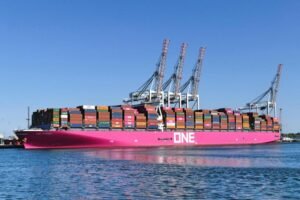
The war in the Middle East has reopened one of the shipping industry’s most contentious debates: whether emergency fuel surcharges imposed by ocean carriers are a legitimate recovery tool or simply another way to boost revenues during a crisis.

Since the conflict intensified, container lines have introduced emergency fuel surcharges ranging from $30 to $300 per TEU, depending on the trade lane. Carriers argue that the extraordinary spike in fuel prices has forced them to move beyond the normal quarterly bunker adjustment factor (BAF) mechanism, which they say is too slow to reflect the pace of the disruption.

But many cargo owners are unconvinced. For shippers, the concern is not the existence of higher fuel costs, but the risk of being charged twice: once through the emergency surcharge now, and again later when the quarterly BAF formula catches up.

ADVERTISEMENT

That concern has become more pressing as the usual relationship between bunker prices and BAF calculations has broken down. According to analysis from Vizion, the speed of the conflict’s escalation and the effective closure of the Strait of Hormuz have fractured the traditional fuel-cost pricing model used in liner shipping.

Industry voices have been blunt. James Hookham, director of the Global Shippers Forum, said shipping lines too often appear to turn crises into opportunities for financial gain, warning that this form of “double-dipping” further damages the credibility of surcharge practices.

Others in the shipper community share that view. Antonios Rigalos, managing partner of shipper network ShiftX, said emergency bunker adjustment factors may have been understandable during the current contract period ending March 26, but not beyond that point. In his view, the Q3 BAF review, which will reflect March, April and May fuel costs, should absorb the increase. Charging both an emergency surcharge and a revised BAF would amount to unfair double billing, he argued.

Shippers negotiating freight contracts are already pushing back. One Asia-Europe shipper based in Hong Kong said its contracts are linked to the Shanghai Containerized Freight Index (SCFI), which already incorporates both BAF and EBAF elements. From that perspective, any additional emergency charge is being treated as unacceptable.

Meanwhile, carriers continue to act. CMA CGM this week raised its emergency fuel surcharge from $150 to $265 per TEU on long-haul trade lanes after first introducing it on March 16. OOCL said it would introduce a temporary emergency bunker surcharge from March 23, citing fuel availability pressures that fall outside existing mechanisms. Cosco Shipping has rolled out emergency bunker surcharges on trades involving Europe, South America and Africa. MSC introduced a temporary emergency bunker surcharge on March 16, with levels varying between $30 and $300 per TEU. Maersk, for its part, announced on March 10 a $200 per TEU emergency bunker surcharge on all long-haul routes.

Maersk said the fee was needed to secure fuel access and manage fuel mix issues beyond what is covered under its fossil fuel fee (FFF). Chief Commercial Officer Karsten Kildahl explained that the situation had become so severe that the carrier was loading fuel in the US and Europe and transferring it to ships in Asia as supplies at major bunkering hubs tightened.

Most carriers say these emergency surcharges will be reviewed every two weeks. Yet with the Strait of Hormuz effectively closed to commercial shipping—and with roughly 20% of global oil and LNG supplies normally passing through the waterway each day—few in the market expect the surcharges to disappear soon.

For shippers, the timing is another problem. Hookham said the speed with which the new charges were introduced has made it almost impossible for importers and exporters to pass those costs on to their own customers or suppliers. For smaller businesses especially, the sudden cash-flow shock could be severe, particularly when cargo is delayed or not delivered at all.

He also pointed to the lack of notice. In the United States, the Federal Maritime Commission requires a 30-day notice period before surcharges can take effect on US services, a rule Hookham says gets the balance right. He believes the current wave of emergency fees will only increase calls for similar protections worldwide.

Vizion’s review underscores how unusual this market shock has been. Average very low sulfur fuel oil (VLSFO) prices stood at $535 per metric ton in 2025, down 14.4% year over year and the lowest level since 2020. During that period, BAF accounted for only 10% to 20% of total freight costs. But after US and Israeli strikes on Iran on February 28, fuel prices jumped 73%, reaching $939 per metric ton in less than two weeks. Carriers reacted almost immediately with emergency surcharges of $60 to $190 per TEU, far faster than the traditional quarterly BAF cycle would allow.

Vizion says that response reveals a deeper divide in the market. Some carriers initially tried to preserve long-term customer relationships by absorbing volatility, while others moved quickly to transfer costs and defend margins. Maersk was initially seen as part of the first camp before later introducing its own emergency surcharge, while MSC and CMA CGM adopted a faster pass-through strategy.

For now, shippers with fixed contract rates may enjoy temporary protection. But Vizion warns that over the next three to six months, aggressive Q2 BAF corrections are likely as carriers seek to recover the remaining fuel-cost gap.

That is exactly why many shippers are uneasy. Chantal McRoberts, director and head of advisory at Drewry Supply Chain Advisors, said companies understand that higher bunker costs will normally feed into Q3 pricing. The issue is whether the emergency fees being imposed now are truly temporary cost-recovery tools—or whether they risk becoming an additional revenue line once the standard BAF mechanism also rises.

For many cargo owners operating under transparent, formula-based bunker pricing agreements, that concern is enough to trigger resistance.


Previous Post

Morocco’s Automotive Rise: From Minimal Exports to a $14 Billion Industry

Next Post

Tesla and LG back $4.3 billion US battery plant for Megapack expansion

Next Post
Tesla and LG back $4.3 billion US battery plant for Megapack expansion

Tesla and LG back $4.3 billion US battery plant for Megapack expansion

Leave a Reply Cancel reply

Your email address will not be published. Required fields are marked *

A D V E R T I S E M E N T

Popular News

  • Drone Delivery Takes Flight: Amazon Partners with UPS for Trial Program

    Drone Delivery Takes Flight: Amazon Partners with UPS for Trial Program

    0 shares
    Share 0 Tweet 0
  • Rail Cargo Group Strengthens European Network with Captrain Netherlands Acquisition

    0 shares
    Share 0 Tweet 0
  • Automotive Inbound Logistics Market: Navigating Future Challenges

    0 shares
    Share 0 Tweet 0
  • Global Inflation Cools to Target After Three Years, Central Banks Face Policy Dilemma

    0 shares
    Share 0 Tweet 0
  • Dubai Mercantile Exchange Rebrands as Gulf Mercantile Exchange Following Saudi Tadawul Group Acquisition

    0 shares
    Share 0 Tweet 0

Recent News

CMA CGM launches land corridors to bypass the Strait of Hormuz

CMA CGM launches land corridors to bypass the Strait of Hormuz

March 18, 2026
Rail freight outlook improves as economic indicators stabilize

Rail freight outlook improves as economic indicators stabilize

March 18, 2026
Trump suspends Jones Act temporarily as energy prices surge

Trump suspends Jones Act temporarily as energy prices surge

March 18, 2026

Discover a new era of logistics reporting with The Logistic News, your go-to platform for breaking news, insightful features, and exclusive interviews shaping the global logistics and freight landscape. Trust us to deliver accurate, timely, and relevant information that empowers professionals and enthusiasts alike in navigating the intricacies of this vital sector.

Navigation

  • Home
  • About Us
  • Press Room
  • Podcasts
  • Media Kit
  • Contact Us
  • Careers
  • Privacy Policy
  • Terms of Use

© 2024 - thelogisticnews.com

Welcome Back!

Login to your account below

Forgotten Password? Sign Up

Create New Account!

Fill the forms below to register

All fields are required. Log In

Retrieve your password

Please enter your username or email address to reset your password.

Log In

SIgn Up Newsletter

This will close in 20 seconds

Manage Cookie Consent
We use technologies like cookies to store and/or access device information. We do this to improve browsing experience and to show (non-) personalized ads. Consenting to these technologies will allow us to process data such as browsing behavior or unique IDs on this site. Not consenting or withdrawing consent, may adversely affect certain features and functions.
Functional Always active
The technical storage or access is strictly necessary for the legitimate purpose of enabling the use of a specific service explicitly requested by the subscriber or user, or for the sole purpose of carrying out the transmission of a communication over an electronic communications network.
Preferences
The technical storage or access is necessary for the legitimate purpose of storing preferences that are not requested by the subscriber or user.
Statistics
The technical storage or access that is used exclusively for statistical purposes. The technical storage or access that is used exclusively for anonymous statistical purposes. Without a subpoena, voluntary compliance on the part of your Internet Service Provider, or additional records from a third party, information stored or retrieved for this purpose alone cannot usually be used to identify you.
Marketing
The technical storage or access is required to create user profiles to send advertising, or to track the user on a website or across several websites for similar marketing purposes.
Manage options Manage services Manage {vendor_count} vendors Read more about these purposes
View preferences
{title} {title} {title}
No Result
View All Result
  • Logistic
  • Air
  • Maritime
  • Land
  • World
  • Business
  • Tech
  • Events
  • Advertise

© 2024 - thelogisticnews.com