



Oil has climbed above $100 per barrel for the first time since 2022, as conflict in the Middle East disrupts production, strands tankers and sends freight rates to extraordinary levels.
Brent crude was reported at $101.19 per barrel, while West Texas Intermediate reached $107.06.
The sharp move follows a series of major developments across the Gulf. Qatar has declared force majeure on LNG production at its huge Ras Laffan complex, while Saudi Arabia has shut down the Ras Tanura plant, the world’s largest oil refinery, after drone strikes. Saudi exports are now being redirected through the smaller Yanbu facility on the Red Sea.
Qatar’s energy minister, Saad al-Kaabi, told the Financial Times that other regional oil and gas producers may soon also be forced to declare force majeure. He warned that Gulf production could stop within days and said prices could climb to $150 a barrel if the conflict continues for several more weeks. He also cautioned that a prolonged interruption to energy supplies could bring down economies around the world.
The UAE and Kuwait cut production volumes last week, and Kuwait has since declared force majeure on all oil production. Iraq has also reduced output.
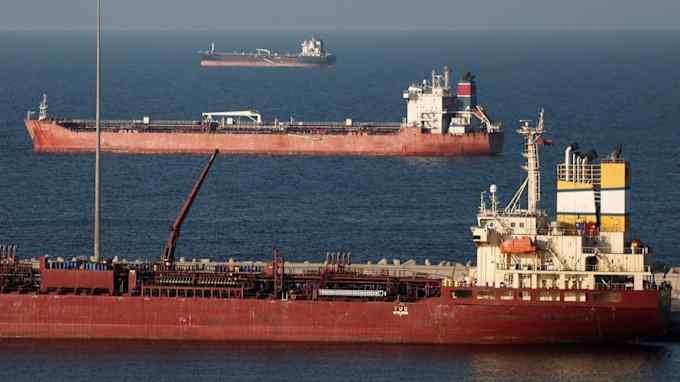
The conflict between the United States and Israel has sent both LNG and tanker markets into turmoil. VLCC rates have now exceeded $700,000 per day. According to Tankers International, the 2010-built, 318,000 dwt Kalamos, owned by Aeolos Management, has been fixed at $770,000 per day.
Only a limited number of tanker owners appear willing to continue transiting Hormuz. Among them is George Prokopiou’s Dynacom, which is believed to have sent five tankers through the Strait in recent days.
War risk insurance remains available, according to New York broker Poten & Partners, but at sharply higher cost. Before the conflict, cover could be obtained at around 0.1% to 0.15% of vessel value. That has now risen to around 1%, or as high as 3% for tankers linked to US or Israeli interests.
Despite the huge rate spike, the windfall may not last. With production across the Gulf being shut in, there may soon be far fewer cargoes to move. Some owners are now reportedly fixing tankers west of Hormuz for floating storage instead, although the volumes involved remain limited and the details are still unclear.
Poten has noted reports of 30- to 90-day storage deals for VLCCs at between $400,000 and $500,000 per day.
Crude had already jumped to $93 on Friday, its highest level since autumn 2023, and some analysts were predicting over the weekend that prices would break through the $100 mark in early Monday trading. That forecast has now become reality.