Air Nov 27, 2026
Poland advances plans for Port Polska’s landmark air traffic control tower
JSK Architects has secured a contract worth more than PLN 15 million to design the future airport’s control tower, a strategic facility positioned between the runways and aligned with the passenger terminal.
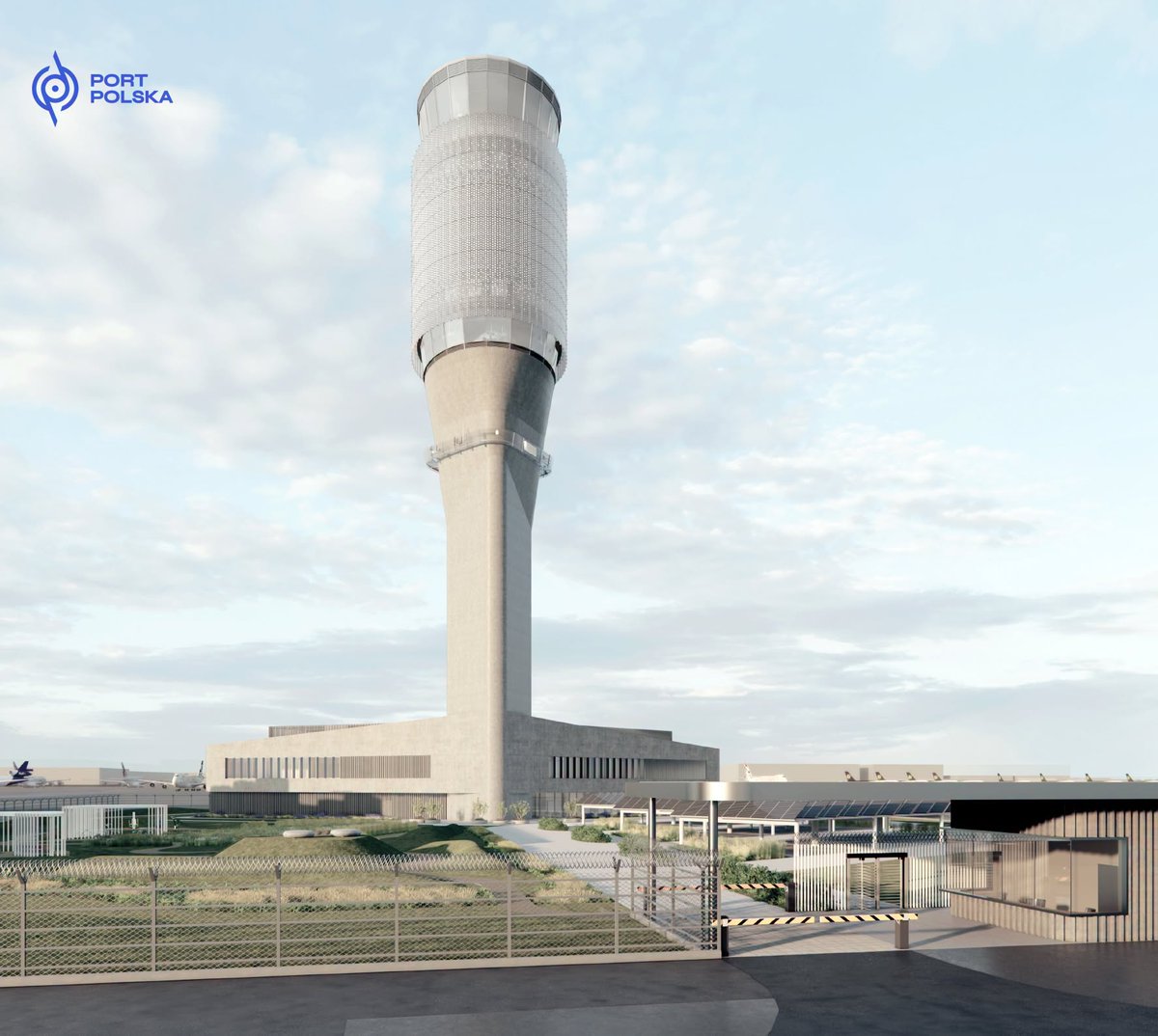
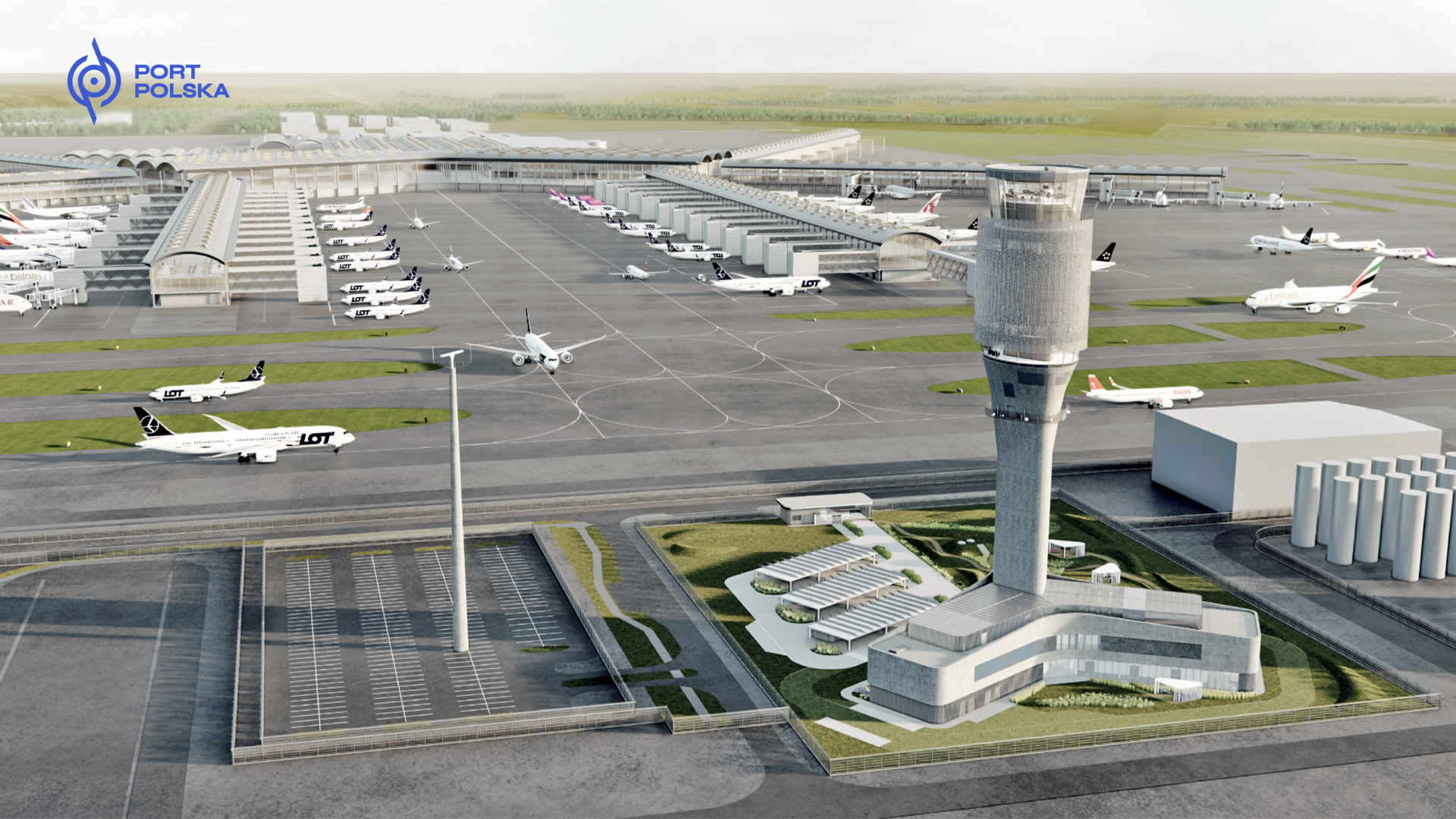
The architectural plans for one of the most prominent structures at Poland’s future Port Polska airport are beginning to take shape. The planned Air Traffic Control Tower (ATCT) will play a central role in the airport’s operational infrastructure, with a strategic location between the runways and directly aligned with the passenger terminal.
Beyond its operational responsibilities, the tower is expected to become one of the airport’s most recognisable architectural features, thanks to its distinctive design and prominent position within the future airport complex.
The contract for preparing the tower’s design documentation has been awarded to JSK Architects, with a value exceeding PLN 15 million.
The project is one of 18 executive contracts under a general package for preparation of design documentation for 36 airport support facilities. Infrastructure projects are an aircraft maintenance base, cargo terminals, a dedicated airport police building and a fire station.
Inside the future control tower will be the air traffic control teams and those responsible for coordinating aircraft and vehicle movements on the airport apron. Its design will therefore have to meet stringent operational requirements and ensure the efficient coordination of airport activities.
Strategic position with 360 degree views
The tower will be constructed in the central part of the airport, in between the runways along the axis of the passenger terminal. They’re positioned to enable air traffic controllers to have a 360 degree unobstructed view of the entire airport site.
Custom-built operational areas will be used to monitor and coordinate aircraft movements both in the air and on the ground.
Architecturally the building will be organized around three main elements. The first is the operational cab, which will house air traffic control facilities. Below, a reinforced-concrete shaft will house technical installations and circulation areas and at the same time serve as the building’s structural frame.
The third element will be a two-storey podium to accommodate administrative offices and technical facilities, bringing together the supporting functions needed for the daily operation of the tower.
Port Polska: a larger transport infrastructure program
Development of the air traffic control tower is part of the wider Port Polska Program, a strategic investment initiative designed to establish an integrated transport system connecting air, rail and road infrastructure.
Central to the program is the building of a new, state-of-the-art airport between Warsaw and Łódź, and the development of a high-speed railroad network designed to enhance connectivity between the country’s largest urban centers.
It is expected to accommodate 34 million to 44 million passengers a year in its first few years of operation. Its long-term development strategy will enable flexible capacity expansion, depending on market demand and future traffic growth forecast.
The air traffic control tower, which is an integration of operational efficiency, advanced technical facilities and an architectural design to give the future airport a distinctive identity, is an important part of this infrastructure.
END OF REPORT