Land Nov 25, 2026
S&P Raises CPKC Credit Rating to A- as North American Rail Growth Strengthens
The upgrade reflects CPKC’s strong post-merger performance, expanding cross-border business between Canada, the United States and Mexico, and solid financial prospects despite trade uncertainty and competitive pressures.

S&P Global Ratings raised Canadian Pacific Kansas City Ltd.'s (CPKC) long-term issuer credit rating to A- from BBB+, and also upgraded its rating on the railway's unsecured debt. The decision reflects the company’s consistent financial performance, diversified operations and growth potential in North America’s three major markets.
The upgrade announced Tuesday comes with a stable outlook. CPKC has continued to deliver solid results amid economic uncertainty and trade challenges, showing the strength of its business model following the acquisition of Kansas City Southern (KCS) in 2023, S&P said. This follows the agency revising the outlook on the company’s BBB+ rating to positive in December 2025.
Cross-border operations drive growth ahead of industry peers
CPKC has ranked at the top of other North American Class I railways on several key financial and operational measures. Since 2022, its pro forma volumes, revenue and adjusted earnings before interest, taxes, depreciation and amortisation (EBITDA) have grown faster than its competitors, S&P said. The agency expects this to continue.
The rating agency cites the integration of Kansas City Southern, improvements in rail services and the strategic advantage of running the only single-line railway network connecting Canada, the United States and Mexico as reasons for the company’s performance.
“We expect continued growth in several business segments. S&P forecasts low single-digit volume growth, spurred by freight shifting from road to rail on US-Mexico routes and intermodal partnerships involving Maersk, Hapag-Lloyd’s Gemini venture, Schneider National and Americold.
Another positive is the return of coal shipments from Elk Valley Resources. CPKC lost this business to Canadian National in 2021, but the return of these volumes should support its growth.
S&P said these upside opportunities should more than offset tougher comparisons on Canadian grain shipments and potential competitive pressure from a possible Union Pacific-Norfolk Southern merger.
Trade exposure remains manageable
CPKC's latest operating results highlight the strength of its freight business. Year-to-date through November 21, revenue ton-miles were up about 4.2 percent, with increased shipments of grain, minerals and consumer products helping to offset flat or decreasing volumes in industrial segments.
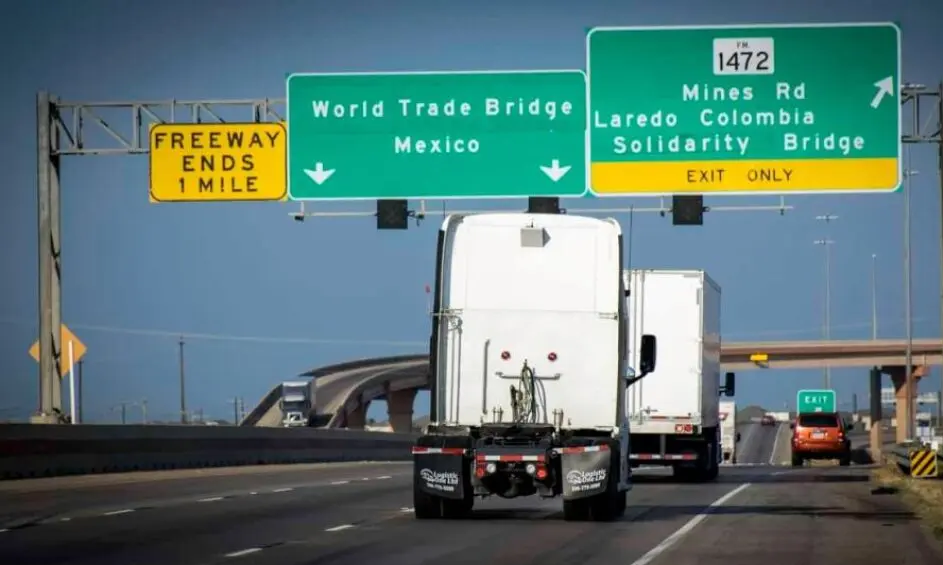
Cross-border transportation is particularly important to the company’s business, accounting for about 41% of revenue from goods moving between Canada and the United States or between Mexico and the United States.
S&P expects the tariffs to reduce CPKC’s revenue by less than 1% this year, despite its exposure to international trade. Tariffs on freight lanes where account exposure is direct are less than 20% of the company’s freight revenue, limiting the potential financial impact of trade restrictions.
Financial outlook: continued cash generation
S&P’s forecasts suggest CPKC’s strong financial metrics will be sustained over the next few years. The agency expects adjusted funds from operations (FFO) to debt to stay at 23% to 25% and adjusted debt to EBITDA to be 2.8x to 3.0x.
We expect annual EBITDA to grow in the mid-single digits and capital expenditures to be around 16% to 17% of revenue.
The company is also expected to generate annual free operating cash flow of C$3.5 billion to C$4 billion, or approximately US$2.46 billion to US$2.81 billion. This would be between 12% and 15% of total debt.
CPKC had net leverage of 3.2x as of 30 September 2026. S&P expects the company to bring this down to management's target of 2.75x by the end of next year.
The agency also expects CPKC to spend at least US$1.76 billion a year on share buybacks and to increase dividends by around 10% annually. The company will adapt its share repurchase programme as needed to keep leverage at or near its target.
Future rating change conditions
The outlook is stable, but S&P has identified a number of financial thresholds that could lead to a reassessment of CPKC’s credit rating within the next 24 months.
On a sustained basis, a downgrade could be considered if adjusted FFO to debt is below 23% or free operating cash flow to debt is below 10%. The decline could be due to a more aggressive financial strategy or weaker operating performance.
Conversely, an upgrade would require a sustained improvement in financial strength with FFO to debt above 35% and free operating cash flow to debt above 18%. S&P would also want to see a more conservative financial policy at the firm.
Market performance and analyst sentiment
On November 24, CPKC shares closed at US$92.82, up 2.42% on the day. The company has a market capitalisation of about US$80.7 billion and its share price has traded between US$70.01 and US$96.90 over the last 52 weeks.
Analyst sentiment is broadly positive. Of the eight ratings tracked, there are 6 bullish and 2 neutral ratings, with no bearish recommendations. Average price target is US$111.38, median target is US$103. Individual forecasts range from US $93 to US $145.
Why the upgrade is important to the rail freight industry
"The jump to an A- credit rating is more than just a nod to CPKC's recent financial results. In general, a stronger credit profile means a company will have access to financing at lower borrowing costs and be able to attract a wider range of investors to its debt securities.
The upgrade also underscores CPKC’s financial strength in its integrated North American railway network following the acquisition of Kansas City Southern. Its single line system connects three national markets, and increasing intermodal activity and strong cross-border freight flows are enhancing its standing in an ever-competitive rail business.
The stable outlook suggests S&P expects this momentum to continue, but trade uncertainty, tariff exposure and possible consolidation among rival rail operators remain key factors for the sector.
END OF REPORT