



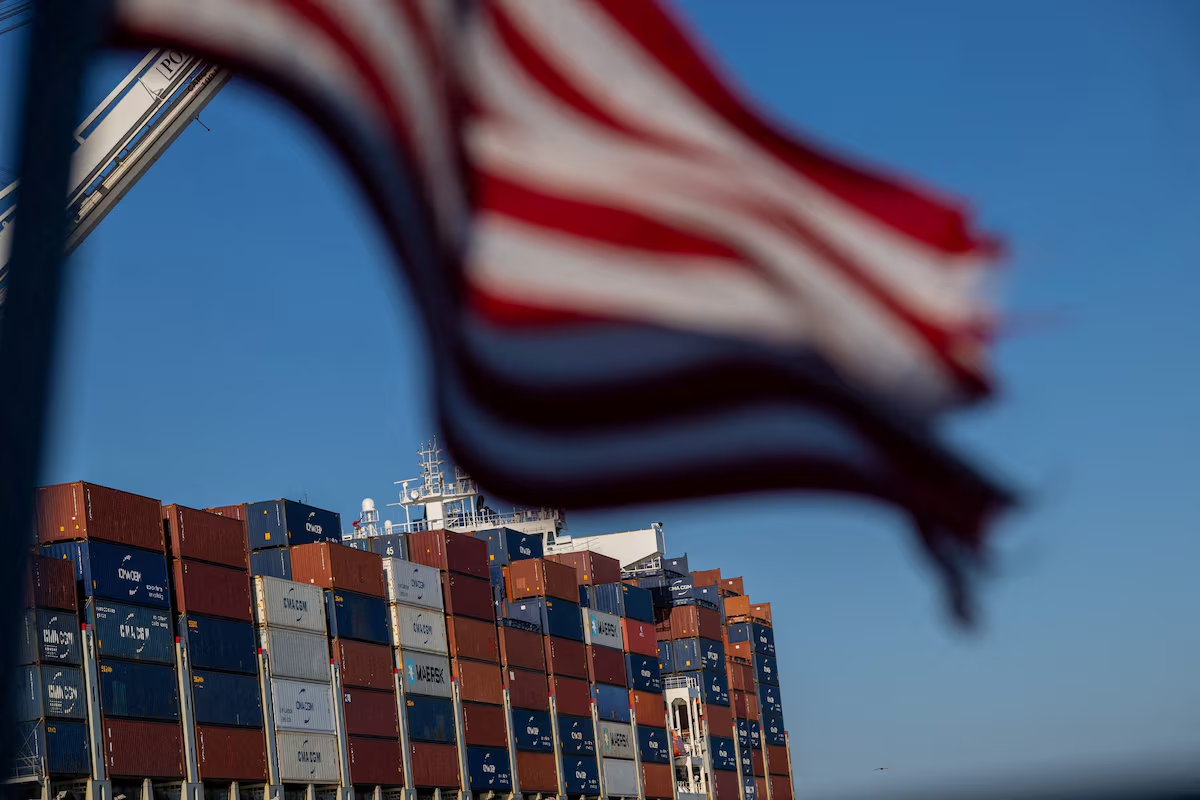
The maritime industry has reacted cautiously to U.S. President Donald Trump’s announcement of potential support for commercial shipping in the Middle East, with many operators insisting that the practical impact will depend on the details.
Trump said he had ordered the U.S. Development Finance Corporation (DFC) to provide political risk insurance and guarantees for the financial security of “all maritime trade, especially energy,” traveling through the Gulf. The pledge comes as P&I clubs have withdrawn war-risk products in the Arabian Gulf and as additional premiums are being applied across expanding “regions of peril” in the Middle East.
BIMCO chief safety and security officer Jakob Larsen said the insurance offer needs full clarification, adding it could potentially tilt the risk/reward equation and encourage some shipowners to resume operations in a high-threat environment. However, even if insurance costs fall, the industry warns there is no guarantee shipowners will return to what is effectively an active war zone.
Trump also said the U.S. Navy could escort tankers through the Strait of Hormuz if needed. An ex-U.S. Navy source suggested escorts may not be feasible in the near term given ongoing naval combat operations.
Larsen said escorts could reduce threats for protected ships, but providing blanket protection for all tankers threatened by Iran would be unrealistic due to the number of warships and assets required. He added that even escorted ships could remain exposed during loading and unloading at berth, as Iran has targeted oil production and logistics infrastructure in recent days. He cited the U.S.-flagged tanker Stena Imperative, part of the U.S. Maritime Administration’s Tanker Security Program, which was struck by two missiles on March 2 while at the Port of Bahrain.